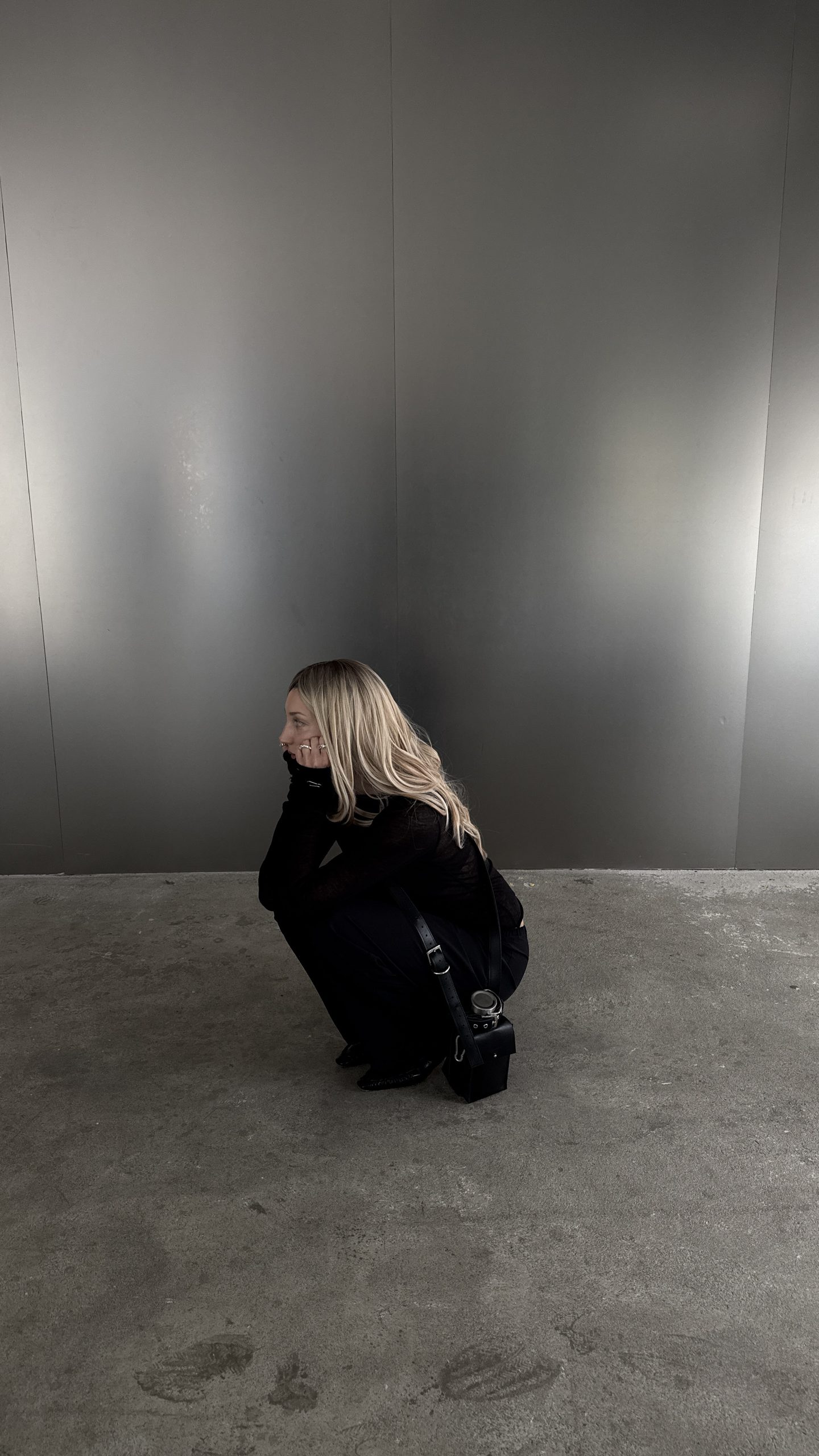
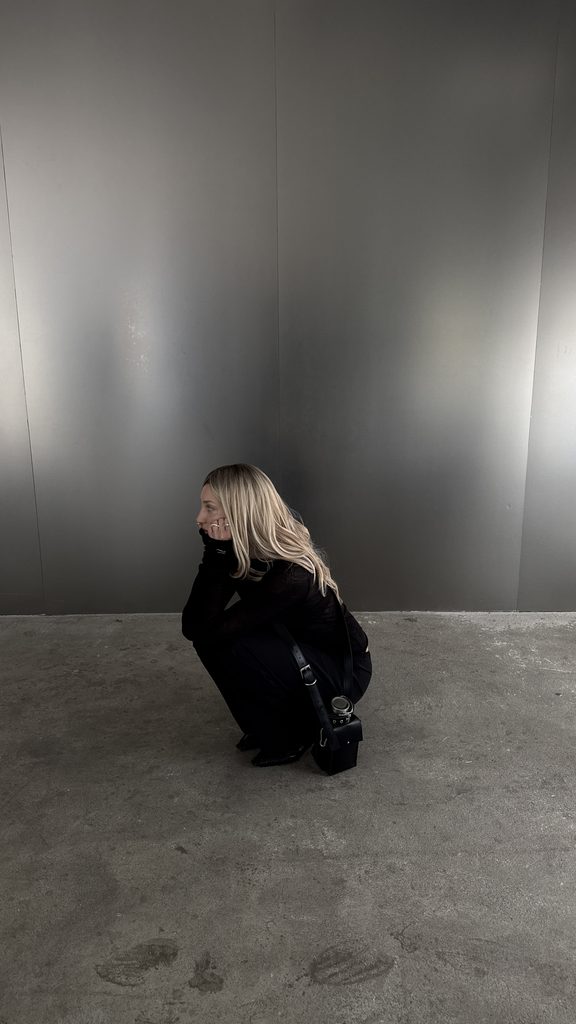
We stumbled upon a team member of the Polish fashion label NAWARA. We discussed the ideologies of design and the history of the brand. It became apparent that we needed to sit down with the owner and founder of her namesake label, Lidia Nawara, to learn more about NAWARA.
Since evolving from a personal project into a brand during the COVID-19 pandemic, the brand has kept itself busy by continuously dropping small batches of clothes, which, according to Lidia, all, in a way, belong to one big collection. NAWARA has its roots in brutalist design whilst also being associated with the techno and underground scene. Through the years, it has gained widespread recognition for its unique bags – predominantly its steel bag and its ID Projector bag – which have become synonymous with the brand through a marriage of technology and fashion.
We hopped on a Zoom call to discuss the start of Lidia’s personal journey from fashion stylist to fashion designer – and now, as she manages her own brand with a growing team, aims to gain further traction and success in the industry.
You are a retired stylist. What made you get into fashion design? Based on our research, you initially picked up sewing as a hobby – when did you realise you could make a career out of it? Was it the lack of preferred options for your clients, or was it something that you were always interested in doing?
It was all by accident. When I was a teenager I had my own blog. When I turned 18, I applied for a job at a multi-brand store as a stylist. I didn’t have the education or the experience and no previous job experience as a stylist. I was only known in my city as a blogger and it helped me acquire the position I applied for. I liked dressing up, and I thought, why not? I decided to reach out to them and in the end, I managed to get the job. That was my first job in the fashion industry – I had previously done modelling work, which was the closest thing, I guess. I was 19 at the time and the job predominantly focused on their webshop, their stock, etc.
My tenure there lasted for about three years, and I also decided to expand my personal hobbies, which included sewing. I was always free during the evenings, so the idea was simple: I’d learn how to sew clothes for myself. I took a sewing class where I met someone who had previously worked in patternmaking. The concept of patternmaking was foreign to me. I had obviously heard of designers, but not about patternmakers and it truly intrigued me. That made me swap sewing classes for patternmaking ones – I got obsessed with it and it made me pursue further knowledge through education. I studied patternmaking for two years.
I wanted to create clothes from scratch. Then you learn how to create patterns that are the foundations of every garment, designing pieces is much easier. I don’t think it’s necessary to study fashion design if you have studied patternmaking before. For me, studying patternmaking provided a solid technical foundation for design. It taught me how to translate an idea into a functional garment and understand its construction from the beginning.
After my studies, I worked as a bartender. It was a part-time job that paid my bills. I eventually started branding my own garments with my surname. Back then, it wasn’t a brand nor was it something that I had envisioned. I was simply making my own garments and attaching labels to them. It eventually led me to create an Instagram account to share my work, which later developed into me creating my own website where I’d upload some of the pieces for sale. It was only a passion project and nothing serious, but things started to ramp up, and I managed to sell more and more. This happened in 2020, right as COVID-19 started spreading which shut down most places and I didn’t have a job as the bar I worked at shut down. The pandemic motivated me to pursue fashion design more wholeheartedly due to the growing demand for my designs. I basically had no other options anyway, so in 2021 I decided to create my own brand – NAWARA.
When did you realise that you could do this full-time? Was it during the pandemic?
Funnily enough, I didn’t really come to that conclusion myself. Things were going well, so I lost track of time and wasn’t really aware of how well I was doing. I did everything myself, and just like that, I hired my first team member to help me out. Fun fact: I stopped sewing about two years ago to fully focus on managing the brand. I just don’t have the time to sew as there are so many other aspects of running a business. But I still indulge in patternmaking and I obviously have a hand in the designs too. As I mentioned before, this was first and foremost a passion project that I thoroughly enjoyed – it helped me pay my bills but it wasn’t a proper business before. It took us quite some time to reach the stage that we’re currently in.
I don’t think people fully grasp how difficult it is to run a fashion brand. From the outside, it can look easy, but it certainly isn’t. As NAWARA became a self-sustaining business, my role naturally evolved. Today, I am both the CEO and artistic director of the brand. I continue to define its creative direction, but most of my daily work now involves the technical, organisational and business aspects of running the company. I spend more time working on Excel spreadsheets than designing, which is the less romantic but very real side of the industry. This allows me to focus on the company’s development while continuing to shape its creative direction together with the team
How big is the NAWARA team?
We’re five members, including me. We sometimes have to acquire help from outside when it comes to making very specific pieces that require larger machinery. The same applies to acquiring our fabrics. We source them here in Poland, but we need outside help to cut and measure. As part of our core values, we always ask for the spare fabric that would usually be discarded. We believe there’s always a possibility of using them–no matter how big or small–for various types of projects.
What are some of the challenges and advantages of not having had a fashion design education – but rather training in patternmaking – when it comes to designing your garments?
I would say it has helped me, in a way. Because I am very realistic about my designs and having studied patternmaking, I know how to design pieces without compromising on the construction and durability. Since patternmaking allows me to fully grasp the concepts, the foundations and the basics of making garments, I can create functional clothes that are wearable.
You’ve incorporated steel material into your pieces, and you even made a statement steel bag. How did that come to fruition? Are there further ambitions to incorporate different types of materials to evolve your design language and your brand towards a more distinctive path?
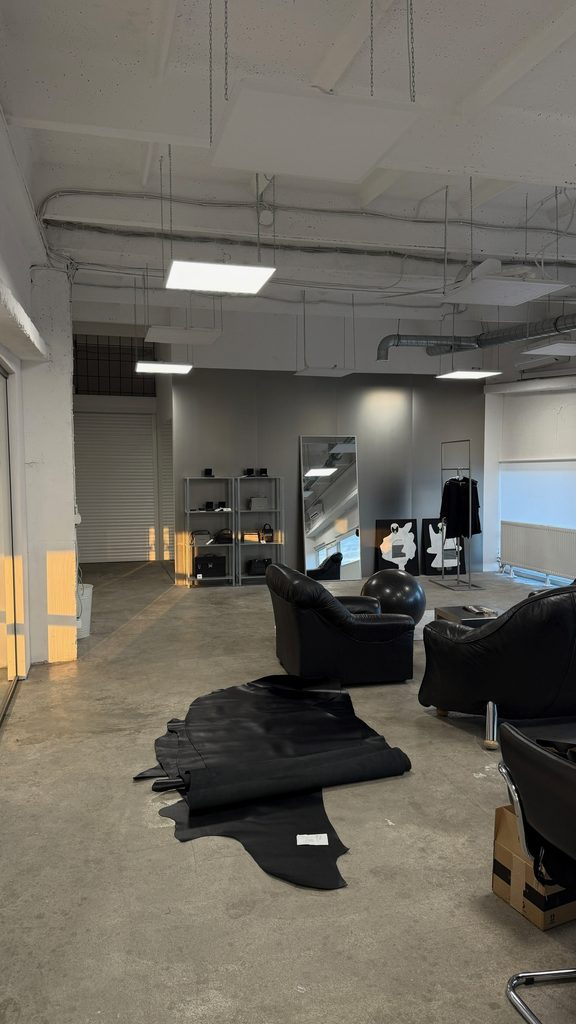
I have never wanted to define NAWARA exclusively as a fashion brand. I see it more as an interdisciplinary design studio working at the intersection of fashion, technology, art and functional design. The philosophy and ideas behind the projects are as important to me as the products themselves. This is why we create not only clothing and accessories, but also objects such as the steel bag and, more recently, furniture combining leather and steel.
Would you prefer to create more art pieces and furniture in the future?
I am more into the idea of creating art pieces that you can use. My designs are always based on functionality rather than art forms per se. We also created a small product with a 3D printer made of steel – a very small steel bag which could fit in the palm of your hand. I wanted to try out the technology to see if it was possible to create something small and almost absurd.
How did you come across the idea of creating products out of steel?
The story is quite simple. I was making my first structure for a fashion event. I decided to make a display case from steel to showcase my garments. When I had finished designing it, the steel-worker I met told me he could make anything from steel. I jokingly asked him if he could make a steel bag, and he said:
“Yes, why not?”
Two weeks later, I was designing a steel bag and sent him the design. He then made it exactly as we had envisioned.
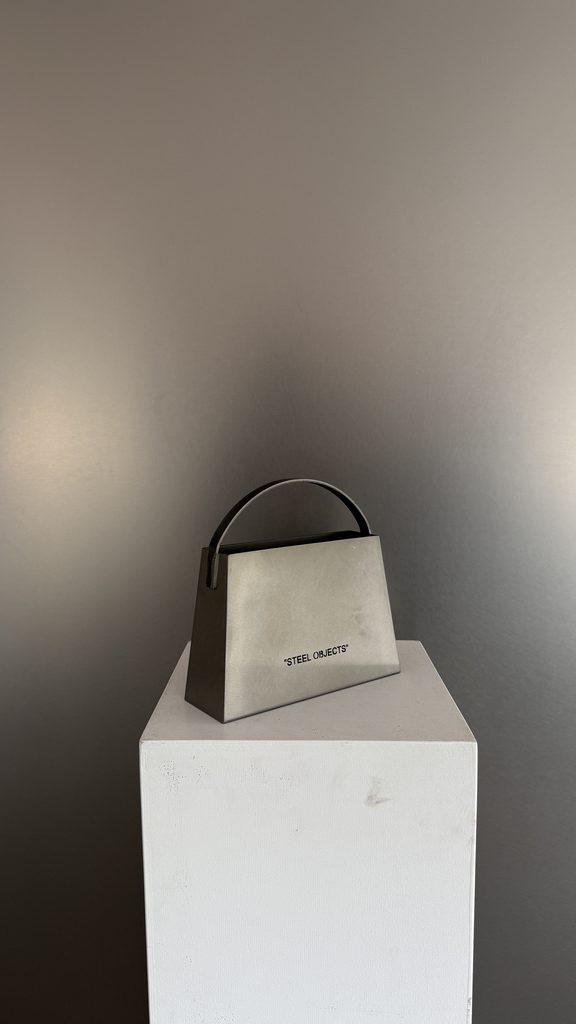
Do you make a limited number of copies when it comes to hardware such as steel bags based on the manufacturer’s minimum order quantities? I am assuming you’re working with someone externally when it comes to your steel bags?
We do not have the equipment required to produce the steel bags in-house, so we work with an external specialist. The process requires specialised machinery and metalworking expertise, including laser-cutting, heating, forming and finishing the steel according to the design
Is the steel bag a bestseller?
Yes, it has been one of our most recognisable and successful products. We have also started creating garments featuring steel elements, which have been very well received. The steel bag remained our most popular product for a particularly long time. After all, it’s a statement piece. My brand wasn’t very well known before we launched the bag. After the launch, we had a lot of magazines get in touch with us to find out more about the product. It was a huge game changer for me and for the brand.
When did you make the first iteration of the bag?
By the end of 2021. I can’t pinpoint one exact founding date because NAWARA developed gradually and very organically. It did not begin with a complete business plan or a single defining moment. It started as a personal project and naturally evolved into a brand and a company over time. I know that at the time I was quite tired of working on the brand, since I wasn’t making a lot of money from it. The pandemic was at its peak. I essentially threw all my belief into the steel bag, knowing it’s a unique product. I told myself that by the end of the year, if I couldn’t make a living from this, I would quit and do something else. I was prepared and almost ready to work elsewhere, because I knew I could work as a patternmaker for an already established brand. After we released the steel bag, things really changed for us. It was a huge “boom” and we managed to catch a lot of attention.
The idea of a steel bag is a very brutalist design choice. Brutalism is often considered very cold, harsh and raw. Would you say that it is something that drives you and plays a bigger part in your overall design language?
I think the steel bag itself is a very unique and niche piece, even in Poland, where brutalist and post-war architecture remains a visible part of the urban landscape. There’s a very small number of people who appreciate this type of design. If they admire brutalist style, they will definitely be interested in the NAWARA brand, as it is something we incorporate in all our work.
Is your clientele bigger in Poland or abroad?
When I first started, I put more emphasis on selling and succeeding abroad. It’s quite cool that here in Poland, people truly appreciate things that are made or designed here. There’s a sense of pride that really ties us all together. I am glad that a lot of the younger generation appreciate handcrafted products or goods made locally rather than searching for new products abroad.
Could you tell us more about the Polish fashion industry? Do you have any designers that you look up to?
Have you heard of Magda Butrym? She is a major Polish designer known for high-fashion womenswear. I appreciate the way her work can reference Polish identity and traditional elements.I appreciate that young Polish people are very mindful of the clothes they wear, especially when they buy from Polish designers. They acknowledge that a person has designed and created the garments they wear – it’s not only about the name of the brand they wear, but also about the craftsmanship. I think there’s a shift, almost a trend, where it is now considered cool to know how to sew. Many young people are actively learning how to sew, which is a shift from the obsession with big designer brands. It’s almost a bit of a “flex” to wear garments from small and niche designers in Poland– I truly appreciate it.
What’s your fashion week like?
It’s very small in comparison with other countries, of course. I think the Polish fashion community is very close-knit and family-like. We appreciate each other’s work, and respect one another as we know how difficult it can be to exist in this industry. Some of us have discussed creating a different kind of fashion week, but it would be a major undertaking requiring considerable time and effort. For an initiative of this scale to succeed, it would require long-term collaboration, strong organisational support and coordination across different parts of the Polish fashion industry.
Your ID Projector bag is a very unique bag, from the hardware to the software. Could you walk us through the design choice of having a projector displaying the logo? What was the inspiration behind it?
The reason I created it was – well – why not? As I’ve said before, I am very interested in technology and the possibilities it brings when combined with fashion. For me, it was all about mixing these worlds together, soI ended up making the bag.
The projector is at the bottom of the bag and projects the NAWARA logo onto the ground – it looks very cool when you walk around with it. There’s a small pocket at the bottom where the battery is located, so it’s easy to replace. I’ve used mine for about three years now, though it hasn’t always been turned on, so I can’t give you the exact lifespan– but so far, so good. I actually don’t have it turned on as much as it feels a bit weird to showcase your surname all the time.
Have you previously experimented with technology and fashion, or was the projector bag the first product featuring the two elements?
The projector bag was our first product to incorporate an active electronic component directly into its design. I think I will continue to experiment with various pieces of technological hardware and fashion in the future. I’d like to add that it’s very difficult to work with technology. With the projector bag, the idea just came to me, and it all happened so fast, from idea to prototype to end product. I’ve done plenty of research over the past few years into fabrics made using more non-traditional methods. We have tested several alternatives to natural leather, including pineapple-based materials, but so far they have not met our standards for durability, tactile quality, functionality and long-term use. We remain open to incorporating alternative materials as the technology continues to develop. This is why we continue to use high-quality natural leather in selected products. In my view, a well-made product that can be used for many years is currently the most responsible choice in terms of durability, product lifespan and its impact on the planet. At the same time, we aim to use the material responsibly by preserving and repurposing production leftovers in future projects. Whenever we create garments or samples, we always try to use the leftover fabrics for future projects. We specifically try to bring that into our patternmaking. When we create a certain pattern, the leftover fabrics are usually cut in a way that makes them usable for a different type of pattern.
You’re adhering to the Zero-Waste design strategy. What does sustainability mean to you, and what type of mission do you believe that your brand has embarked on in that regard?
We aim to minimise waste from the earliest stages of patternmaking and production. There are times when we cannot eliminate waste in its entirety, therefore our approach is to preserve scraps and reintegrate “waste-material” into future projects. Our goal is to keep materials in circulation for as long as possible and to make the production cycle as closed as we realistically can. This approach is more demanding and not always cost-effective, but it remains an important part of the values we have set for the brand.
You also made an upcycled collection. Could you tell us more about it?
We made everything in-house using deadstock fabrics from our own production. We had a lot of leather and cotton in-house from our bags and jumpers. I’ve worked on a new product using these materials to create a leather cushion with deadstock cotton as the filling. It is not for sale yet. The design process is quite simple. We cut the leather into square patterns, sewed it together, added a metal zipper before including the cotton scraps. This allows us to give a new function to small cotton scraps that could no longer be used in garments, while reducing the amount of production waste we discard. I think the design fits the brutalistic design language that we’re trying to convey with our brand.
Do you feel that using dead-stock material like this is challenging or exciting?
I think it’s more challenging, but it makes my job a little bit more meaningful. When I was younger, I really wanted to make an impact in the world because I think we, as humans, should always strive to make things that really matter. I know that the fashion industry has a huge impact on the environment, so for me it is very important to take responsibility and contribute in any way possible towards a more sustainable future.
You obviously care about the environment, and you always try to stick to the values that you’ve personally set for yourself and the brand. Do you think that it sometimes compromises your ability to scale your business?
Of course it does. We could grow more quickly, but doing so might require us to compromise on some of our production standards. Our aim is therefore to grow at a pace that allows us to remain consistent with our values. For me, it has never been about scaling or reaching a certain stature. I think people who share similar values will appreciate the fact that we remain true to ourselves. We do not claim to be perfectly sustainable. Fashion production always has an environmental impact, but we believe it is important to acknowledge that impact and continuously look for ways to reduce it. But we’d rather spend money on better quality materials, because longevity is sometimes an overlooked factor in making sustainable clothing. I always strive to ensure that we never compromise on anything and that we always provide what we consider the best in terms of quality.
When it comes to designing your garments and new collections, are you the sole designer or do you involve other team members in the creative process?
I am the head of design but I obviously let my sewing team have their creative ideas. My team will come to me with solutions or new ideas for various pieces. At first, it was a bit challenging to let my team bring their own design ideas, because I wanted to do everything by myself. In the past few years I’ve realised there are some things that I simply cannot do on my own. I hire people who are better than me in specific areas to ensure that we scale and improve in the right direction. My co-workers bring expertise in areas that complement my own, and giving them space to contribute has helped both me and the brand develop. I fully trust them, and we would not have been here without them. When you’re trying to manage everything (including scaling, marketing, etc.), trusting your team, giving them the reins and allowing them to take responsibility makes my job a little easier.
A lot of the inspiration in your designs comes in the shape of music, specifically techno. Is that assessment correct?
Yes, that is basically how it all started. I used to sew dungarees or uniforms for techno DJs. It was part of the brand identity. We would host parties and raves, and the DJs would wear garments designed by us. My own personal growth is reflected in the brand’s growth. Techno and underground culture remain important parts of our history, but they no longer define the full scope of the brand. As both I and NAWARA have evolved, our references and creative language have become broader. This development is reflected not only in our designs, but also in how we present the brand to the outside world
Do you still host raves, parties and other events?
Sometimes. When we opened up the studio last year, we held an event that also featured many people from the Polish music scene. These things are still part of the brand. but I don’t specifically want to be labelled as a “techno brand”. It’s not who I personally am. Therefore, we’ve made efforts to further evolve not only through design but also how we present ourselves to the outside world.
The choice of materials (steel, synthetic materials, and the use of technology) feels quite futuristic, complemented by your design language, which focuses on durability and wearability. It feels like you’re bringing the future to us in the present. Would you agree?
I think it’s a bit of a mix. I often observe the people who come to our studio, and they are very unique – from a stylistic point of view.
I think the community around NAWARA gives people with unconventional tastes a safe space of recognition, acceptance and belonging. The fact that they can relate to our work and feel that our designs align with their own style is something I admire and appreciate.
Our focus lies in creating statement pieces, and it feels like our community sees us as something that can sometimes act as a foundation or backbone of their outfits.
Your primary focus has been on making capsule collections with drops. Have you thought about scaling up in the future and doing seasonal collections or hosting runway shows?
Not really. Our goal is to create pieces that feel relevant today without being tied to a single season or short-lived trend. We want our clothes to be timeless and allow our customers to pair pieces from various capsule collections without it looking stylistically odd. Our clothes are meant to be worn for years, so I would almost say that our brand is only making one gigantic collection. We create two collections a year, but we do not see them as completely separate, seasonal stories. Instead, we treat them as chapters of one continuously evolving collection. The pieces are designed to work together across different releases and to be worn for many years. We spend the entire year making clothes, and once we’re pleased with the amount of different designs we have, we release them and call it a collection, before moving on to our next batch. We often conduct research on what we believe our customers need to complement our previous designs which helps a ton. I personally love wearing our own garments, so whenever I feel like something is missing – whether it’s a certain pair of trousers, a bag, or a jacket – I try to solve the issue by designing and creating that piece for our brand rather than searching for it online and purchasing it.
How important is it to you to produce garments and your products locally?
Our roots and the core of our current production are in Poland, and supporting local expertise, craftsmanship and suppliers remains an important part of NAWARA. At the same time, we do not want to limit projects that require specialist technologies which may not currently be available through our local partners. In those cases, we are open to working with carefully selected manufacturers abroad, provided that they meet our standards for quality, working practices and responsible production.
Do you source your fabrics locally or do you source them from abroad?
We source most of our fabrics from Poland. We’ve gained a lot of knowledge and experience whilst also establishing great relationships with the people we source from. There are some very good local markets and the quality of the fabrics is very high. But as I mentioned before, there are some limits when it comes to more unique and advanced fabrics and materials. That limit can sometimes be quite frustrating when we want to try to design something more advanced, which is why we’ll look to source fabrics from abroad as well. Some of our leather collections featured Italian-made leather as it’s some – if not the best – quality leather in the world. But I also want to give huge praise to the more local, smaller production mills outside of the bigger towns; their leather and fabrics quality is amazing.
Even if we decide to produce abroad, I think the local community will still benefit, as we’ll try to use local fabrics in as many of our designs as possible. I will always look for ways to support local businesses.
What is the main source of inspiration for your designs?
My own sensory experiences – I enjoy the satisfaction of comfortable fabrics. Therefore, I always incorporate a flawless execution and high quality,soft fabrics into my bold design language. Mixing comfort with design will always be part of my personal preference, and it’s something I refuse to compromise on.
Where do you think Polish fashion is heading, and what do you think the Polish fashion industry will be like in the next 5-10 years?
We already have some big brands here. I thoroughly admire the brands that can intertwine the traditional aspects of Polish clothing with a modern take. I think that’s a strong core for our industry, and it might gain more traction abroad in the future. I think there are some aspects of traditional garments that I may incorporate into our garments in the future, not in terms of design but more so the comfort – and of course, the heaviness and industrial feel to make extremely durable clothes.
As we part ways with Lidia, the overall feeling is that NAWARA might gain cult-like status for die-hard fans of brutalism and technology-related garments or accessories. As the bridge between fashion and technology narrows, NAWARA will most likely be at the forefront for individuals keen to be part of this niche community.
Written by Jesper Green
Edited by Staš Čebular