Category: Interviews

  • Codex Interview: MITTAN

    Codex Interview: MITTAN

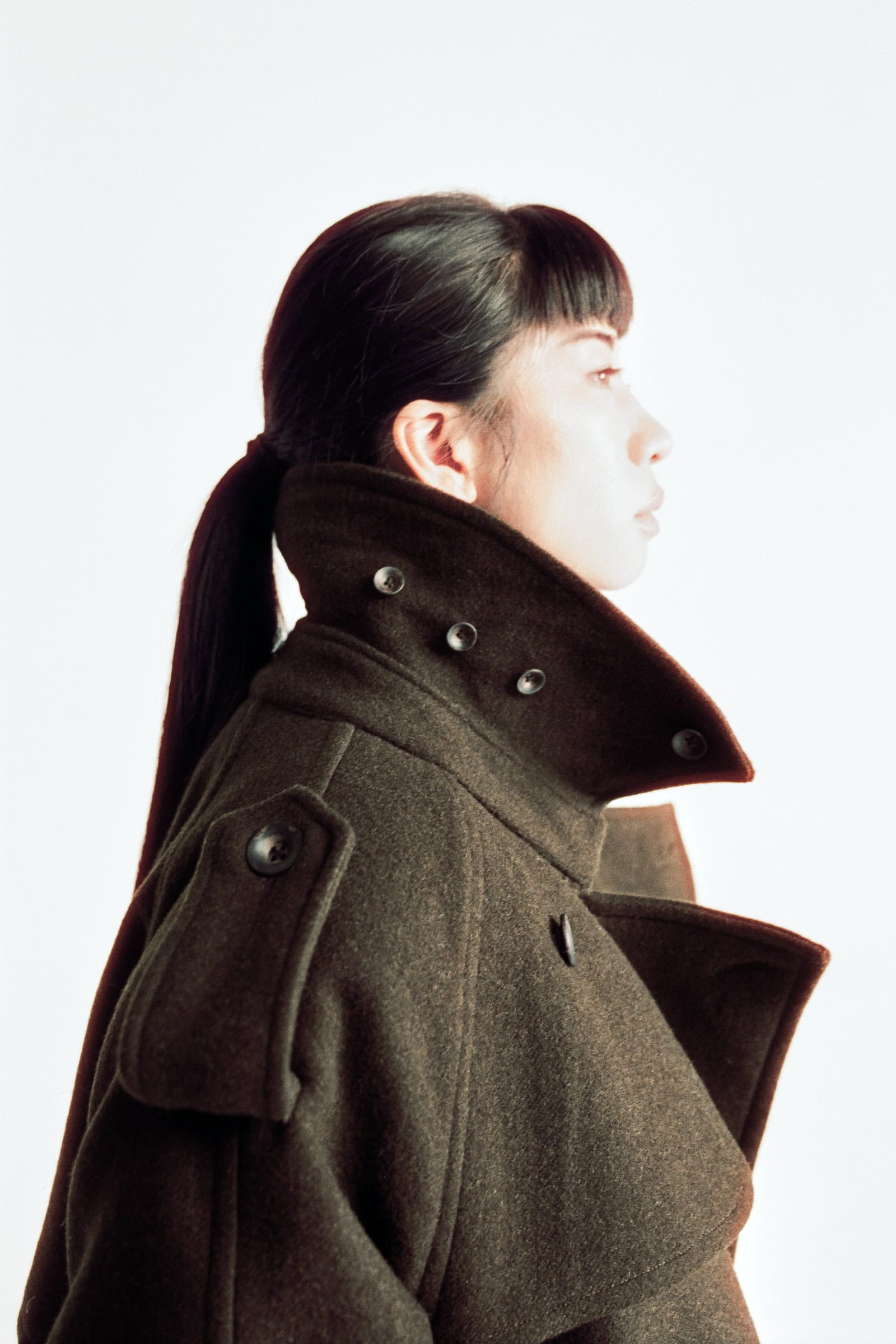
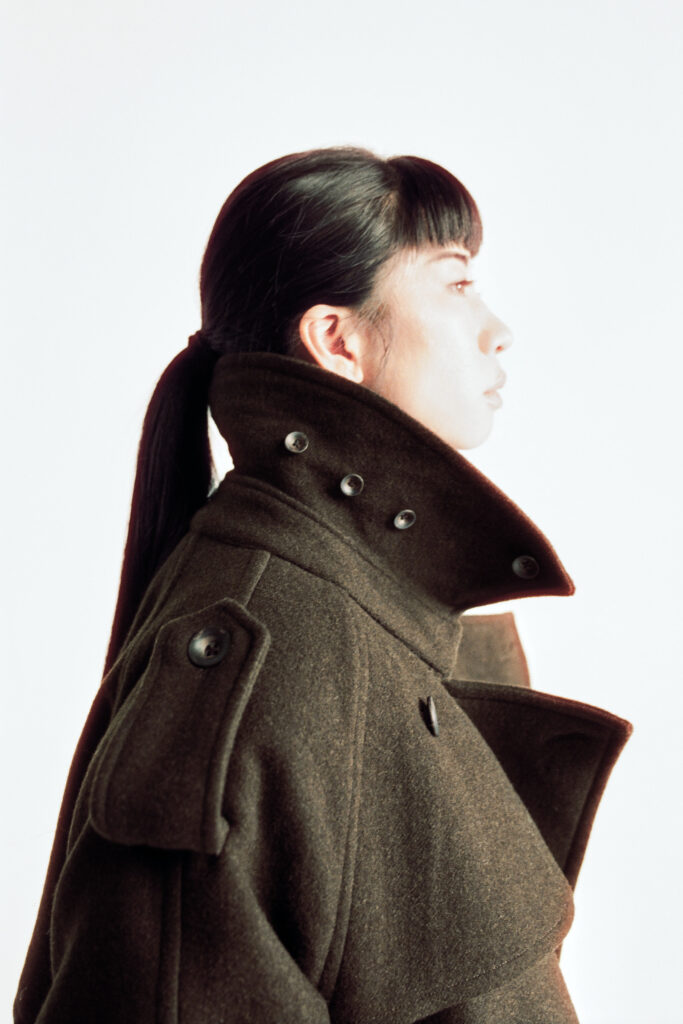
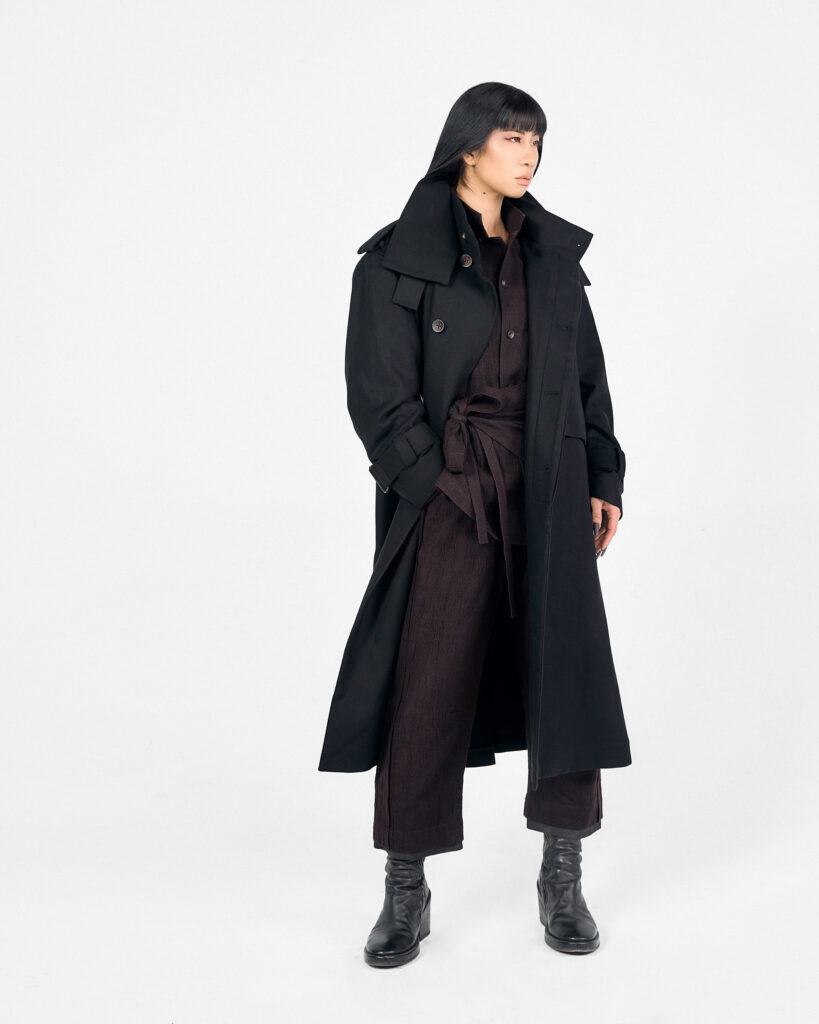
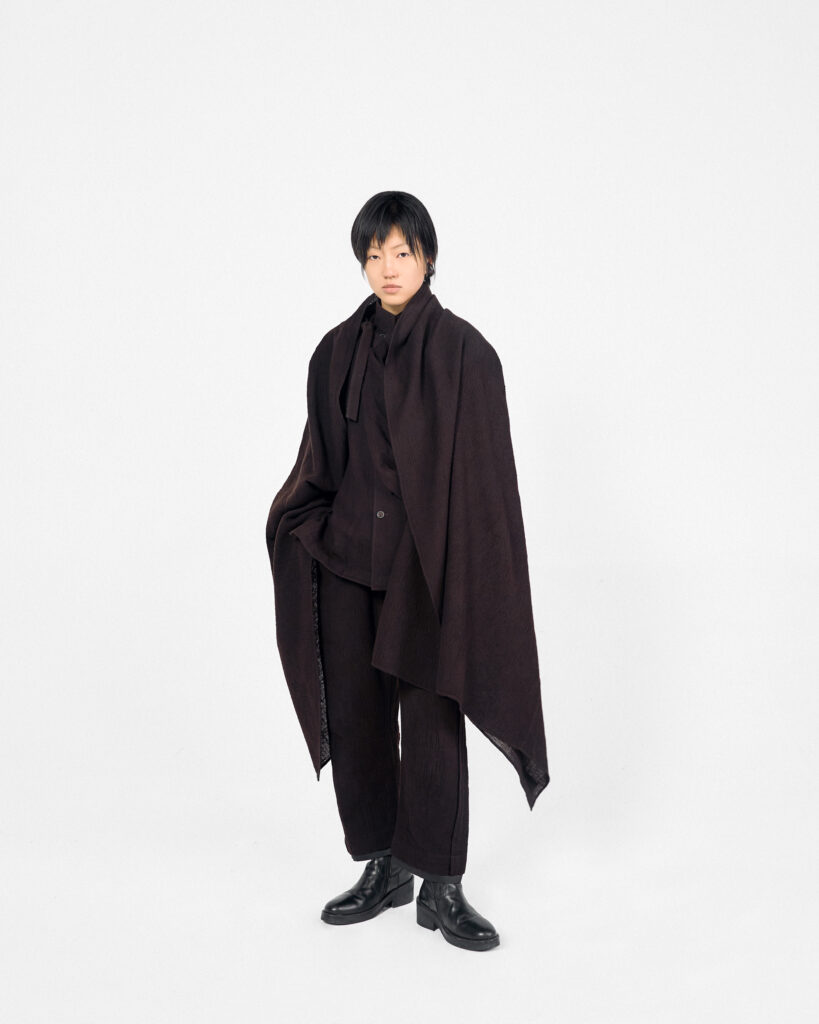
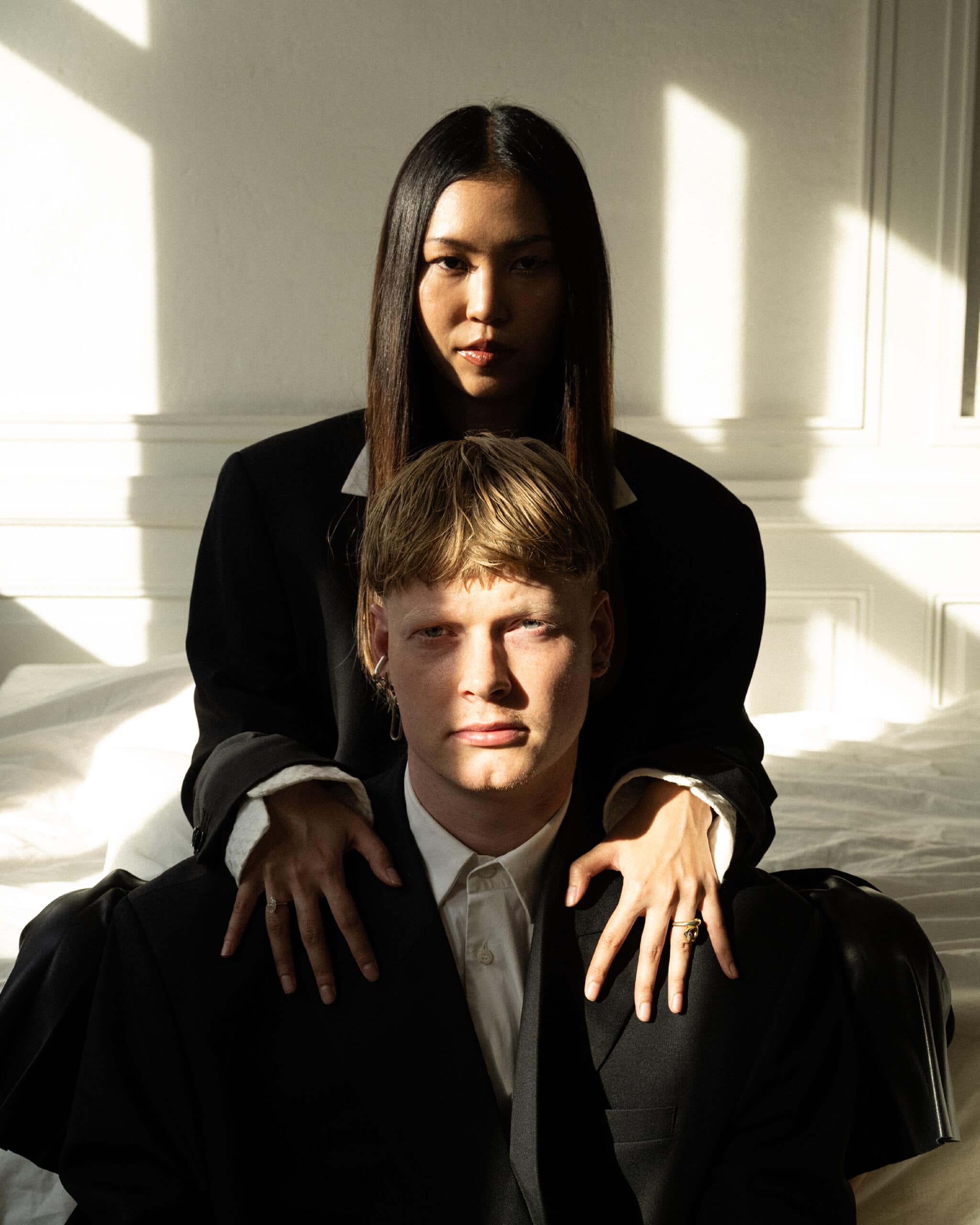
    Image courtesy of MITTAN

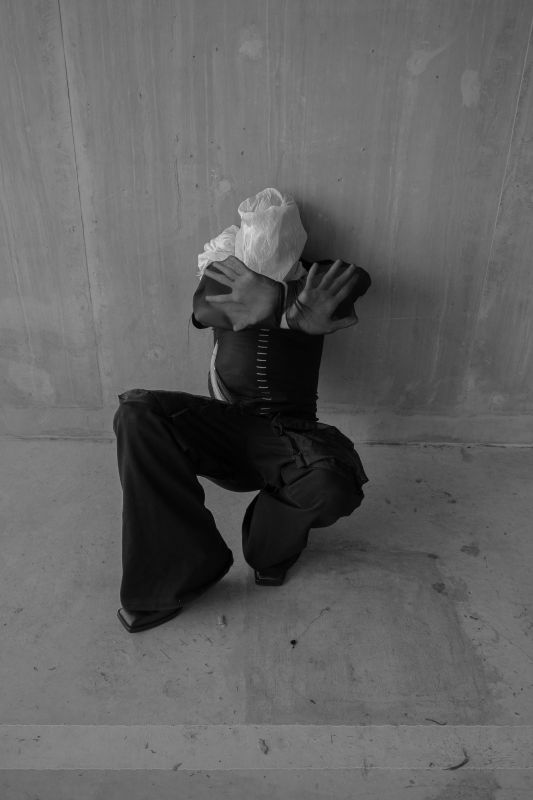
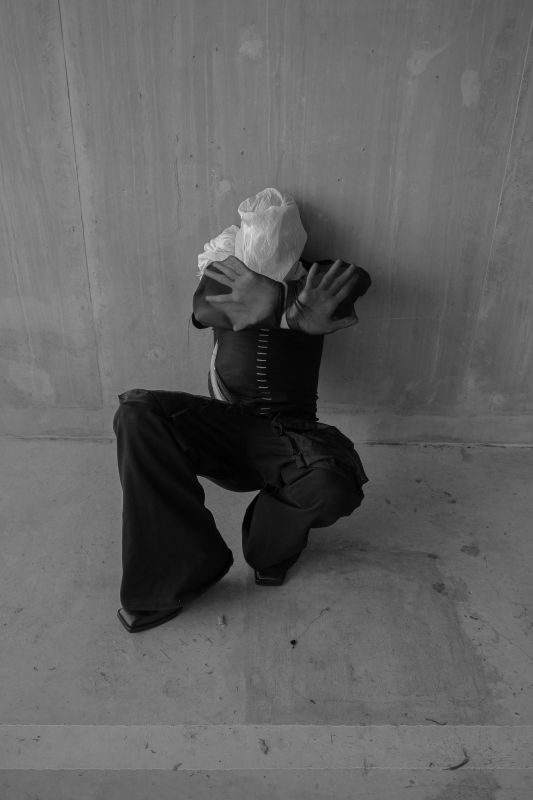
    Our first encounter with MITTAN happened after a deep-dive into the Japanese fashion industry. The brand’s array of interesting materials, craftsmanship and designs pulled us closer as deeper research was required to understand its ethos.

    The Japanese artisanal brand ‘MITTAN’ was founded by Bunka Fashion College graduate Takeshi Mitani in 2013. Mitani cites ‘It began with a sense that something was wrong’ as part of why MITTAN was created. Whilst we normally put emphasis on the designer, we have—on Mitani’s request—agreed to specifically focus on MITTAN in this interview.

    Its ground floor features the repair atelier, which repairs and re-dyes garments.
    The upstairs is dedicated to previously owned garments that have been repaired, re-dyed and washed to be ready for resale, alongside samples.

    We explore why the brand rarely uses the term ‘sustainability’ when describing its circular philosophy. We also cover its design approach, dyeing and re-dyeing, repairs and buy-backs, and its 2028 targets.

    Editor’s note: A few details in our questions, most notably around MITTAN’s dyeing and how makers are credited, turned out to be inaccurate. We’ve opted not to edit the questions to fit Mitani’s answers for full transparency and accountability.

    Your brand isn’t really a “fashion” brand but more a brand with a contemporary philosophy that ignores trends. When did you realise that this was the right call for you and that you had to create MITTAN?

    MITTAN did not begin with a grand ambition. It began with a sense that something was wrong.

    We started in Osaka in 2013, the year the Rana Plaza garment factory collapsed in Bangladesh and more than 1,100 people died. We were entering an industry built on short cycles of consumption and large amounts of waste. In Japan, for example, clothing prices fell to less than half their 1990 level by 2019, while the volume of clothing supplied doubled. Making clothes meant working inside that structure. We came to see the shrinking length of time a garment is worn as one of the causes. If that was the problem, that time had to be lengthened, and unless we worked on that, we saw no reason for us, as a brand, to make new clothes at all.

    The clothing industry has long produced more than people need. Keeping existing clothes, including second-hand garments, in circulation could come close to meeting demand on its own.

    So what is the point of making new clothes? We have asked that question since the beginning, and we still ask it. MITTAN is our way of continuing to look for an answer, rather than the result of having found one.

    MITTAN’s approach to garment making is very unique. Sustainability is often used as part of the marketing, but at MITTAN, it seems to be embedded at its core. Natural dyes, fibres, fabrics and material are all used. Based on this, sustainability and accountability seem to be part of your own identity, would you agree? And what does sustainability mean to you?

    We rarely use the word sustainability. We start from a simpler question: how can a garment stay in use? An organic or recycled label alone tells us little about how long a garment will be worn, and the material alone is not enough if the garment is soon thrown away.

    For us, keeping clothes in use comes before recycling. We choose things that will last, and materials whose changes with age add to their value rather than take it away. These choices shape the garment from the start.

    Accountability, to us, means accurately explaining how we work, including what we have not yet managed to do. That allows people to make an informed choice about the clothes they buy.

    What is MITTAN’s approach to design?

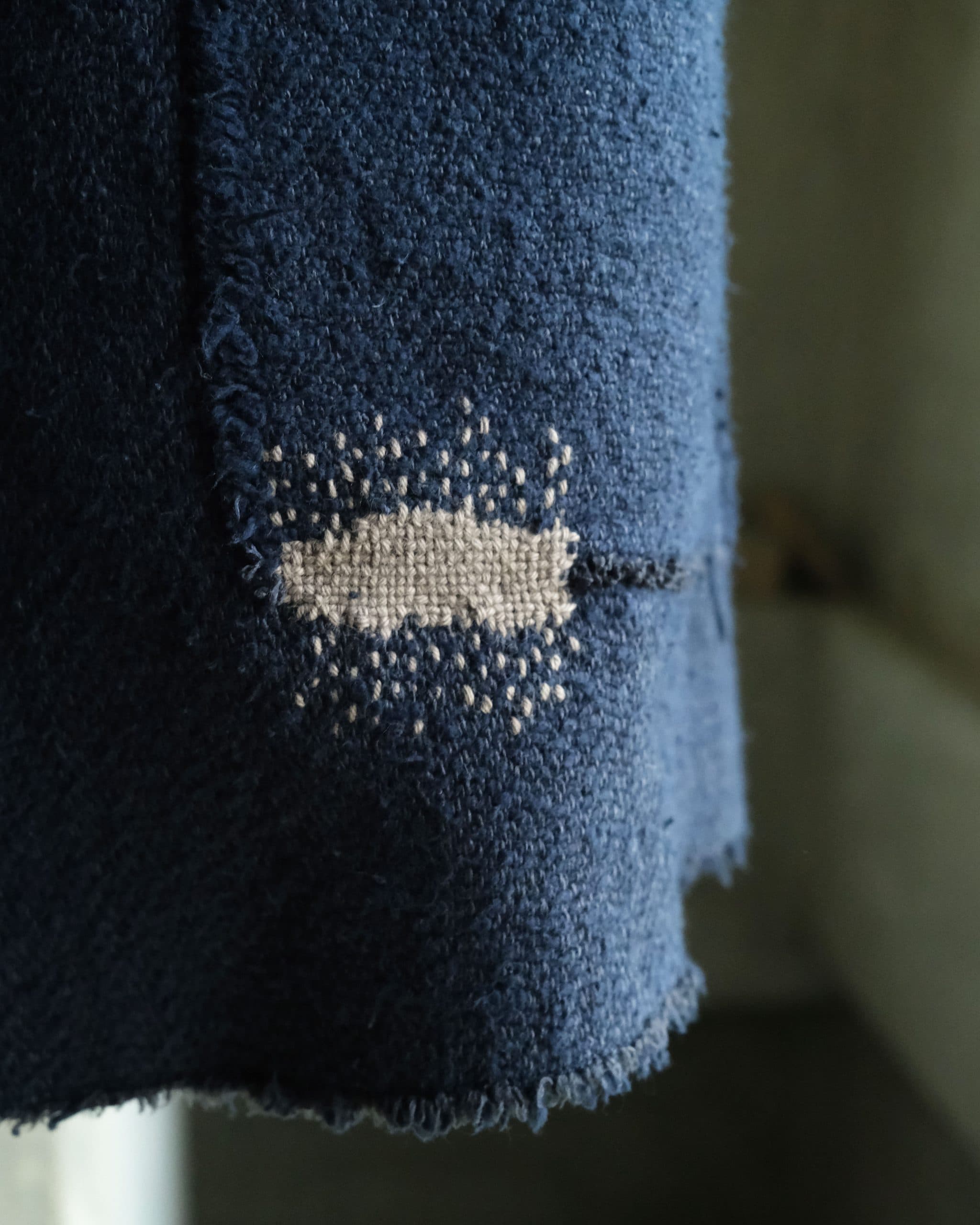
    Our design starts from how a garment will be worn and kept, rather than from how it looks in a particular season. From the start, we design with repair and re-dyeing in mind: natural fibres without synthetic blends, cotton sewing thread that takes the dye along with the cloth, and reinforcement where a garment comes under the most strain.

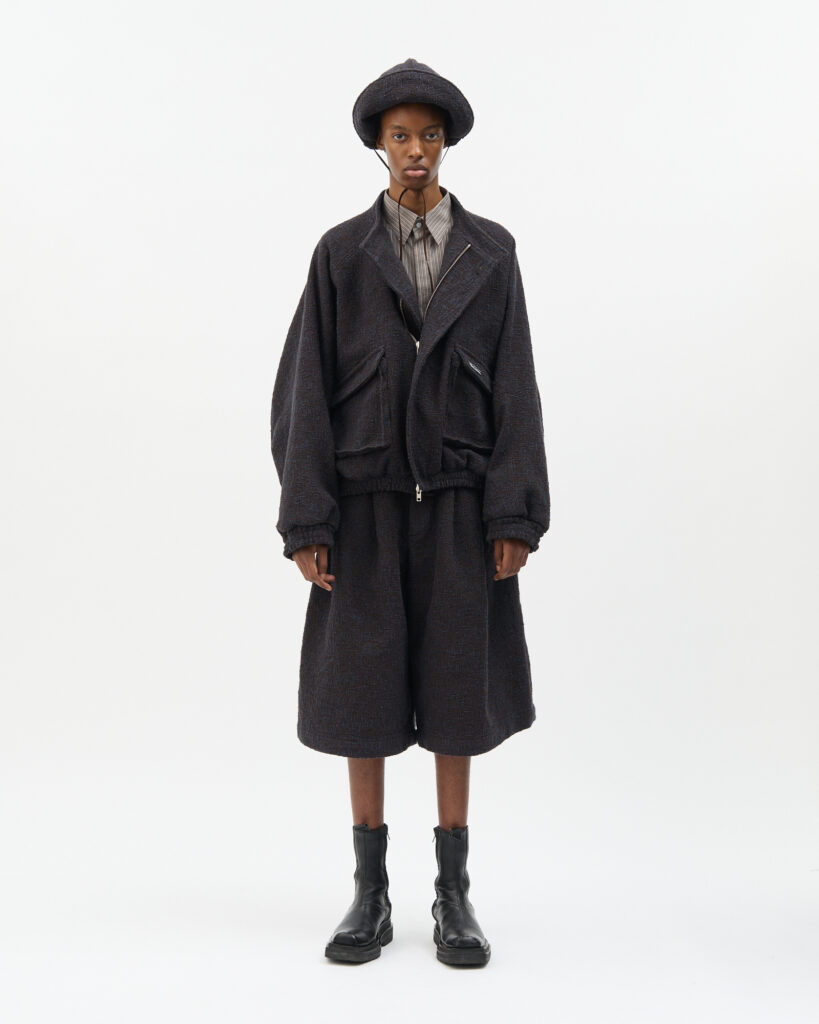
    Image courtesy of MITTAN

    You offer re-dyeing and repair services, which isn’t unique to the brand itself, but it allows for a circular economy and allows garments a second chance. Have you learnt something about yourself as a designer as your products make their way back to you for repair/re-dyeing?

    As you say, repair and re-dyeing are not unique to us. For us, though, they are not simply additional services. Keeping clothes in use has been central to our work since 2013. We make around 23,000 garments a year, and last year about 1,000 garments came back to us for repair or re-dyeing.

    The garments that come back show us how our designs hold up over time. After a few years of wear, you can see what goes first: cuffs stretch out, side seams split, knees wear thin. Our own sewing team carries out the repairs, so what they learn feeds into later designs.

    The garments that come back have also taught us that a garment is not finished when it is bought. When a faded garment is re-dyed in a colour its owner chooses, it often suits that person better than it did at first. We have come to see signs of wear as something that can add to a garment’s value.

    Following up on the previous question, how did this idea develop and are there aspects you’d like to improve and or implement into this philosophy?

    Repair and re-dyeing were part of the design from the start. Buy-back came from something we noticed later. Even when repair and re-dyeing are available, not everyone stays fond of a garment. Once it has worn through or faded, it tends to be worn less and less, until it is not worn at all, and at some point it may be thrown away. That is why, in 2021, we began buying our garments back.

    We buy back MITTAN garments in any condition. We pay 20% of their original retail price in Japan, excluding tax, in cash, then repair or re-dye them as needed and sell them again. The buy-back gives a worn garment value even when its owner no longer wants to wear it. We hope this gives people a reason to bring it back rather than throw it away.

    What we want to improve is access. At the moment, repair, re-dyeing and buy-back are only available to people who can send their garments to us in Japan. In the future, we want to be able to collect garments locally in the main regions where our clothes are sold. Whatever condition a garment is in, if we can collect it, we want to buy it back for cash. So please, never throw them away.

    On your site, you’ve stated a goal for 2028: to only use materials that meet a certain standard — one that accounts for environmental impact, labour conditions, and animal welfare. What kind of challenges do you expect to face along the way to reaching that goal?

    From our 2028 releases onwards, our aim is for at least 99% of the total weight of our production to consist of materials that meet our own standards. This percentage applies to our production as a whole, not to each garment.

    Our criteria vary by material. They specify organic cotton, wool from sheep that have not been mulesed, and, as a rule, spun silk made from upcycled raw material. We are still refining them. We have also exchanged written confirmations with all our sewing factories regarding compliance with Japan’s Labour Standards Act. These are written confirmations, not audits.

    It is 99% rather than 100% because we have not yet found suitable alternatives for some components: interlinings, stay tape, the stretch yarn in knitwear, zip tape, and sewing thread where strength is needed. These are still synthetic.

    Price is a challenge, of course. Changing materials raises costs, and there is a limit to how much of that can go into the retail price. But we will not give up the standards for the sake of price.

    The harder question is how far we can really see working conditions. Most of our production is in Japan, so we can visit the factories, but we cannot gather data from the factory floor ourselves, and nothing guarantees that everything is as it should be. We also know where our fabrics are woven and where our garments are sewn. But where sewing factories, dye houses and the farms where the fibres originate are overseas, tracing them with the same accuracy will take more time.

    We do want to reduce our impact. But we also think that reducing impact has to become part of a garment’s value, because things that have value are the things people keep.

    Image courtesy of MITTAN

    It is also worth mentioning that being sustainable and selling sustainable products in today’s age often come with a very high price point. But MITTAN’s price point indicates that sustainability should be more accessible, and give people the opportunity to experience real craftsmanship and better materials at a fair price. How do the financial aspects play a part and do you ever worry about making compromises?

    Thank you for what you said about our prices. Our clothes are by no means cheap, but we want to show that they can exist at as fair a price as possible.

    We have raised prices, but we do not want to rely on raising them again and again. We want people to choose our clothes because they share the thinking behind them. If prices rise too far, we risk relying on the brand’s image to justify them.

    We do not want to cut costs at the expense of our material standards or working conditions, by putting more pressure on factories or by moving production to countries where it is cheaper. Instead, we need to make our own work more efficient, and that is where we still have the most to improve. Selling directly is part of this. We have our own shop in Kyoto, and we will open a second one in Kanda, Tokyo, in early 2027. Direct sales change our cost structure and help us limit price increases without putting more pressure on the factories.

    Aside from your craftsmanship and transparency, you feature a glossary category on your website. It contains a lot of information regarding different techniques, dyes and materials that MITTAN implements. What made you implement a glossary in the first place? Has it changed how others approach your brand?

    A garment is made through the work and knowledge of many people. Between the raw fibre and the finished piece there is spinning, weaving, dyeing and sewing, and each step has its own terms and techniques. Without those words, we felt we could not really explain where a garment comes from.

    Each garment has a QR code on its swing tag. It links to information about its materials and, as far as we have been able to trace them, where they came from and where spinning, weaving, dyeing, finishing and sewing took place. The glossary explains the terms used in that information.

    We think part of the reason clothes are not looked after is that people no longer know what they are. Clothes used to be much closer to people, rooted in everyday life. Knowing what a garment is, we believe, is what leads people to value it.

    On your website, you show appreciation to the people who work on the garments by highlighting their names and linking their social media profiles. How important do you believe it is to showcase the often overlooked human aspects behind the clothes?

    Our product pages show where each stage of production took place, with links to the websites of mills and workshops involved in weaving, dyeing, sewing and other stages where they have one. We do not list individual makers’ names.

    We believe people are more likely to keep a garment when they know where and how it was made.

    It matters for the people we work with as well. We want to keep working with these production partners over time, and showing where the work takes place makes those relationships visible. We believe steady orders, season after season, help the production partners we work with more than a single large order.

    What does the production process look like for you and the people you work with? How closely do you work with the artisans who craft the garments? What does working with particular dyeing or sashiko techniques allow you to achieve that a more standard procedure doesn’t?

    Most of our production takes place in Japan, and there are very few agents or trading companies between us and the makers, so we mostly deal with them directly. We talk directly with the craftspeople who dye our finished garments, and the same goes for weaving. We visit the mills and workshops as often as we can, even when it takes time and money. Not everything can be solved at a desk. I have been visiting Bishu, the wool-weaving region, for close to twenty years.

    We use sashiko and dyeing for practical reasons as well as for how they look. Sashiko began as a way of reinforcing cloth, so we use it where garments come under the most strain. Some of the hand-stitched sashiko on our repaired and resold garments is done at a workshop in Tochigi where people with disabilities work.

    With dyeing, it also matters to us that a garment can be dyed again years later. We generally use cotton sewing thread because it takes the dye along with the cloth when a garment is re-dyed, so even the stitches of a repair take on the new colour. Where more strength is needed, such as for attaching buttons, we use thread with a synthetic core or polyester thread. Wool garments are another exception. They are rarely re-dyed, and what we can do for them is limited, but we try to accommodate them as far as we can.

    Photo: Ryo Suzuki 

    Your brand predominantly uses natural materials, dyes and fabrics. Some of the fabrics and materials you use are imported from China and India (amongst others), are you part of the fabric development or do you source them? What type of requirements do you impose for a fabric to be used?

    First, a small correction: our dyes are not all natural, and in fact synthetic dyes make up the larger share. Each dye has its own character. Some natural dyes age beautifully, while some synthetic dyes are more colourfast. We value both.

    We develop and order many of our fabrics ourselves, but how we do it varies a great deal. Sometimes we work it out together with a mill, sometimes a mill makes a proposal, and sometimes we do. Only a few are developed from the yarn up. Most of our weaving is done in Japanese textile regions such as Bishu for wool and Enshu for cotton and linen. Some raw materials and yarns come from abroad: hemp, ramie and spun silk, for example, come from China and are woven in Japan. In India, hand-spun, hand-woven cloth is made to our order in West Bengal and in Kutch.

    When choosing the main fabric for a garment, we look for three things: natural fibres without synthetic blends, a fabric that improves with wear, and, where possible, a fabric that can be re-dyed. We avoid synthetic blends because they make it much harder to turn the cloth back into fibre and spin it into yarn again at the end of its life. We are also working towards the material standards in our 2028 goal.

    If you develop your own textiles, could you guide us through some of the process? If not, do you have plans on developing your own textiles in the future?

    There are too many cases to describe a single process. What we do keep in mind is continuity. Rather than using a special finish for one season and moving on, we try to choose work that can carry on for as long as possible. Many designer brands, in Japan and elsewhere, use a particular technique for one season and do not use it again. We would rather keep coming back to the same techniques, season after season.

    Recently we have also begun sending cloth left over from cutting to a recycling mill, where it is turned back into fibre and spun again. The recycled fibre keeps the colour of the original cloth. Next, we want to try sorting the scraps by colour before sending them, so that we can get coloured yarn without dyeing it.

    Japan has a vast number of famous and long-lasting fashion designers, and there’s a new wave of designers and brands making their way into the West. What are your thoughts on the “new wave” of Japanese brands and designers? What do you think the rest of the world could learn from Japanese design that isn’t already known?

    To be honest, I do not feel MITTAN has much in common with Japanese fashion designers, so I am not really in a position to judge the new wave.

    What we look at is less fashion design than the way cloth used to be kept in use in Japan. Kimonos were cut from straight lengths of cloth with little waste. They could be taken apart, washed and sewn back together, and when they could no longer be worn, the cloth went on to other uses until it was used up. When cloth was precious, using and repairing it for as long as possible was common sense. Our garments are not all cut in the same way as kimono, but we also want to recover the spirit of that time, when cloth was precious.

    Written and edited by Jesper Green
  • Codex Interview: NAWARA

    Codex Interview: NAWARA

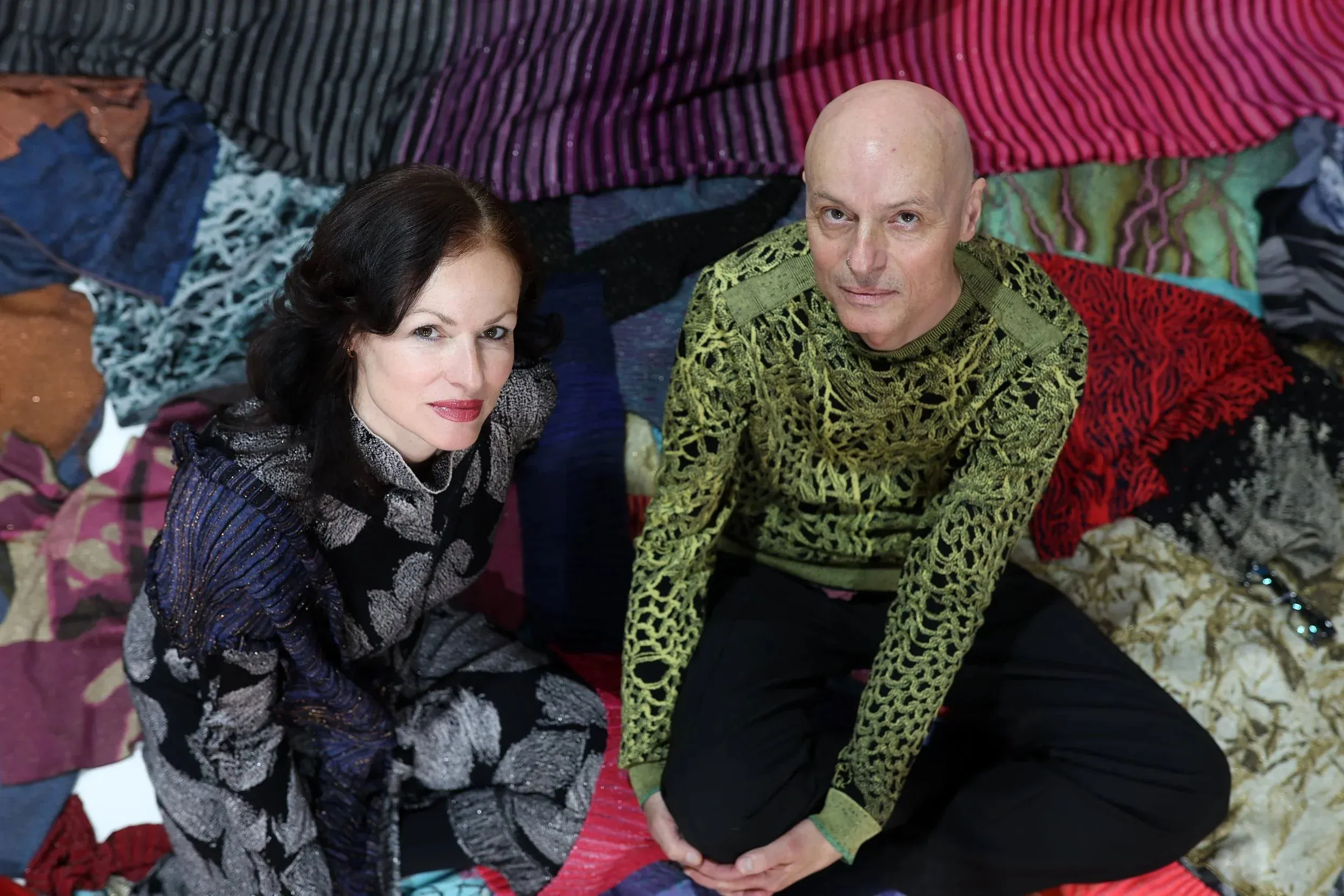
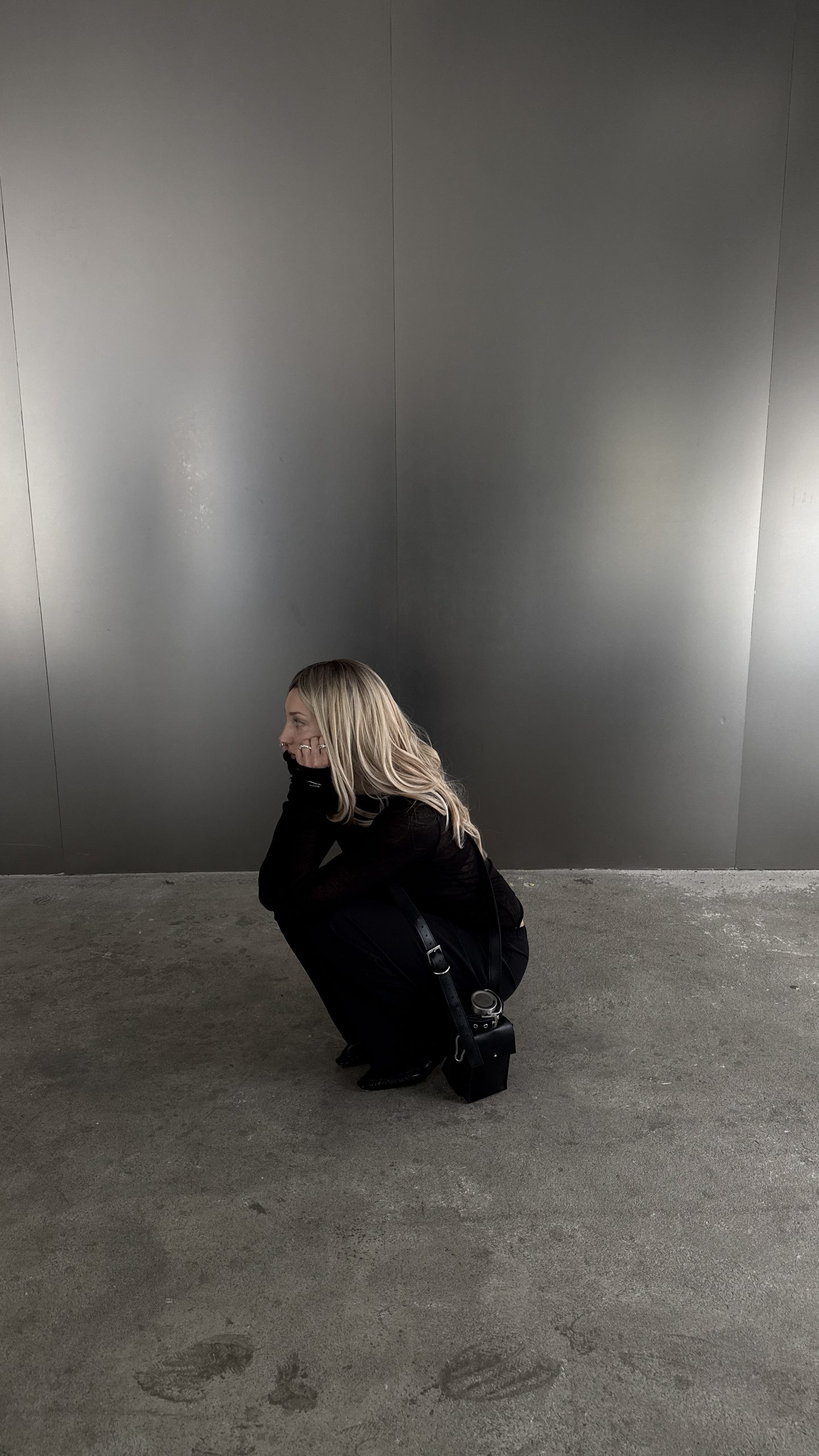
    Image courtesy of NAWARA

    We stumbled upon a team member of the Polish fashion label NAWARA. We discussed the ideologies of design and the history of the brand. It became apparent that we needed to sit down with the owner and founder of her namesake label, Lidia Nawara, to learn more about NAWARA.

    Since evolving from a personal project into a brand during the COVID-19 pandemic, the brand has kept itself busy by continuously dropping small batches of clothes, which, according to Lidia, all, in a way, belong to one big collection. NAWARA has its roots in brutalist design whilst also being associated with the techno and underground scene. Through the years, it has gained widespread recognition for its unique bags – predominantly its steel bag and its ID Projector bag – which have become synonymous with the brand through a marriage of technology and fashion.

    We hopped on a Zoom call to discuss the start of Lidia’s personal journey from fashion stylist to fashion designer – and now, as she manages her own brand with a growing team, aims to gain further traction and success in the industry.


    You are a retired stylist. What made you get into fashion design? Based on our research, you initially picked up sewing as a hobby – when did you realise you could make a career out of it? Was it the lack of preferred options for your clients, or was it something that you were always interested in doing?

    It was all by accident. When I was a teenager I had my own blog. When I turned 18, I applied for a job at a multi-brand store as a stylist. I didn’t have the education or the experience and no previous job experience as a stylist. I was only known in my city as a blogger and it helped me acquire the position I applied for. I liked dressing up, and I thought, why not? I decided to reach out to them and in the end, I managed to get the job. That was my first job in the fashion industry – I had previously done modelling work, which was the closest thing, I guess. I was 19 at the time and the job predominantly focused on their webshop, their stock, etc.

    My tenure there lasted for about three years, and I also decided to expand my personal hobbies, which included sewing. I was always free during the evenings, so the idea was simple: I’d learn how to sew clothes for myself. I took a sewing class where I met someone who had previously worked in patternmaking. The concept of patternmaking was foreign to me. I had obviously heard of designers, but not about patternmakers and it truly intrigued me. That made me swap sewing classes for patternmaking ones – I got obsessed with it and it made me pursue further knowledge through education. I studied patternmaking for two years. 

    I wanted to create clothes from scratch. Then you learn how to create patterns that are the foundations of every garment, designing pieces is much easier. I don’t think it’s necessary to study fashion design if you have studied patternmaking before. For me, studying patternmaking provided a solid technical foundation for design. It taught me how to translate an idea into a functional garment and understand its construction from the beginning. 

    After my studies, I worked as a bartender. It was a part-time job that paid my bills. I eventually started branding my own garments with my surname. Back then, it wasn’t a brand nor was it something that I had envisioned. I was simply making my own garments and attaching labels to them. It eventually led me to create an Instagram account to share my work, which later developed into me creating my own website where I’d upload some of the pieces for sale. It was only a passion project and nothing serious, but things started to ramp up, and I managed to sell more and more. This happened in 2020, right as COVID-19 started spreading which shut down most places and I didn’t have a job as the bar I worked at shut down. The pandemic motivated me to pursue fashion design more wholeheartedly due to the growing demand for my designs. I basically had no other options anyway, so in 2021 I decided to create my own brand – NAWARA.

    When did you realise that you could do this full-time? Was it during the pandemic?

    Funnily enough, I didn’t really come to that conclusion myself. Things were going well, so I lost track of time and wasn’t really aware of how well I was doing. I did everything myself, and just like that, I hired my first team member to help me out. Fun fact: I stopped sewing about two years ago to fully focus on managing the brand. I just don’t have the time to sew as there are so many other aspects of running a business. But I still indulge in patternmaking and I obviously have a hand in the designs too. As I mentioned before, this was first and foremost a passion project that I thoroughly enjoyed – it helped me pay my bills but it wasn’t a proper business before. It took us quite some time to reach the stage that we’re currently in.

    I don’t think people fully grasp how difficult it is to run a fashion brand. From the outside, it can look easy, but it certainly isn’t. As NAWARA became a self-sustaining business, my role naturally evolved. Today, I am both the CEO and artistic director of the brand. I continue to define its creative direction, but most of my daily work now involves the technical, organisational and business aspects of running the company. I spend more time working on Excel spreadsheets than designing, which is the less romantic but very real side of the industry. This allows me to focus on the company’s development while continuing to shape its creative direction together with the team

    How big is the NAWARA team?

    We’re five members, including me. We sometimes have to acquire help from outside when it comes to making very specific pieces that require larger machinery. The same applies to acquiring our fabrics. We source them here in Poland, but we need outside help to cut and measure. As part of our core values, we always ask for the spare fabric that would usually be discarded. We believe there’s always a possibility of using them–no matter how big or small–for various types of projects.

    What are some of the challenges and advantages of not having had a fashion design education –  but rather training in patternmaking – when it comes to designing your garments?

    I would say it has helped me, in a way. Because I am very realistic about my designs and having studied patternmaking, I know how to design pieces without compromising on the construction and durability. Since patternmaking allows me to fully grasp the concepts, the foundations and the basics of making garments, I can create functional clothes that are wearable.


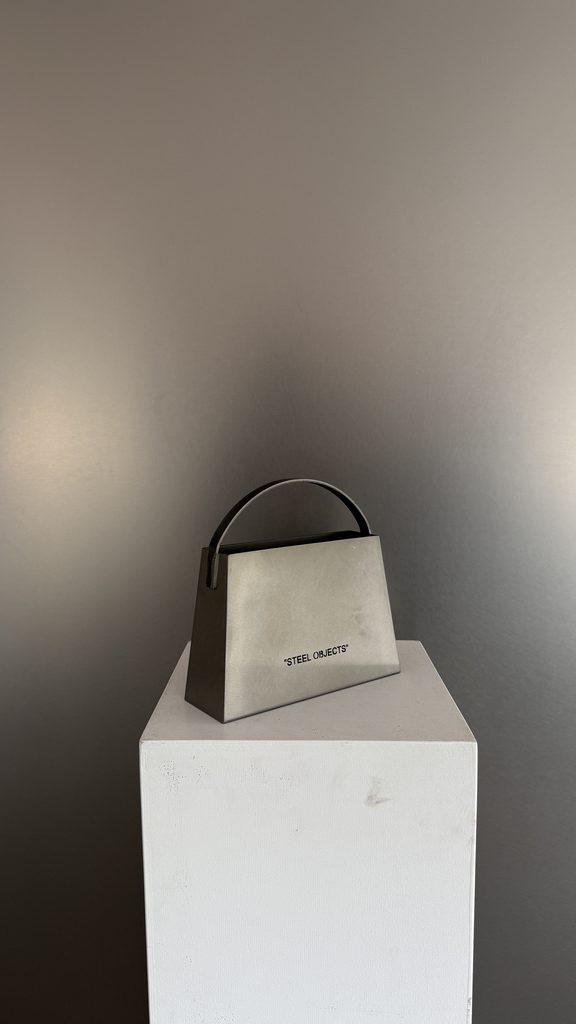
    You’ve incorporated steel material into your pieces, and you even made a statement steel bag. How did that come to fruition? Are there further ambitions to incorporate different types of materials to evolve your design language and your brand towards a more distinctive path? 

    I have never wanted to define NAWARA exclusively as a fashion brand. I see it more as an interdisciplinary design studio working at the intersection of fashion, technology, art and functional design. The philosophy and ideas behind the projects are as important to me as the products themselves. This is why we create not only clothing and accessories, but also objects such as the steel bag and, more recently, furniture combining leather and steel.

    Would you prefer to create more art pieces and furniture in the future?

    I am more into the idea of creating art pieces that you can use. My designs are always based on functionality rather than art forms per se. We also created a small product with a 3D printer made of steel – a very small steel bag which could fit in the palm of your hand. I wanted to try out the technology to see if it was possible to create something small and almost absurd.

    How did you come across the idea of creating products out of steel? 

    The story is quite simple. I was making my first structure for a fashion event. I decided to make a display case from steel to showcase my garments. When I had finished designing it, the steel-worker I met told me he could make anything from steel. I jokingly asked him if he could make a steel bag, and he said:

    “Yes, why not?”

    Two weeks later, I was designing a steel bag and sent him the design. He then made it exactly as we had envisioned.

    NAWARA steel bag. Image courtesy of NAWARA.

    Do you make a limited number of copies when it comes to hardware such as steel bags based on the manufacturer’s minimum order quantities? I am assuming you’re working with someone externally when it comes to your steel bags? 

    We do not have the equipment required to produce the steel bags in-house, so we work with an external specialist. The process requires specialised machinery and metalworking expertise, including laser-cutting, heating, forming and finishing the steel according to the design

    Is the steel bag a bestseller?

    Yes, it has been one of our most recognisable and successful products. We have also started creating garments featuring steel elements, which have been very well received. The steel bag remained our most popular product for a particularly long time. After all, it’s a statement piece. My brand wasn’t very well known before we launched the bag. After the launch, we had a lot of magazines get in touch with us to find out more about the product. It was a huge game changer for me and for the brand.

    When did you make the first iteration of the bag?
    By the end of 2021. I can’t pinpoint one exact founding date because NAWARA developed gradually and very organically. It did not begin with a complete business plan or a single defining moment. It started as a personal project and naturally evolved into a brand and a company over time. I know that at the time I was quite tired of working on the brand, since I wasn’t making a lot of money from it. The pandemic was at its peak. I essentially threw all my belief into the steel bag, knowing it’s a unique product. I told myself that by the end of the year, if I couldn’t make a living from this, I would quit and do something else. I was prepared and almost ready to work elsewhere, because I knew I could work as a patternmaker for an already established brand. After we released the steel bag, things really changed for us. It was a huge “boom” and we managed to catch a lot of attention.

    The idea of a steel bag is a very brutalist design choice. Brutalism is often considered very cold, harsh and raw. Would you say that it is something that drives you and plays a bigger part in your overall design language?

    I think the steel bag itself is a very unique and niche piece, even in Poland, where brutalist and post-war architecture remains a visible part of the urban landscape. There’s a very small number of people who appreciate this type of design. If they admire brutalist style, they will definitely be interested in the NAWARA brand, as it is something we incorporate in all our work.

    Is your clientele bigger in Poland or abroad?

    When I first started, I put more emphasis on selling and succeeding abroad. It’s quite cool that here in Poland, people truly appreciate things that are made or designed here. There’s a sense of pride that really ties us all together. I am glad that a lot of the younger generation appreciate handcrafted products or goods made locally rather than searching for new products abroad. 

    Could you tell us more about the Polish fashion industry? Do you have any designers that you look up to? 

    Have you heard of Magda Butrym? She is a major Polish designer known for high-fashion womenswear. I appreciate the way her work can reference Polish identity and traditional elements.I appreciate that young Polish people are very mindful of the clothes they wear, especially when they buy from Polish designers. They acknowledge that a person has designed and created the garments they wear – it’s not only about the name of the brand they wear, but also about the craftsmanship. I think there’s a shift, almost a trend, where it is now considered cool to know how to sew. Many young people are actively learning how to sew, which is a shift from the obsession with big designer brands. It’s almost a bit of a “flex” to wear garments from small and niche designers in Poland– I truly appreciate it. 

    What’s your fashion week like?

    It’s very small in comparison with other countries, of course. I think the Polish fashion community is very close-knit and family-like. We appreciate each other’s work, and respect one another as we know how difficult it can be to exist in this industry. Some of us have discussed creating a different kind of fashion week, but it would be a major undertaking requiring considerable time and effort. For an initiative of this scale to succeed, it would require long-term collaboration, strong organisational support and coordination across different parts of the Polish fashion industry.

    Your ID Projector bag is a very unique bag, from the hardware to the software. Could you walk us through the design choice of having a projector displaying the logo? What was the inspiration behind it?

    The reason I created it was – well – why not? As I’ve said before, I am very interested in technology and the possibilities it brings when combined with fashion. For me, it was all about mixing these worlds together, soI ended up making the bag.
    The projector is at the bottom of the bag and projects the NAWARA logo onto the ground – it looks very cool when you walk around with it. There’s a small pocket at the bottom where the battery is located, so it’s easy to replace. I’ve used mine for about three years now, though it hasn’t always been turned on, so I can’t give you the exact lifespan– but so far, so good. I actually don’t have it turned on as much as it feels a bit weird to showcase your surname all the time.

    Have you previously experimented with technology and fashion, or was the projector bag the first product featuring the two elements?

    The projector bag was our first product to incorporate an active electronic component directly into its design. I think I will continue to experiment with various pieces of technological hardware and fashion in the future. I’d like to add that it’s very difficult to work with technology. With the projector bag, the idea just came to me, and it all happened so fast, from idea to prototype to end product. I’ve done plenty of research over the past few years into fabrics made using more non-traditional methods. We have tested several alternatives to natural leather, including pineapple-based materials, but so far they have not met our standards for durability, tactile quality, functionality and long-term use. We remain open to incorporating alternative materials as the technology continues to develop. This is why we continue to use high-quality natural leather in selected products. In my view, a well-made product that can be used for many years is currently the most responsible choice in terms of durability, product lifespan and its impact on the planet. At the same time, we aim to use the material responsibly by preserving and repurposing production leftovers in future projects. Whenever we create garments or samples, we always try to use the leftover fabrics for future projects. We specifically try to bring that into our patternmaking. When we create a certain pattern, the leftover fabrics are usually cut in a way that makes them usable for a different type of pattern. 

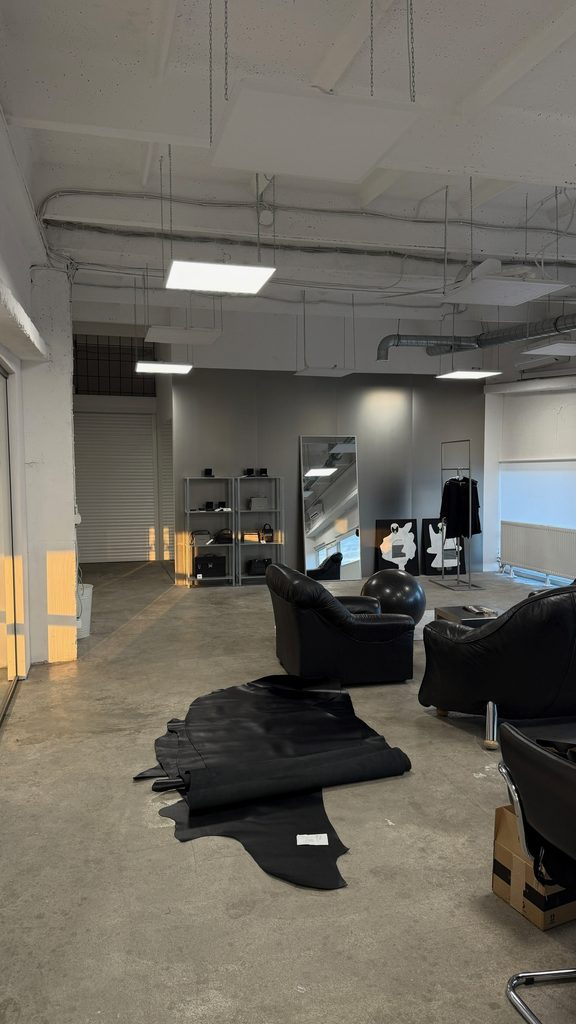
    The NAWARA studio. Images courtesy of NAWARA.

    You’re adhering to the Zero-Waste design strategy. What does sustainability mean to you, and what type of mission do you believe that your brand has embarked on in that regard?

    We aim to minimise waste from the earliest stages of patternmaking and production. There are times when we cannot eliminate waste in its entirety, therefore our approach is to preserve scraps and reintegrate “waste-material” into future projects. Our goal is to keep materials in circulation for as long as possible and to make the production cycle as closed as we realistically can. This approach is more demanding and not always cost-effective, but it remains an important part of the values we have set for the brand.

    You also made an upcycled collection. Could you tell us more about it? 

    We made everything in-house using deadstock fabrics from our own production. We had a lot of leather and cotton in-house from our bags and jumpers. I’ve worked on a new product using these materials to create a leather cushion with deadstock cotton as the filling. It is not for sale yet. The design process is quite simple. We cut the leather into square patterns, sewed it together, added a metal zipper before including the cotton scraps. This allows us to give a new function to small cotton scraps that could no longer be used in garments, while reducing the amount of production waste we discard. I think the design fits the brutalistic design language that we’re trying to convey with our brand.

    Do you feel that using dead-stock material like this is challenging or exciting?

    I think it’s more challenging, but it makes my job a little bit more meaningful. When I was younger, I really wanted to make an impact in the world because I think we, as humans, should always strive to make things that really matter. I know that the fashion industry has a huge impact on the environment, so for me it is very important to take responsibility and contribute in any way possible towards a more sustainable future.

    You obviously care about the environment, and you always try to stick to the values that you’ve personally set for yourself and the brand. Do you think that it sometimes compromises your ability to scale your business?

    Of course it does. We could grow more quickly, but doing so might require us to compromise on some of our production standards. Our aim is therefore to grow at a pace that allows us to remain consistent with our values. For me, it has never been about scaling or reaching a certain stature. I think people who share similar values will appreciate the fact that we remain true to ourselves. We do not claim to be perfectly sustainable. Fashion production always has an environmental impact, but we believe it is important to acknowledge that impact and continuously look for ways to reduce it. But we’d rather spend money on better quality materials, because longevity is sometimes an overlooked factor in making sustainable clothing. I always strive to ensure that we never compromise on anything and that we always provide what we consider the best in terms of quality.

    When it comes to designing your garments and new collections, are you the sole designer or do you involve other team members in the creative process?
    I am the head of design but I obviously let my sewing team have their creative ideas. My team will come to me with solutions or new ideas for various pieces. At first, it was a bit challenging to let my team bring their own design ideas, because I wanted to do everything by myself. In the past few years I’ve realised there are some things that I simply cannot do on my own. I hire people who are better than me in specific areas to ensure that we scale and improve in the right direction. My co-workers bring expertise in areas that complement my own, and giving them space to contribute has helped both me and the brand develop. I fully trust them, and we would not have been here without them. When you’re trying to manage everything (including scaling, marketing, etc.), trusting your team, giving them the reins and allowing them to take responsibility makes my job a little easier.

    A lot of the inspiration in your designs comes in the shape of music, specifically techno. Is that assessment correct?

    Yes, that is basically how it all started. I used to sew dungarees or uniforms for techno DJs. It was part of the brand identity. We would host parties and raves, and the DJs would wear garments designed by us. My own personal growth is reflected in the brand’s growth. Techno and underground culture remain important parts of our history, but they no longer define the full scope of the brand. As both I and NAWARA have evolved, our references and creative language have become broader. This development is reflected not only in our designs, but also in how we present the brand to the outside world

    Do you still host raves, parties and other events?

    Sometimes. When we opened up the studio last year, we held an event that also featured many people from the Polish music scene. These things are still part of the brand. but I don’t specifically want to be labelled as a “techno brand”. It’s not who I personally am. Therefore, we’ve made efforts to further evolve not only through design but also how we present ourselves to the outside world.

    The choice of materials (steel, synthetic materials, and the use of technology) feels quite futuristic, complemented by your design language, which focuses on durability and wearability. It feels like you’re bringing the future to us in the present. Would you agree?

    I think it’s a bit of a mix. I often observe the people who come to our studio, and they are very unique – from a stylistic point of view.
    I think the community around NAWARA gives people with unconventional tastes a safe space of recognition, acceptance and belonging. The fact that they can relate to our work and feel that our designs align with their own style is something I admire and appreciate.

    Our focus lies in creating statement pieces, and it feels like our community sees us as something that can sometimes act as a foundation or backbone of their outfits.

    Your primary focus has been on making capsule collections with drops. Have you thought about scaling up in the future and doing seasonal collections or hosting runway shows?
    Not really. Our goal is to create pieces that feel relevant today without being tied to a single season or short-lived trend. We want our clothes to be timeless and allow our customers to pair pieces from various capsule collections without it looking stylistically odd. Our clothes are meant to be worn for years, so I would almost say that our brand is only making one gigantic collection. We create two collections a year, but we do not see them as completely separate, seasonal stories. Instead, we treat them as chapters of one continuously evolving collection. The pieces are designed to work together across different releases and to be worn for many years. We spend the entire year making clothes, and once we’re pleased with the amount of different designs we have, we release them and call it a collection, before moving on to our next batch. We often conduct research on what we believe our customers need to complement our previous designs which helps a ton. I personally love wearing our own garments, so whenever I feel like something is missing – whether it’s a certain pair of trousers, a bag, or a jacket – I try to solve the issue by designing and creating that piece for our brand rather than searching for it online and purchasing it. 

    How important is it to you to produce garments and your products locally?
    Our roots and the core of our current production are in Poland, and supporting local expertise, craftsmanship and suppliers remains an important part of NAWARA. At the same time, we do not want to limit projects that require specialist technologies which may not currently be available through our local partners. In those cases, we are open to working with carefully selected manufacturers abroad, provided that they meet our standards for quality, working practices and responsible production.

    Do you source your fabrics locally or do you source them from abroad?

    We source most of our fabrics from Poland. We’ve gained a lot of knowledge and experience whilst also establishing great relationships with the people we source from. There are some very good local markets and the quality of the fabrics is very high. But as I mentioned before, there are some limits when it comes to more unique and advanced fabrics and materials. That limit can sometimes be quite frustrating when we want to try to design something more advanced, which is why we’ll look to source fabrics from abroad as well. Some of our leather collections featured Italian-made leather as it’s some – if not the best – quality leather in the world. But I also want to give huge praise to the more local, smaller production mills outside of the bigger towns; their leather and fabrics quality is amazing.

    Even if we decide to produce abroad, I think the local community will still benefit, as we’ll try to use local fabrics in as many of our designs as possible. I will always look for ways to support local businesses.

    What is the main source of inspiration for your designs?

    My own sensory experiences – I enjoy the satisfaction of comfortable fabrics. Therefore, I always incorporate a flawless execution and high quality,soft fabrics into my bold design language. Mixing comfort with design will always be part of my personal preference, and it’s something I refuse to compromise on. 

    Where do you think Polish fashion is heading, and what do you think the Polish fashion industry will be like in the next 5-10 years?

    We already have some big brands here. I thoroughly admire the brands that can intertwine the traditional aspects of Polish clothing with a modern take. I think that’s a strong core for our industry, and it might gain more traction abroad in the future. I think there are some aspects of traditional garments that I may incorporate into our garments in the future, not in terms of design but more so the comfort – and of course, the heaviness and industrial feel to make extremely durable clothes. 


    As we part ways with Lidia, the overall feeling is that NAWARA might gain cult-like status for die-hard fans of brutalism and technology-related garments or accessories. As the bridge between fashion and technology narrows, NAWARA will most likely be at the forefront for individuals keen to be part of this niche community.

    Written by Jesper Green

    Edited by Staš Čebular

  • Codex Interview: Kyle Ho

    Codex Interview: Kyle Ho

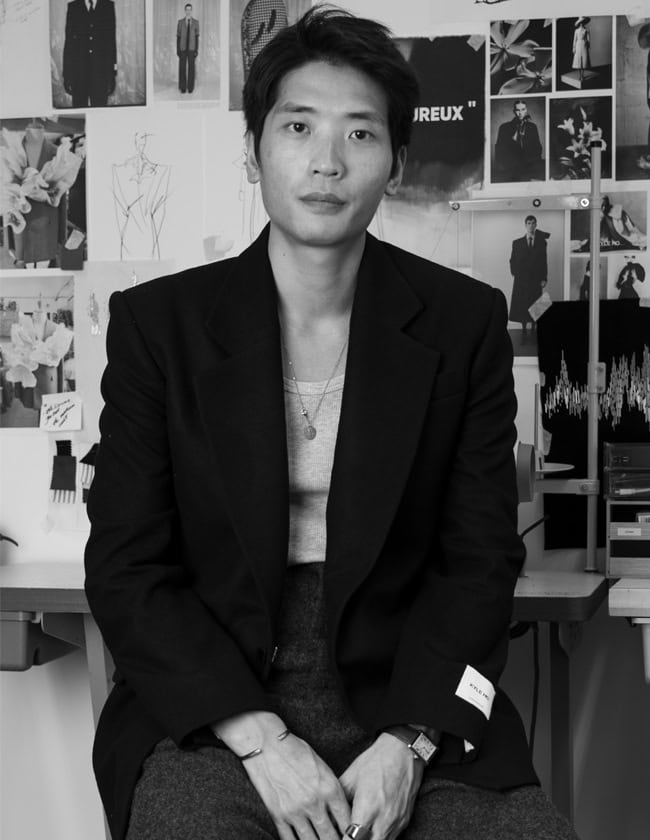
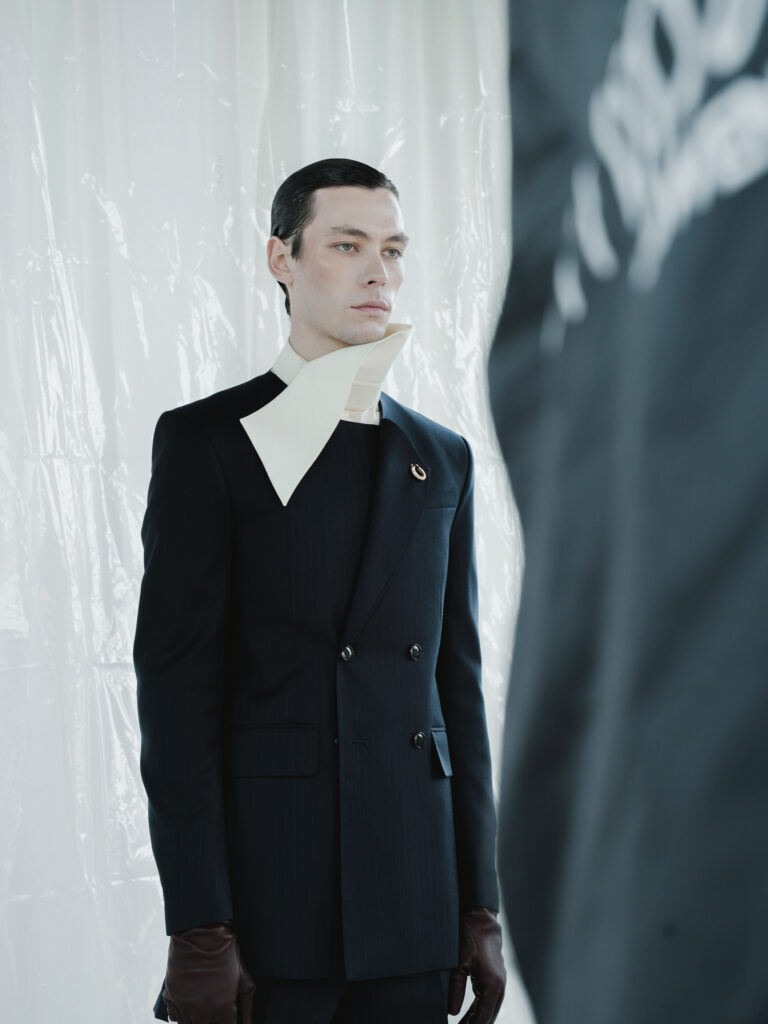
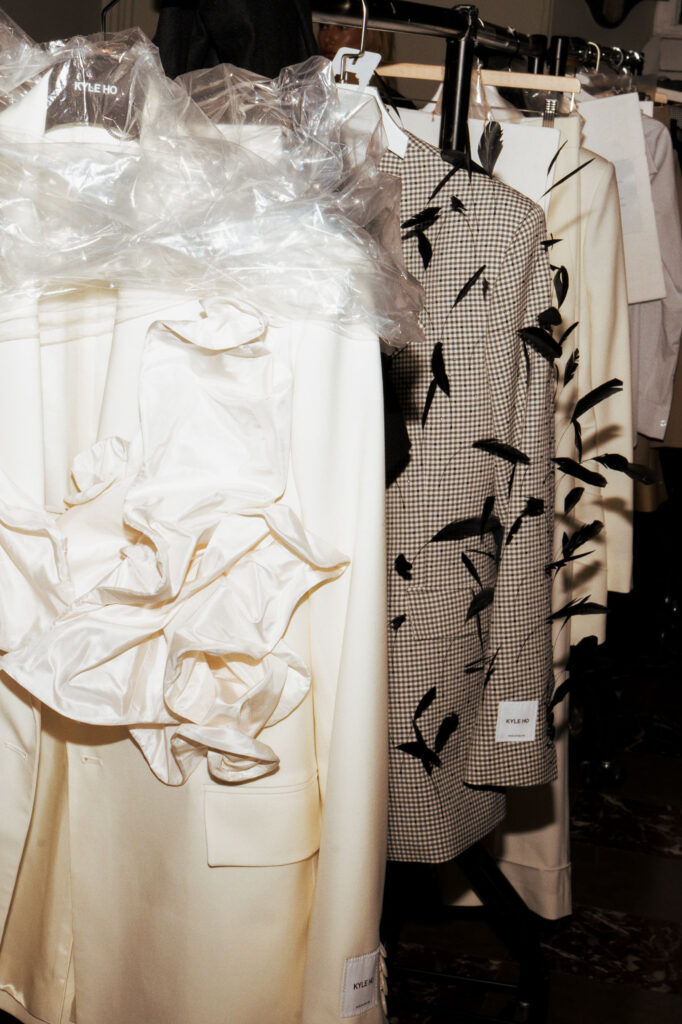
    Image courtesy of Kyle Ho.

    Our first introduction to British menswear designer Kyle Ho and his eponymous label was at the Zalando Visionary Awards at Nikolaj Kunsthal, an old church-turned-art-gallery, during Copenhagen Fashion Week in January 2026. Born in Hong Kong, where he resided until 2015, he moved to London to pursue his ever-growing interest in fashion.

    Ho’s design language draws inspiration from the clean cuts and high-end tailoring of Savile Row, whilst expressing a certain flamboyancy, redefining his own personal take on masculinity. Ho initially studied to become a fashion stylist before pivoting to fashion design to create his embodiment of the perfect look.
    He embarked upon himself to address the aforementioned flaws he saw in various garments, especially in suits, to produce something that would stand the test of time and be synonymous with Kyle Ho, and his brand – high-quality bespoke tailoring with a flair.

    We also explore his slightly more mysterious side as he takes us deep into the origin of his two latest collections, and the story behind it, whilst we also gain a slight glimpse of what is to come in the future; such as his ready-to-wear plans.

    Please, tell us about yourself.

    I was born and raised in Hong Kong and moved to London about 12 years ago,  in 2015, where I did my BA in fashion styling and production. At the time, I wasn’t really fashion stylist material. The image that I want to create, well, I couldn’t really find that anywhere. So I started making garments myself, and during the final year of my studies, I decided to make a mini collection because I knew for a fact that I wanted to pursue an MA in menswear. I used that project as my portfolio to apply for the MA at LCF, London College of Fashion. At the time, people questioned me because I didn’t have the practical skills, seeing as I hadn’t studied fashion design before. The course leader said that he was a bit concerned about my lack of previous experience. But I told him: “If you take me on board, you will never regret it”. They only picked 20 people for the MA. In a way, I managed to convince myself that being brave, blunt, or straightforward might get me somewhere.

    When was the mini collection created?

    I made it in 2018; it was just part of my final major project for my BA.

    You’re self-taught when it comes to sewing; how did you pick up the interest, and what made you embark on your journey into fashion design?

    I watched a lot of YouTube videos on how to sew; that’s one thing. But how did I become more advanced? I did a few apprenticeships in Savile Row. I started working with a machinist, who taught me all the little tricks to make things very precise and accurate. In honing my patternmaking skills whilst studying for my MA, there was this very good patternmaker from Korea whom I’d constantly ask: “How the hell do I do this?” and so on.

    That made me realise that this is it; I would really like to pursue this. From sketches to the final product, you’re talking about spending hours just to create the perfect silhouette. That is how I started my journey, and to this day, I still watch YouTube tutorials and videos on how to sew.

    The fact that you still watch YouTube videos on sewing actually makes sense, as it is one of those skills that is simple to learn but takes decades to perfect.

    Yes, however, there’s a downside to this. When you set a certain standard due to your own craftsmanship level, it can be difficult to let others chime in because there’s a possibility of having to make certain compromises.

    When you push yourself to learn something too advanced to reach a certain level, you create a habit of no longer wanting to compromise on quality. But from a business perspective, it would eventually bring it down. Let’s say you were to work with a factory and you’d like to upscale; however, they couldn’t uphold the standards you’ve set, and you obviously don’t want to compromise on quality. Eventually, you will have to spend even more money to find a better factory you can work with. Being a very advanced sewer is good for my own sake; however, for my business, it makes me too picky with the quality of our product.

    Do you craft and manufacture all the garments in-house?

    Yes, right now we’ve got four interns that I work with. But I mainly make the clothes myself because it is really challenging for me to outsource.

    Understandably, because the brand is yours, letting go of control can sometimes be quite difficult.

    People will know me for my craftsmanship, and that is the one thing that I will never compromise on. But in the long run, I’ll need to make some compromises. It’s important to find a balance between letting go of control and trusting the manufacturers. At this stage, I don’t want to let go just yet. It’ll happen soon, but not for the moment.

    Do you have a specific forecast or an idea of when you think it will happen?

    Yes, we have a yearly team meeting, and we decided to search for stockists this year. Because we’re very bespoke-focused at the moment, our business model will adapt slightly to focus on ready-to-wear garments. This will be the year to test the waters. 

    That makes sense. We’ve seen that you currently have a small batch of ready-to-wear products on your website.

    Yes, exactly. When you try to scale up and have to work with stockists, you need to produce a lot more. That is our plan for now, and it’ll be in the works for the next six months.

    Will all of the ready-to-wear garments be manufactured in the UK?

    Yes, always. We’re a British fashion brand, so we have to adhere to that and make all our clothes here.

    Will you predominantly focus on your wholesale operations to remain in the UK, or are you more inclined to expand internationally, for example, to Hong Kong?

    I would like to expand internationally, not only in the UK. I don’t think we’ll look into expanding into the US market yet, however.

    Many skilled tailors, such as Sam Melwani and Hari Harilela, came from Hong Kong, and many of the famous shops are still active there, so there is a strong sense of sartorial culture, especially in the post-war period. How did growing up in Hong Kong affect your personal style and taste as well as your outlook on clothes and fashion in general, especially since you predominantly focus on bespoke tailoring?

    Growing up in Hong Kong didn’t really change anything for me. Back in the day, I wasn’t even aware of fashion in general. I come from a traditional Hong Kong family – they expected me to pursue a career in law or medicine, which is very traditional.
    When I attended high school, I actually studied chemistry and economics. I also dabbled in a bit of accounting. This was obviously not something that I wanted to do. Growing up in Hong Kong, I didn’t know much about fashion until I moved to London. That’s when I started to sense the concept of fashion, and that is how I started to get into it. What interested me was very niche in terms of the bespoke or sartorial style. How I started getting into that was because in Hong Kong and even in London, I’ve seen a lot of people wear suits. But the suits wouldn’t fit the wearer most of the time. Then, I walked past Savile Row and admired the way the suits were made there. It gave me a clearer indication of what a good suit was. That is why, when I did my final project for my MA, that collection, I started to look more into human proportions and silhouettes. I asked myself how I could change the male proportions through patternmaking. That is how my journey started. A bad suit will make people look shorter, so I conducted research into Leonardo da Vinci, the Victorian era and finally, the golden ratio. That is how I started tapping into the way of making an anatomically correct suit – where the wearer and the suit become one. That is the concept behind the collection from my finals.

    You’ve studied in both Hong Kong and London; what were the biggest differences between those experiences? And there is a connection between Savile Row in the shared history of creating British-style menswear, so what are your thoughts on that history, if any?

    The biggest difference between Hong Kong and the UK is the educational system. In Hong Kong, you will learn what the tutor teaches. But in London, you learn on your own, which in turn allows you to be more independent. In London, when it comes to studying, there’s a shift in cultural perspective. This “independent studying” is the biggest difference between the two.

    In the UK, they really push you to experiment; you can do nothing wrong as long as you try. Use your hands, get your hands dirty – that’s the mentality here. A lot of the new techniques, or new knowledge in general, will often come from just experimenting.

    It’s a very common theme that in most Asian countries, you will have to do things by the book.

    Yes, and I prefer going against the book. 

    We’ve dug deep into your story; can you tell us about your internship at St. Dupont, Kay Kwok design studio and Handkerchief? How do you think those early apprenticeships shaped you as a designer? Tell us about your accolades between 2012 and 2015 from Hong Kong and London.

    After I graduated from high school, a friend of mine reached out to me about Kay Kwok, which is based in Hong Kong. For a short period of time, I helped him out with basic prints. He graduated from LCF as well; I remember him telling me that I shouldn’t go to LFC until I was rich. He mentioned how much he had spent to study there, which, at the time, scared me quite a bit. The general experience was doing small prints and some administrative work on the side.

    Regarding my time at Handkerchief, they are a conceptual womenswear brand based in Hong Kong, which is very different from what I personally work with. The owner, Amy Cheung, is a very famous artist from Hong Kong. She does not have a fashion background; she’s a fine art artist. Her work is very interesting; everything is based on the concept, but we helped her make it into garments. I worked with Handkerchief for a year, during which I met my manager, who has now become my best friend. After my time there, I had no clue about the technical or practical side of garment making, but because of my art background, I managed to secure my position there, and they taught me how to make my first patterns.

    I actually won the VTC Fashion Show in 2012, and the look was based on Black Swan. At the time, I didn’t know what patterns or patternmaking was, so I applied the fabrics to the mannequin and just worked on the garment from there. Regarding the Whistles Window Display competition, that was actually a fashion styling project. It was a group project, and whoever won the competition would get to showcase their project in a window display. When I partook in the Hankie Bank exhibition, I was an assistant designer. As I mentioned before, Amy Cheung, who was my boss during my time at Handkerchief, did many exhibitions in New York, London, and Hong Kong. She had built a concept called “Hankie Bank” – she had built a monster, which was a metaphor of how it’s essentially inhaling people’s money. 

    How did that affect you as a creative?

    Amy is very philosophical and psychology-oriented; she made me think outside the box. Being a designer and artist is very different, because one profession is very commercial and the other isn’t.

    You’ve mentioned classical music plays a big role in your inspiration. Which classical composers are your favourites? And with your take on masculinity through clothing, would you say that the 18th and 19th century are your key inspirational time-periods?

    I wouldn’t say my inspiration comes from a very specific time period; it’s more about how I interpret clothes during different eras. I sometimes get inspired by, let’s say, an even earlier era, like the 1600s, but of course, also the 1700s and the 1800s. It depends on the way I want to develop the collections. Bringing you back to the initial question, I am quite sentimental for the Baroque era and the music from that time period. I enjoy music composed in the darker eras, as I find the music of both the Baroque and the Renaissance compelling. It really resonates with me. It’s just something that I cannot put my finger on; I find it quite fascinating. Obviously, I cannot travel back in time, but through music from different time periods, you can sort of envision and almost feel present, and experience what it was to be there during those years. That mood I incorporate into my collections.

    How do you conduct your research? There appear to be specific inspirational elements in your latest collection that look like your personal take on, for example, ruff collars.

    To give you some context, I was a lecturer at LCF for two years. A lot of my work is based on academic research and articles. I draw an academic context, which I then translate into a visual language to influence my design. From the academic articles I read, there are particular highlights I pay attention to. That’s the very first stage of my research. So to summarise, I read and study these articles, and that’s how I begin my design process.

    One of your personal mantras is: “You’ve got to push yourself as far as possible, and you don’t stop until you reach the goal.” It feels reminiscent of the attitude many professional athletes express towards their goals, motivating themselves and others. Although the average person may not speak of a designer as such, a designer often shoulders a daunting amount of work. Do you feel that to achieve the highest level of design, there must be an overcoming of difficulties, both internally and externally? How do you push yourself to reach the level that you aspire to, not only in terms of your brand and your designs, but also as a person, in one of the toughest and most competitive industries in the world?

    If I don’t push myself, it means that I am not really evolving. I actually read a lot of books to help motivate and inspire myself. I also think that if you don’t push yourself, you will never get to experience the universe’s potential reward for your hard work and dedication. Whether it’s a brand or a person, you should never stop trying, as stagnation will eventually catch up to you and you will never truly become who you are meant to be. If you compare the first-ever collection I made to the most recent one, you can tell the difference in terms of craftsmanship and design. That is the result of hard work and many years of me trying to be better every day. I also believe that, if you’re not emotionally invested in your work, it will automatically stagnate. You need to feel a certain passion for something because if you don’t, your work will remain just that: work.

    Could you tell us about some of the books that inspire or motivate you in life?
    I tend to read a lot of books with emotional or psychological topics. Authors that I’ve been reading lately are Carl Jung, Sigmund Freud, and Michel Foucault. I usually read their work.

    These authors cover a lot of psychological and emotional topics. Would you say these are some of your key inspirations for your work?

    I think they influence me a lot when I write the book about the narrative of my collections, or the story of Louis, to be specific. They are big inspirations for my collections, in that sense. But I wouldn’t say they were as influential in earlier stages of my career or life in general. 

    Your chapter one collection, “Love, Louis”, explores egocentrism and narcissism, and the second chapter, “Goodbye, Martin”, digs deep into the complex experiences of love, such as whether to hold onto someone or to let go. Your work appears to explore a palette of human emotions through design, demonstrating how emotions can be invoked through storytelling and design. What made you pursue this type of storytelling, and what message would you like to convey through it? What does exploring human emotions mean to you?

    My process for starting chapters one, two, and three came through writing my own fiction. Every collection that I’ve made is based on the fictional story that I’ve created. The narrative isn’t based on a personal experience per se, but there are some minor elements that I’ve experienced that I’ve incorporated into the story. 
    The narrative is still ongoing, so I am not sure what the ending will be. When I presented my first chapter, “Love, Louis”, people found it quite fascinating.  The story is based on Louis, an antique collector and is set in the 1950s in Saint-Germain, Paris, so it’s a very specific location. I am not sure why I chose this specific area, but I love the culture there because it transports you back in time. I am going to give you more context regarding the story. Louis lives a double life – he is Louis the antique collector during the day, but a different person at night. As an observer, you’re not quite sure what Louis truly is. Chapter one was very Louis-focused; through the design, I explained some details regarding Louis. For more context, he’s obviously French, he works with antique goods, and he’s heavily sex-driven at night and is very primal. He loves partaking in different sexual acts with different people. The story is quite dark, so he’s essentially a predator looking for prey at night, hunting for men to sleep with. Due to his strong sexual nature, I’d refer to him as a “nightwalker”.

    Chapter two: “Goodbye, Martin”, tells us the story of how Louis met someone that he fell in love with, which was against his own nature. Because the previous encounters Louis had with other men had all been very casual, he sees men almost like objects rather than people. There are no emotional attachments involved at all. Before he knew it, he met Martin. Set during a time period where same-sex marriage and relationships were deemed illegal, Louis still decided to propose to Martin, who, in the end, says no. Louis suffers from some type of obsessive disorder, almost like OCD. Louis later asks Martin why he turned down his proposal, to which he tells Louis, “I know what and who you are”. Louis later decides to take Martin’s life and preserves his remains. That is why I decided to name chapter two: “Goodbye, Martin”. The collection was presented at St. Marylebone Parish Church; the idea is that Louis attends his and Martin’s wedding, whilst simultaneously attending Martin’s funeral. 

    How many chapters are you planning to write? Is this something that you’d like to turn into a book which you can later publish?

    At the moment, I don’t know. My thoughts and feelings from certain periods of time are translated into the story I am writing, which serves as inspiration for my collections.

    Have you recently, based on the story of chapter two, let go of someone close to you?
    No. My head is just spinning, and is filled with different ideas. I’ve found solace and comfort in writing because otherwise, I will just forget. Most of what I write actually comes from my dreams when I am asleep. I write these stories with a heavily psychological perspective. Regarding the number of chapters, I can’t actually tell you how many I will write, but chapter three comes out this September.

    Will the collection be presented in London?

    Yes, we haven’t gone into much detail regarding it yet. The collection will be our debut runway, so I have six months to prepare. Chapter three will be very exciting. I don’t think anyone will be expecting what we have in store for the collection.

    Being able to write your own story is already extremely difficult, but doing so and also designing garments and creating collections that adhere to it is even harder. In a way, you’ve created a narrative which might be slightly restrictive in terms of your design language for these collections. On the other hand, that possible restriction might help you evolve as a designer, as you will have to be more creative in your process for cohesiveness. 

    Yes, before I presented chapter two, I remember telling people it was in the works. I was told it was “fucking genius” – because every season feels like people were watching a series on Netflix. The entire narrative is very long, so if you want to know what is to happen next, you will have to watch the shows. People are very curious about the story behind Louis, who he is, and how the next season is going to unfold.

    Adding human names to the collection title is a great way to create excitement, because it’ll automatically make for a sense of affection or attachment to the fictional characters.

    I am sending you an image from the latest show invitation. The fingerprint that you can see on the invitation is actually Louis’. Most of the time, these details are overlooked, but if you have a keen eye, you can see the fingerprint in the wax seal on the envelope. The idea is for Louis to leave his signature, or to “seal the deal”, adding Martin to his personal collection. The first collection took place in the 1950s, whereas part two takes place in the 1960s. I have a lot to say regarding that collection, and it feels like I can finally tell the world about the story I am trying to convey. 

    Obviously, same-sex relationships were deemed illegal back in the day, and yet Louis proposed to Martin. Has that part of the story been told, or is it something that we’ll discover in future collections?

    In the book, I decided to write about why Louis had the courage to do so. It is more so to do with Louis’ ever-growing obsessive personality; he wanted to turn Martin into his own, no one else could have him, he wanted to make him into his own personal belonging. They obviously couldn’t go to church to get married, but a metaphorical wedding would ensure Martin would belong to Louis.  The opening look of the collection is a white suit, which stands for the marriage, whilst the closing look is a black mourning dress to emphasise the funeral. I personally can’t tell people the full narrative because, as I mentioned, it is a very dark story, and it might be a tough pill to swallow for some people to read. At the beginning, when I started writing the book, the first chapter was the backstory of Louis. The second chapter is about the killing; however, chapters three and four, I cannot disclose it to the public yet.

    There will be at least four chapters that follow Louis’ story, then? 

    At least four chapters, yes. It feels good to finally be able to tell the story and the narrative behind my work. Because if you look at some details from chapter one, for example, there are earrings and cufflinks, which are essentially memorabilia, that Louis collected from the many different partners he had.

    Who, or what, are your inspirations outside of fashion? What motivates you?

    There’s a book I haven’t actually finished yet, Eroticism by Georges Bataille. Another book that has inspired me is actually design-inspired; it has helped me to think outside the box: Ex-formation by Kenya Hara, a Japanese author. Japanese design philosophy is actually quite different to Western design philosophy.


    Finally, what is up next for you and your namesake label? What are your ambitions and goals? Hypothetically, if you had one outlandish dream, what would it be and why?

    I want to get recognition for my work, maybe not on the same scale as Lee McQueen, but I want people to recognise the craftsmanship of our work. Obviously, I’d like to build my own brand empire, but if I were to dream big, I want my name to be synonymous with high quality and to be recognised as the person who has pushed the boundaries of menswear.

    Written by Jesper Green

    Edited by Wonne Scrayen

  • Codex Interview: Gracia Ventus

    Codex Interview: Gracia Ventus

    Gracia Ventus side profile

    Image courtesy of Gracia Ventus

    Our exclusive interview with ROSEN and ROSEN-X founder, Gracia Ventus, explores her fascination with Japanese designers, growing up with strangers, her studies abroad, her relationship with writing, and much more.

    Ventus grew up in Indonesia before being sent to Singapore. She eventually ended up in Shanghai where she started her own label in 2017. Knowing that she’d like to pursue a career in fashion entrepreneurship, she studied business rather than fashion to get a better understanding of how to operate a business.

    My first encounter with Ventus was through a series of tweets by Derek Guy talking about lesser-known designers who make excellent clothes. It was something about the distinct design language and the comments on various forums about the brand that convinced me to pull the trigger on my first garment from her, a pair of Hakama trousers.

    Whilst normally a very private person, we’ve had the opportunity and the privilege to interview her to gain a better insight into her personal life and the person behind ‘therosenrot’ and ROSEN. 

    This interview was conducted in writing and has been loosely edited to maintain her own writing style and authenticity.

    As a writer, what has your relationship with language been like? At what age did words take on a significance for you? And what specific themes and topics have been interesting to you throughout that journey? Are there recurring ones? What has been your emotional experience with words, whether your own or those of others?

    I write out of my love for reading. As with fashion design, I am a conduit of ideas. I absorb other people’s thoughts, filter them through my own observations and experiences, then reinterpret them. I was born and raised in a bilingual environment in Jakarta, speaking Indonesian in school and Hakka at home, supplemented by rudimentary English and Mandarin from after-school classes. At the age of ten, I was sent to Singapore to continue my education. In the house I shared with a few other Indonesian children under the guardianship of a stranger, far from our families, was a library of books ranging from Enid Blyton, Roald Dahl and J.R.R. Tolkien, amongst many others. It was then that I began reading out of boredom. I started my first year in Singapore as a fifth grader. The English syllabus required frequent writing exercises in class, or “compositions”, as they preferred to call them. I had no idea what it meant to do a piece of ‘writing’ before then, but I plugged away with variations of mischievous children getting in and out of trouble, or of children discovering their inner fortitude. Half a year went by uneventfully before my English teacher read one of my compositions aloud to the class. As a child dissociated from all semblance of home and family, newly arrived in a foreign culture, being given credit where it was most unexpected did wonders for the subconscious mind. That encouragement probably paved the way for confidence, which fuelled my affinity for literature and writing. Within a year, I had largely abandoned my two primary languages, switching to English for all classes and conversations, with Mandarin on the side. Over the course of my studies, my writing shifted from storytelling towards argumentative essays. I enjoyed the logical process of coming to a rational conclusion in a debate, or exploring possible outcomes out of variables and parameters that were being presented. In university, I learned the process of supporting conclusions with evidence, which paved the way for substantiating my personal writing on fashion with studies and literature reviews from journal articles and published books. I do my best to not pull facts out of thin air. Every piece of writing is a reflection of my integrity. Words are powerful, and we must wield them responsibly.

    What is the significance of Rosen and its variations to you — in terms of name, image, concept for the brand and so on? Were there alternative names or variations in mind? 

    ROSEN was taken from the online moniker that I have been associated with for a decade, which itself was based on a song by a German industrial band. I wanted a name that was easy to remember and could also be easily translated into Chinese through a homophonic rendering. There were other names being considered, but I no longer remember them.

    You have been running an independent fashion label since 2017. Before that, you had prior experience with selling vintage garments. What were some lessons you took from that earlier experience into the operations of your brand? For example, how was your design philosophy and interest influenced by the vintage pieces you sourced? And has that relationship between vintage garments and your own evolved since? How does it feel to have spent 8 years on this journey?

    My design philosophy and the vintage clothes I used to buy and sell stem from my personal aesthetic preferences. They deviate from mainstream beauty standards, but are also intriguing to those who are curious. And most importantly, they stand outside the flow of time. There are two important lessons I learned from my former business: how to create quality while breaking conventional rules of construction, and more importantly, how to exceed expectations the moment the customer handles the garment. That feeling of surprise and delight is what I aim to deliver. The tactility of a garment begins with the fabric and its hidden interfacing, followed by all the trims and finishes. Whether light or heavy, soft or structured, a garment must serve its purpose and occasion. One also learns how to walk the balance between weight and drape so that a hefty garment does not tire the wearer, and a light garment does not feel cheap when handled. With each collection I make, I learn a new construction method, gain a deeper understanding of existing rules and how to break them, or learn how to handle a new material. With each passing year of running this manufacturing-centric business, I have come to understand how primary and secondary industries drive the real global economy, how valuable human capital is in manufacturing, and how differing economic systems influence the geopolitics we see today. The global tension we see right now is the consequence of financial capital increasingly failing to maintain its dominance over the rest of the world, while the producers of tangible goods and services gain prominence by providing value that people actually seek out.

    You studied Commerce in Monash. What was the significance of that course of study to you, whether in the choice of classes or what you learnt from them, and how did it situate itself within the rest of your life? For example, does it reflect an interest from childhood? What about your studies in London?

    Before enrolling in university, I knew that I wanted to be an entrepreneur in the fashion industry. I chose not to enrol in a fashion degree because I was aware that my personal interest would motivate me to study all aspects of the subject independently. What I needed instead was a rigid learning environment in which to study how the commercial world operates, for two reasons. The first was to reduce reliance on others when starting a business. The second was to fill as many gaps in my ignorance as possible, leaving little room for others to take advantage of me should I encounter bad actors. Fashion is a business. In university, I chose subjects that would help me navigate business operations, such as international economics, marketing and the study of human behaviour, while eschewing in- depth studies in banking and finance, as I was never fond of the parasitical nature of those industries. In London, I took additional business classes alongside philosophy, which over time helped me think more logically. During my time there, I also examined the feasibility of establishing an independent fashion business without external capital injection or government support. All the education I received has provided a basic understanding of how labour converts into goods and services, the importance of efficient logistics and supply chains, as well as the barriers to trade in different countries and trading blocs. Europe was undoubtedly a utopia for employment with fashion conglomerates, but I felt it was not conducive for independent players with little capital or connection to build a company from the ground up. The drive for entrepreneurship ultimately brought me back to Asia.

    Which blogs and writers do you enjoy? Which of them, if any, had an effect in your decision to begin publishing your own essays online? Or was that an independent decision based on another desire or influence? Has your relationship with reading the works of others, especially contemporaries, changed over the years?

    I don’t recall reading fashion blogs much, as they rarely offer the kind of primary research that I base my writing on. In the beginning, I enjoyed looking at street-style blogs such as The Sartorialist or Bill Cunningham, which spurred me to document my own personal styling attempts. I began writing in depth about fashion theory after reading scholarly fashion journals and books on fashion studies, mostly written in the 1980s and 1990s, which I still keep to this day. Books by Dr. Joanne Entwistle and Elizabeth Wilson helped me study fashion from a sociological and theoretical perspective. I am less interested in treating it purely as an art form than in examining it through cultural and economic lenses. These perspectives help explain our consumption habits and the behaviour of the industry itself. These days, I have moved on from reading about fashion to focus on literature. I am fond of Fyodor Dostoevsky, Jun’ichirō Tanizaki, amongst many others, including more recent authors such as David Foster Wallace. Literary authors have played a larger role in shaping my writing in recent years.

    For those with less knowledge about China and its fashion industry, could you explain your decision to design and produce your brand in Shanghai? What is your experience with the Chinese market and customer base? How has the proximity to China affected your design philosophy and research? And what do you wish people understood better about China?

    Before moving to China, I had not the slightest inclination to design my own clothes, let alone create an entire clothing brand. It was only after moving here that I realised how accessible garment manufacturing can be. The barrier to entry in monetary terms is relatively low. Anyone with an idea can eventually find freelance skilled professionals who can bring it to life, along with fabric and trim suppliers who require little to no minimum orders. What separates successful brands from the stragglers is the ability to build robust manufacturing and marketing networks once the initial excitement fades. In the early stages, being resourceful often matters more than having large amounts of capital. Chinese fashion consumers behave differently from their Western counterparts. Competition is fierce, partly because consumers are accustomed to extreme convenience, with lightning-fast delivery and lax return policies. Younger consumers either buy inexpensive goods, often impulsively, or spend heavily on viral statement pieces. Between these extremes lies a large group influenced by celebrity culture. Affluent customers, however, prefer the conventional luxury experiences: private retail environments, attentive service and intimate runway events where purchases can be made immediately. When brands meet their expectations consistently, loyalty tends to follow. Though they are less swayed by trends, they remain aware of them, and are not afraid to experiment. For these reasons, starting a clothing brand in China can be relatively easy, but succeeding in the Chinese market without significant capital or manpower is extremely difficult. From a design perspective, running a business in China is creatively stimulating. Fabric merchants constantly update their inventory, so I am never short of beautiful materials. Fierce domestic competition keeps me on my toes, ensuring that I never take my work for granted and always strive to improve. Manufacturers and skilled workers are constantly updating their knowledge in order to remain competitive, which in turn allows designers to bring complex ideas to life. China itself is a well of cultural capital from which to draw inspiration. I was moved by the sight of giant tapestries in Tibetan monasteries. I found solace in the hilly tea plantations of Hangzhou, before descending onto the stone bridge that cuts across West Lake, looking at the same scenery that was painted a thousand years ago. Witnessing technological innovation and the wonders of large-scale civil engineering juxtaposed against beautiful natural landscapes across the country creates an optimism about the future of humanity, which in turn motivates me to create. Living in China also opens one’s eyes to a different system of thinking, from grassroots society to national politics. Despite being ethnically Chinese and understanding the language, I realised that when I possessed only a toddler’s understanding of China’s history, culture, regional differences and political movements upon arriving here ten years ago. It is thus a pity that as US hegemony is being challenged economically, a significant propaganda campaign amounting to more than billions of dollars has been mounted to obfuscate people about China. This has unfortunately given rise to ignorance within the economically anxious. It has also created a class of social media commentators who profit from spreading misinformation, many of whom eventually become believers in their own narratives. As a result, political pundits often appear genuinely surprised whenever positive developments emerge from the country. Most importantly, many young people remain unaware of the opportunities China offers because they are inundated with fear-driven narratives. China’s state-directed economic planning keeps public services such as housing, healthcare and public transport affordable. When the government subsidises the cost of public goods, the cost of doing business comes down significantly because ordinary people are not weighed down by debts they have to repay. On top of that, the Chinese system adopts a laissez-faire approach to small businesses so they can operate with comparatively little bureaucratic red tape. This combination has proven more conducive to grassroots entrepreneurship than the other systems I have experienced firsthand. With that said, living here does not automatically translate into a true understanding of a country as vast as China. Ultimately, it depends on the level of open-mindedness and intellectual curiosity each individual brings with them.

    What is your design process? In preparing for a new collection, how does the creative and manufacturing process begin and end? Can you describe the research methods you have found and refined over the years? How do you know when a garment is ready to go-to-market? What have been the worst setbacks in production and how did you feel and overcome them?

    My design process has no definite beginning nor end. New ideas appear in my mind every few days, which I store away mentally until I am ready to begin sampling. These ideas usually revolve around a particular silhouette, a type of garment, or a fabric. A collection begins to take shape when several of these ideas coalesce into complementary pieces that can be produced using similar materials or colours. Often, it can begin with a single hero product, around which the rest of the garments are designed. A garment is ready when it fits well and possesses the right balance between weight and structure. Major setbacks usually occur when the final sample fails to perform or fit as intended during testing, often due to pattern or material issues. Each setback becomes a valuable lesson. Over time, I have learned to gauge the feasibility of a pattern, the suitability of a fabric, and how a garment will sit on the body simply by handling the material. This intuition significantly reduces the time required for research and development.

    Having studied abroad for years, what is your reflection on that experience? How has it shaped your desires in life? And as an Indonesian Chinese, what is your relationship now with Indonesia and your upbringing there? How has it affected your relationship with Chinese culture and language too? What are the feelings associated with that history?

    I have lived in five countries and experienced different economic systems, cultures and ways of life. Driven by my childhood ambition to run my own business, I would evaluate each place according to its suitability for establishing a fashion business by considering its manufacturing capacity, logistics, bureaucratic barriers and taxation. It is also important for me to consider the cultural compatibility between my own values and those of the wider society. I have also found that living in places with a slower pace of life kills the fire for creativity and competitive spirit in me. For many Chinese Indonesians, there exists an implicit understanding of our precarious position in the country. In the 1960s, caught in the CIA- and MI6- backed anti-communist genocide, thousands of ethnic Chinese were massacred, many by their own neighbours. Many more businesses and homes were burned, including those of my grandparents. Both of my parents, each of whom grew up in families with nine siblings, were brought up in poverty as a result, until my father gradually climbed the socio-economic ladder in his adult years. For the next forty years, forced assimilation policies banned Chinese cultural practices, including the use of Chinese names on official documents. In the late 1990s, widespread looting and riots once again broke out, this time specifically targeting the Chinese communities. I witnessed the violence unfolding on television. My family and I had to leave our home out of fear that the looters would arrive in our neighbourhood. A few days later, when we believed that things had calmed down, we made a visit to a relative’s home. I remembered then how the taxi driver who took our fare told us to “go back”. It was only some years later I realised he was telling us to go back to China. Despite my father’s gentle rebuttal that our family had lived in Indonesia for generations, the driver kept repeating the phrase like a broken radio. Less than a year later, my parents sent me to Singapore to further my studies, while the rest of my family moved to Malaysia. In the last few years, racial relations has seen signs of improvements, although tensions can still resurface at the drop of a hat. Nevertheless, I do enjoy visiting the country whenever I can, and I remain hopeful for its economic progress. Despite my abrupt departure, there are parts of me that remain staunchly Indonesian. We are generally soft-spoken and polite, often to a fault, and I try to maintain this trait wherever I go. Food also plays an important role in my life, as it does for many Indonesians. I may be biased, but I personally rank Indonesian cuisine to be the best in the world. I am fortunate to have parents who prioritised education, insisting that I spoke our mother tongue at home while also sending me to language classes outside of school, thereby building the foundation of my nomadism. Despite the political restrictions of the time, my parents found a Chinese tutor, sending me to her classes at the age of six. They had the foresight that China would become a major economic power and wanted to prepare my future self for that reality. This was more than three decades ago, when the country was still widely perceived as poor and underdeveloped. Because of their efforts in exposing me to multiple languages at an early age, I was able to adapt relatively smoothly when I began studying in Singapore. That experience eventually became the stepping stone to higher education in Western institutions, and later living and working in China with minimal language barrier. Their determination to preserve our cultural identity also spared me from developing deep anxieties about my ethnicity. I have never felt inadequate for being different wherever I go. As a result, I do not feel compelled to abandon my values in order to fit in, nor do I expect others to compromise theirs for me.

    What are your thoughts on ambition? As someone with wide ranging interests and modes of self-expression, is there a pathology to your efforts in the world? In other words, what compels you to create new things? Can you explain your history with creativity and its nature within your work? How does it feel to create something new?

    Ambition is like the rudder of a ship; without it, we are merely vessels tossed around in the ocean of life, prone to being carried away by the whims of others. As cheesy as it may sound, one must be the captain of one’s own life or risk turning into a Kafkaesque bug. The impetus to create comes from within. I absorb the things I see, which are funnelled into my mental processes and eventually manifest as ideas that I feel compelled to bring into the world. Once an idea has been materialised, whether as a garment or in writing, there is always more waiting in my mind that I must act upon. On top of that, there are always new construction methods, fabrics and silhouettes to explore. There are new issues to be explored as our world changes in the blink of an eye. The drive to create exists like a fire that refuses to die. Inspiration comes along when it wants to, in large part due to the dynamic environment that I live in, being sent new fabric samples every other month and consuming different forms of aesthetics to keep my mind stimulated, whether through film, music or literature. My proclivity for the arts began at a young age when I took drawing lessons. I enjoyed doodling and colouring, which eventually led me to major in illustration and photography during my pre-university diploma years. The initial stage of creation is always easy. To see it to completion as a finished product is extremely difficult. It requires determination to overcome self-doubt and insecurity. In the end, releasing a finished work into the world can feel as cruel as throwing a part of oneself into the lion’s den.

    In your affinity for Japanese designers such as Rei Kawakubo and Junya Watanabe, whose clothes often obfuscate and subvert the image of human bodies, does a tension exist alongside your affinity for nature and travel? In another way, what are your thoughts on exercise, musculature and anatomy in relation to making clothes that seek to hide and transform such silhouettes? Does such a question hold any significance to you, especially with regards to your sportswear offerings and use of performance textiles in ROSEN-X?

    The clothes of Rei Kawakubo, as well as those of her peers and protégés, are designed primarily for urban environments, often defined by affluence and order. Aesthetically, they feel at home in liminal areas such as airports, sparsely decorated museums or empty corridors where the flow of time seems suspended. Whether those garments feel equally at home in natural settings, such as villas or hot springs in a mountainous village, is another question. In this context, I think Issey Miyake does that better than the others, perhaps because the label continues to explore natural materials and traditional silhouettes. When strenuous activity is involved, different types of clothing become more appropriate. This line of thinking eventually led to the creation of ROSEN-X. ROSEN-X was designed with an active lifestyle in mind; they are garments that can toggle between work and leisure in urban settings, while also accommodating exercise and outdoor exploration without appearing out of place. Outside of work and home, the place where I spend most of my time is the gym. Exercise benefits both the body and the mind. Achieving physical goals that once seemed impossible builds self-esteem. My personal aim is to maintain bodily strength and cardiovascular health as I age, while also preserving my ideal physique. I do not see the concealing silhouettes of my designs as being in conflict with physical fitness. Fitness and physique are private matters; we are not obliged to display them to the world. The creation of ROSEN-X has less to do with exposing the body and more with facilitating a modern lifestyle that involves movement and physical exertion. On a deeper level, it is an auto-biographical representation of the person I was growing up: a competitive-student athlete, a fence-climbing short-haired tomboy, a rebellious teenager playing the drums. Much of my youth was spent channeling my violent energy and internal rage into productive, pro-social outlets, which in many ways I continue to do today.

    What is the significance of history to you? In your collections for ROSEN, you often present the pieces alongside a strong sense of geography and narrative, whether textually or visually. What is the significance of highlighting time and place in such ways? Is it fair to say that ROSEN represents a kind of life or worldview you wish to have for yourself, carved outwards into the external world?

    History is a lesson and, at times a fiction, that must be examined critically because it shapes our reality, and we are all products of it. I am deeply interested in human behaviour and understanding why individuals, societies and nations act the way they do. Studying events from the 18th century onwards, such as the Industrial Revolution, or the rise and fall of Qing Dynasty, can provide valuable context for many of the global tensions we see today. Having the ability to parse conflicting information is essential for identifying workable solutions during times of uncertainties. The narratives that accompany my collections, whether visual or textual, are a glimpse into the places I have travelled to and the knowledge I have absorbed from reading and observing. I have come across aesthetics that are largely overlooked by mainstream fashion, many of which have resonated with my design language. The enrichment of my visual dictionary continues to shape my work to this day. I believe it is important to shine a light on these sources of knowledge as a form of appreciation and gratitude.

    What is the significance of black to you? It features often in your collections as part of monochromatic clothes set against more colourful backdrops of historical and urban landscapes. Does the influence of Japanese designers such as Rei Kawakubo and Yohji Yamamoto take hold here? Or do you have other reasons for the choice of black? If so, what is your personal history with those reasons?

    Black is aggressively protective, but is also practical. It hides stains and marks, which is useful for someone like me who often works in labour-intensive tasks. Before there was any inkling of aptitude for fashion, music was my primary artistic outlet. I was a drummer throughout the later half of my school years, playing for several bands. The music I gravitated towards was heavy metal as it spoke to my personal experiences and internalised rage. The heavier sub-genres, such as industrial, power metal, metalcore, embody intense energy riddled with manifestations of anger, brutalism, nihilism and despair. Musicians of these genres tend to gravitate towards black as the unofficial uniform, though each individual sees its symbolism in different ways. What started as a rebellion against the psychedelic colours of the 1960s has evolved into symbols of transgressions against mainstream Western culture, as well as a nod to what ultimately comes for us all, death and decay. It is perhaps not coincidental that postwar Japanese designers, who perhaps are carrying the collective memory of annihilation and subjugation, also found refuge in the colour of mourning and rebellion. To this day I continue to listen to the music that has shaped me, and I find comfort in black much in the same way that I find comfort in music.

    In choosing to be the public face of your own brand, how has your relationship with the private and public versions of yourself evolved over the years? Has it been desirable for you to create distance between these two selves? To you, what is the significance in being the public face of ROSEN, such as modelling in your own collections? What do you want people to understand about you in relation to your brand? How does it feel to be perceived this way?

    Aside from sharing aspects of my background and personal history, I remain cautious about revealing too much of my day-to-day life. In recent years, I have become even more reserved in that regard. I do not publicly share my personal frustrations; they are my own burdens to carry. However, I am willing to share personal insights or advice when asked. Using myself as a model in the early stages of the brand was a practical decision to familiarise my customer base with my new design venture. Over time, as people began to associate me with the brand, I hope that what they see represents the pursuit of uncommon aesthetics and uncompromising quality. Eventually, I will introduce new faces to represent the brand. There will come a day when age inevitably catches up with me. I feel fortunate that the visual identity I have cultivated, from my signature hairstyle to the colour of my nails, has helped carry the narrative of the brand.

    Do you have recurring collaborators for your brands? What is the nature of your contribution at ROSEN and ROSEN-X? For example, do you have a team behind you? Briefly-speaking, who are they and what are their stories? Do you have intentions to scale the company in the future? And what is your leadership style at its helm?

    Whenever possible, I prefer to work with the same people, whether in manufacturing or media production. Running a fashion business is not a solitary endeavour. It takes a village to make a garment and another to communicate its existence to the world. The work inevitably involves complications, many of which cannot be predicted until they arise. For this reason, building a network of collaborators who understand my vision and working style is essential. It reduces misunderstandings, frustrations and unnecessary time spent learning how to work together. That said, I am always open to exploring new collaborations with different tailors or workshops. However, much like hiring new employees, there must be a trial period to evaluate expectations and standards before entrusting them with complex orders. Once a strong working relationship is established, half the battle of running a design business is won. On the media production side, I have a small core team of models, photographers and assistants who understand my aesthetic. They know what I want and can deliver it without requiring extensive explanation. I have always grown the business organically. What started in a single-bedroom apartment has grown to its present size today without outside investments nor advertising. I am far more interested in honing my design language, production quality and maintaining a healthy profit margin rather than building revenue under a deadline, which often results in larger liabilities and expenses. I don’t subscribe to the model of forced scaling up that is trendy in the tech industry. My long-term aim is to nurture and grow the brand in a financially sustainable manner. There is plenty of room for growth and development for the business, it simply does not need to be carried out at an artificial pace. My leadership style is rather hands-off. I set the tasks, deliverables, quality standards and timeline; how they are executed is up to the individual. Hence the people who work with me have to be independently-motivated rather than needing to be watched constantly.

    Have you felt pressure as a founder? What keeps you invested in the effort and time it takes to refine and perfect a collection to the standards you desire? Do you have any regrets on choosing fashion as a career? If not, what else occupies your time outside of fashion? Are there other interests you have? How else would you like to see and actualise your life?

    Leading a company is inherently stressful because others depend, or at least in part, on my decisions for their livelihood. I must set the agenda for the week, month and year, both for myself and for the company. No one else can do it for me. At the same time, every mistake ultimately becomes my responsibility, even if it originates elsewhere. What drives me, and I believe it is common in creatives, to perfect every collection is my obsessive personality. I cannot rest well knowing that there are mistakes to be corrected, or that I have not made each piece to the best of my ability. I am also willing to sacrifice designs that do not work, rather than allow them to weaken the overall collection. I have no regrets in doing what I do. If anything, it still feels like a dream. I have always wanted to be an entrepreneur before I was a teen, and I knew it would be in fashion by the time I was twenty. What I did not anticipate was becoming a designer myself. Proper garment manufacturing had once seemed inaccessible without industry connections or significant capital. It was only after moving to China that the possibility became tangible. My only other desire in life is to buy a large estate somewhere in China when the time is ready, once I have explored enough cities to choose the right place, with the hopes of converting it into a refuge for stray cats who are unable to survive on their own, either due to long-term sickness or injury.

    When you think of the future, what do you see? Likewise, when you think of the past, what do you see? How do you see yourself at this time in your life? What are your dreams for ROSEN and for yourself?

    The present is always rife with challenges, some of which can feel insurmountable. The work never ends and one can never truly rest. When the going gets too tough, I remind myself of the period after I graduated during the global financial crisis, when I spent six months unable to find work in the fashion industry. Facing the onset of depression, I took fate into my own hands and decided that I would never again depend on others for my livelihood. That decision led to years of navigating an ocean of uncertainties as I chart the course of entrepreneurship. There was little guidance and certainly no mentorship. A few years later, having made a comfortable life for myself trading archive garments, I made another life-altering decision: to experiment with designing my own garments. The first collection consisted of four shirts and a coat. There is no formula for what I’m doing. I am crossing the river by feeling the stones. Knowing that I have been able to sustain both my livelihood and those of others through these decisions helps put present challenges into perspective. What once felt like mountains now appear more like hills. In the near future, I expect to see a deceleration of growth amid increasing instability. But it is under the auspices of chaos that the rules of the game are rewritten. When old guards fall, new ones inevitably emerge. I see this as an opportunity to evolve and elevate our designs so that when the world settles on a new paradigm, we will be ready for it.  

    Written by Thomas Hu & Jesper Green

    Edited by Jesper Green
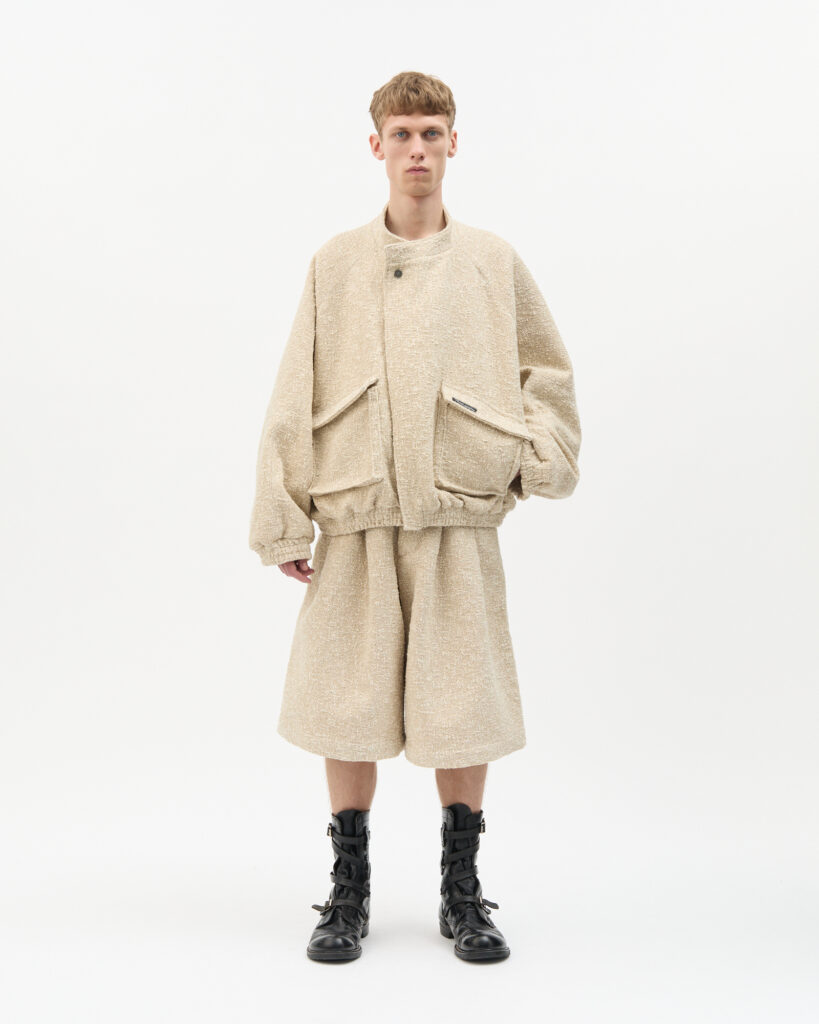
  • Codex Interview: Draž Studio

    Codex Interview: Draž Studio

    We sat down with Slovenian designer duo Urška & Tomaž Draž, at the lobby café of Allegro Hotel in Ljubljana, just across the street from their studio, to explore their unique approach to knitwear, their design process and how their design philosophy has evolved in over three decades of work at Draž Studio.

    For those who might not know you yet, how would you introduce yourselves?

    Urška: I’m Urška Draž. I would first introduce myself as a person without a formal profession, as a mother, and then as a designer. I’ve been making clothes since I was six years old — first with the help of my mother and later developing on my own. 

    For more than 30 years now, I’ve been working together with my brother Tomaž at Draž Studio. We create garments that are predominantly knitted — about 90% are fully knitted pieces, while the remaining 10% combine knitwear with woven fabric.

    Tomaž: My name is Tomaž Draž, Urška calls me “Tomo.” I’m also a father of two children. My hobby is my dog — an active sports dog who is also a member of our family.

    For me, my hobby and my job are one and the same. I feel so good at work that I don’t feel the need to go on vacation. I’m responsible for the development and production of knitted textures.

    Where do you usually draw inspiration from, and what role does research play in shaping your creative process?

    Tomaž: Everything is an experiment. There’s always a desire to move forward — progress is the main driving force. And you can only progress by researching and experimenting.

    Urška: At the beginning, when we first started knitting, our experimentation was focused on slightly impractical silhouettes and on researching animal skin structures. We weren’t really thinking about the people who would wear our garments. Today, we experiment more with themes and patterns. But with every experiment, we always keep the final image of the person who will wear the garment in mind — that is our guiding principle. 

    At fashion shows, we always present pieces that are wearable. For me, this is the highest form of textile design. Our clients have been wearing our work for over 30 years — they want functional pieces that are not ordinary. This is where the most research happens. These experiments have become so natural to us that we’re no longer afraid of them, and they don’t take up much time. There’s a kind of “flow” present in our studio.

    We constantly upgrade our work through different stitches, construction methods, knitting techniques, patterns, or uses of materials — we’re always refining

    Tomaž: It’s not about revolutionary changes, but about progress step-by-step. We want to create human-friendly clothing — clothes that work, that are not museum exhibits or collector’s items, but garments that live with people and have a very long lifespan. 

    We focus on using durable materials. After 30 years, we’ve realized that our knitwear is so robust that it’s passed down from generation to generation. People even bring back garments that are 20 years old to be restored so we can extend their lifespan.

    Urška: Not restored in the strict sense — restoration would mean returning something to its original state. We upgrade the pieces, because over the years, especially the female body changes a lot. If earlier we wanted very fitted silhouettes, maybe that’s no longer the case. We renew and adapt the garments so that the cut suits a woman’s current life again.

    I’ve noticed that you prefer not to use wool in your knitwear, which is quite interesting since it’s such a common material in the field. But your  knitwear isn’t just beautiful — it’s also incredibly durable, lasting for decades. What led you to make that choice and how do you make sure the materials you use remain both environmentally friendly and made to last?

    Urška: About 80% of the materials we use are natural; the remaining 20% are synthetic. Among the synthetic ones is yarn recycled from plastic bottles.

    These synthetic materials are durable and warm. When we mix them with viscose and cotton — cellulose-based and plant fibers — they become even more pleasant to wear, durable, and warm.

    Pure wool can be problematic for people who are sensitive to itching; many people are allergic to wool fibers. You also must ensure that garments contain enough natural fibers so people don’t sweat in them, that they’re machine washable, and that they have a long lifespan. We achieve this by blending different components — that’s our specialty.

    Tomaž: A single yarn is always made up of multiple threads. For example, wool, viscose, and cotton are intertwined. This gives knitwear stability. If wool is used in the yarn, polyester is always added, because that makes the wool more durable.

    Urška: The sweater I’m wearing is 10 years old. I just dry it flat — no ironing. We like a simple lifestyle when it comes to clothing, and we don’t like garments that require a lot of maintenance.

    Tomaž: I don’t even own an iron at home. I don’t iron anything. Of course, ironing is very important during the production process. After we knit a piece, we wash it, dry it, and then steam it. That stabilizes the garment, so it keeps its shape.

    Over the years, technology and manufacturing have changed a lot. Recently, you’ve even incorporated AI into your collections — how have these advancements influenced your work, and what has been the biggest challenge in adapting to them?

    Tomaž: We express ourselves a lot through jacquard knitting. At one point, we felt it was a shallow medium, because we wanted everything to be abstract, hand-knitted, and three-dimensional.

    Then we created a portrait using jacquard and realized it could be pleasant and elegant. We started experimenting and discovered that one stitch equals one pixel. That means you can work in Photoshop and use modern image-processing tools. Digital photography and knitted textures are closely related.

    How does AI help you creatively?

    Tomaž: We started working with Photoshop 15 years ago. About three years ago, artificial intelligence entered the picture.

    This year’s collection is already the third one where we’ve used AI. We use it to generate patterns — AI allows you to create patterns that don’t exist in reality, to synthesize different motifs. For example, it can generate crocheted lace made of wooden branches or glass fibers — something new, something fantastical. 

    I see AI as a new tool. Some say it has no soul, but in a way, it does — if you have one.

    You’ve mentioned that your work often involves experimenting with knitting machines and using them in ways they weren’t originally intended for. Does your background in electronics engineering help you innovate within knitwear design, and what role does trial and error play in that process? 

    Tomaž: I have a story about this. Our knitting-machine mechanic once told me that during times of high unemployment, knitwear companies liked hiring electronics engineers as machine operators. You show them how the machine works once, and they remember it.

    I had a similar experience at the beginning of my career. A classmate helped me with work — we were also selling knitting machines at the time. When you sold a machine, you had to assemble it at the client’s place and teach them the basics. I explained it to him once, and he immediately knew everything.

    You’ve been creating under the Draž brand for over 3 decades, since 1988, a time before the internet, online shops, or modern marketing. How do you see the development of the Slovenian fashion scene over this period? How did you source materials, find suppliers, and build recognition for your brand back then, and how has that process evolved over the years?

    Urška: The beginnings were bold and experimental. When I was at university, I dressed myself in my own designs — sometimes I felt like I was wearing a costume. My appearance often made people ask, “Where did you get that?”. That’s how you start building confidence as a designer — you realize that what you’re doing is something others can’t or don’t do.

    We got a lot of magazine articles because we were different. There were also many fashion competitions back then. At a fashion show in Opatija, we presented a collection, and somehow Josipa Lisac happened to be there — she wanted to wear one of our dresses at the show. We didn’t pay anything; it all happened spontaneously.

    At a young designers’ competition in Budapest, Paco Rabanne was on the jury and awarded us first prize. These experiences gave us a sense of worth as designers. At the same time, when we opened our studio on Kotnikova Street, passers-by laughed and asked, “Who would even wear this?” — so we also got plenty of cold showers.

    We started creating things people loved to wear, but we remained true to ourselves. We didn’t adapt just to please others.

    Tomaž: As for materials, there was a local representative for Italian yarns with a wide selection — we still work with him today. In the 1990s, factories required you to buy large quantities of a single material. That would have required huge storage space and finances.

    Today, factories offer “stock service,” meaning you can buy just one cone of different materials and colors.

    Urška: Since Ljubljana Fashion Week started, it’s been much easier. Designers get professional videos and images — a full presentation package that didn’t exist before. We also had the advantage that we wear our own clothes, which builds trust. We don’t sell one thing and live another life. That’s extremely important, especially for micro-designers like us. Trust between designer and client is everything.

    Have you considered expanding to other markets?

    Urška: We had several attempts, all of which ended with our pieces being sold but not paid for. Without our base here and our own store, we could have gone bankrupt several times because of this.

    After such experiences, you ask yourself why you’d even try. We might explore online sales, but we want to maintain a fair, human relationship with customers. We repair old pieces and value direct contact. If we go online, we want a human-centered approach, not one driven by algorithms. That requires development and resources we haven’t reached yet — but that’s our plan.

    Do you think it’s easier or harder for young designers to get started today? Why? Would you do anything differently if you would have started today?

    Urška: I think it’s harder because there’s too much information, too much of everything. It’s harder to build an identity due to social media, and harder to stand out with something truly personal.

    At the same time, it’s easier to present your work. But building a loyal community is harder because the market is saturated. Trust is crucial. I’ll give an example: a client once chose a very bright color. I warned her it might not be right. She insisted. When we started assembling the dress, I felt it was wrong and called her back. I told her I wouldn’t wear such a dress myself. She realized she’d made a mistake.

    We made her a different dress and used the first one elsewhere. We didn’t let that piece leave the studio. That’s how trust is built — by not saying, “You ordered it, now you must take it.” That’s how you gain loyal customers.

    One of your most recognizable collaborations has been with Alpina since 2014. How does designing footwear differ from creating clothing and accessories? Did you knit the shoes yourselves, and what technical challenges did you face along the way?

    Urška: The collaboration is no longer ongoing. Since 2022, when Alpina was sold, there has been no interest in continuing the partnership. Their core focus is sports and alpine footwear. It’s a pity because the response to our work was incredibly positive. We do believe, however, that we’ll make these sneakers again ourselves, as they were a really good product and affordably priced. We updated the base model and wrapped it in knitwear, and I think we’ll develop it again.

    Did you make the knit yourselves?

    Urška: Yes. We developed a special knit that was different from the one used for garments — more durable, using different materials, while the patterns could remain the same. Alongside the wedding dress, we also created matching sneakers. All the knitwear was made in our studio; the footwear was developed as a semi-finished product here. The knit was not applied afterward — each shoe was designed and shaped as part of the process from the start.

    How does the knit differ for footwear?

    Tomaž: You need to focus on durability rather than comfort against the skin, since all the shoes were lined. The knitting could therefore be firmer, and often also much shinier.

    To conclude, what advice would you give to young designers starting out in the fashion industry?

    Urška: They should build their own identity and find someone who can help them tell their story — who they want to become in five years — so they’re not alone in the world. They should find partners who can help them build that narrative and discover a path that is entirely their own, one that no one else has explored yet.

    They should follow as few rules and trends as possible. If you open Instagram today, it’s full of advice that makes you feel like an idiot for not knowing everything. It’s important to be aware of your own value and to remember that as a fashion designer, you work for people, not for your ego.

    The ego must be present, because you need it to grow — but in the end, you must remain humble and grateful that there are people for whom you are able to create.

    Tomaž: I would say they should develop hands-on skills and explore every process — from the very beginning to the final construction of a garment. At the start, they should stand in front of the mirror and build their complete personal image.

    Written by Jakob Pavlovič

    Edited by Thomas Hu

  • Codex Interview: RENÈ

    Codex Interview: RENÈ

    We sat down with Østergaard on a regular cold winter afternoon via Zoom to learn more about his upbringing, his design language, and what is next for the Copenhagen-based designer.


    Presented at the bi-annual fashion fair CIFF (Copenhagen International Fashion Fair) during Copenhagen Fashion Week, Jens Skov Østergaard’s work with RENÈ stood out as a key highlight. We were immediately struck by the rustic, raw materials and the enchanting design language, which merges Thai craftsmanship with Nordic design.

    At the fair, Østergaard showed us the latest collection, “Norse Saga,” at their booth by the main entrance. The story of the collection mesmerised us, with odes to the old, cold, and harsh medieval period. The collection featured unique soldier and peasant-like silhouettes inspired by the Middle Ages, whilst exploring different textures, fabrics, and landscapes, whilst adhering to the synonymous rustic RENÈ aesthetic.

    Østergaard wasn’t always destined to be a fashion designer. Raised as the son of a priest and a doctor and trained to become a nurse, the choice to pursue a career in fashion design feels particularly bold. His participation in the Danish TV programme “Danmarks Næste Tøjdesigner” accelerated his decision to commit to his brand, RENÈ, and to fulfill his creative vision.

    We’ll begin with something easy. Can you please introduce yourself to our readers?

    My name is Jens Skov Østergaard, and I am the creative director of RENÈ, which I run together with my wife, Kridipat. We focus on oversized genderless garments and have a slightly rustic take on unisex clothing. We pay great attention to fabrics and silhouettes to create a contemporary look. Regarding the fabrics, we work a lot with deadstock – our main suppliers for this are furniture companies in Copenhagen. It allows us to create structured, beautiful silhouettes.

    What types of work does your wife do at RENÈ?
    We are both designers; she is from Thailand, where we produce a lot of our garments. She is our connection to the manufacturers and also handles logistics, communication, and our social media presence. My wife has a part in our designs, too, of course. I’d say our roles are quite mixed, and, in a way, we do everything together.

    Based on our research, you developed an affection and interest in fashion at a young age. Picking up interest in clothes, and textiles specifically, what initially piqued your interest, and how did it evolve into fashion design? 

    My grandmother used to sew and introduced me to it when I was very young. At that point in time, it didn’t really catch my attention – I had too much energy to sit down and work with a sewing machine. Years went by, and then I developed an interest in fashion in general, whilst studying medicine in Aalborg. I eventually quit my studies in order to pursue a career in fashion. I like human anatomy, and how you can manipulate the body with oversized clothes. I later applied for fashion school, where I met my wife, who was already working as a designer for a brand. That was how it all started. She had all the connections in Thailand; over there, everything is a bit simpler when it comes to production. I started making a suit, produced it in Thailand, and sold a few pieces; that is basically the beginning of our story. This eventually allowed me to experiment more freely with the type of garments I wanted to make.

    How did the decision to manufacture your clothes in Thailand come to fruition? Was it something you both unanimously agreed was a sensible way forward?

    Kridipat already had her own brand, for which the manufacturing took place there. It was very simple, I could bring a pattern or a sample to a manufacturer, and they would make it in no time. The idea of creating my own brand, at the time, was more of a fun side gig and a hobby. It wasn’t something I intentionally pursued; I wasn’t setting up brand directions and business plans. It was more of a: “Ok, I have a fairly good understanding of how things work” – that is how it all came together, I’d say.
    Later on, right before I started working on my bachelor’s project, I received a message from a scout working for the Danish TV programme  “Danmarks Næste Tøjdesigner”. They told me to apply, which I did, and it went very well as I managed to reach the final. Meanwhile, I had to create my bachelor’s project on the side, which gave me a lot of motivation to keep pushing myself. I wouldn’t say it was the reason I decided to focus fully on RENÈ, but it really instigated me to work on my brand after I finished my degree. And now I am here, two years and four collections later, which is fun.

    How did the TV programme, “Denmark’s Next Fashion Designer,” impact you as a person, and most importantly, as a designer?

    Very fast and intense. We didn’t really have time to work on the details of our garments. I had to go with my intuition a lot more because they gave us a very strict timeframe. It taught me how to adapt to these circumstances, which are applicable in the industry. It also made me trust my own design language more. Apart from that, it was just a fun experience in general. I don’t think it had much of a bigger impact on me on a personal level.

    RENÈ AW 26 – Image courtesy of RENÈ

    You were also working on RENÈ at the time, correct?
    Yes, so at the time our collections were essentially small batch drops – two jackets, three shirts, and two sets of trousers, that was over a timespan of eight months or so, because we obviously didn’t do seasonal collections.

    Where does the brand name RENÈ come from?
    We decided on the name because we wanted something genderless, so we went through a lot of names which had a clean aesthetic but still matched our brand identity. That is basically it.

    You did one of your internships at FINE CHAOS, correct?
    Yes, it was my first internship at the very start of their brand’s journey. I also interned at two other brands.

    FINE CHAOS’ design language is different from your own and RENÈ’s, albeit there are some similarities. How did your time there and in the other internships shape you as a designer?
    I enjoy their work and their rustic details. I’ve done three internships in total. One was in Italy, at Calcaterra, a womenswear brand – I’d categorise them as a niche luxury brand with oversized garments. Daniele Calcaterra was the key motivator for me; he really pushed me in the direction I’m now in design-wise. He also introduced me to an advanced patternmaker who had been at Louis Vuitton – I was around 24 at the time, and  fell in love with all the work I was exposed to, with oversized silhouettes, big sleeves – fluid yet strict.

    We can see that your time there really shaped your work now that you mention it. There are plenty of influences woven into how you create your silhouettes.

    Exactly. We are mainly focusing on genderless clothing, but our primary target is essentially men. Giorgio Armani is another key inspiration for me, who introduced this masculine silhouette into womenswear, so he’s a very good reference point for me personally.

    Do you enjoy the more “classy” aspects of clothing?

    I do, but with a twist. We are moving more into tailoring and a more utility-like approach to our garments.

    We see an increasing number of designers, especially fresh graduates, starting their own brands. You are one of many. What led you to make that decision, and what type of difficulties and challenges have you faced so far?

    I partook in the TV programme, and simultaneously ran my webshop on the side, so it never really felt like a choice per se. My wife thought that it was the time to go for it: “You have the momentum now, why would you wait five years when it has already started?” At the same time, having your own brand is so: “Oh my god”. I finished school and took RENÈ full-time straight from the get-go. Now it is completely different, and a different reality; we currently have a studio with three interns. There were so many things that I had no experience or knowledge of. Everything from buyers to press, all these things, whilst also focusing on designing and planning collections – it is a lot of work. It forces you to absorb so much knowledge that would have been easier to gain whilst working at another brand, because you’d be able to learn as you go. But you’d also gain insights into when to drop your new season’s collections, the wholesale aspect, and how to manage your production, shipping, and exporting products. There are just so many things that would have been nice to have had some experience with. My recommendation for new designers would be to work at a brand for at least two years to prepare, because you will make so many mistakes on your own, and it’ll cost you time, energy, and money.

    The business aspects of this industry are quite tough, and it’s not something that you’re ever really prepared for. I assume you don’t receive any type of business-related education during your fashion studies?

    No, no, no. Now I spend a lot of time on Excel sheets, and that is me learning it from scratch. It starts with the most basic things, such as setting up your prices with linesheets. And there are so many similar things that you’d be prepared for if you went to business school. But when you’re studying fashion, you get no head start or experience with it. At the same time, it’s a lot of fun, and if you enjoy it, I think it’s definitely worth going for.

    RENÈ AW26 – Image courtesy of RENÈ

    RENÈ is based in Copenhagen, a city that hosts one of the biggest fashion weeks, and as it continues to grow, so does the local competition.
    This means you need a clearer brand identity and, more importantly, a more unique story to tell. How have you managed to set yourself apart from the rest?

    I absolutely love the city. I think our aesthetic is just very different from other brands, especially here. You can find more similarities with Asian brands. Most of the designers I look up to are Asian, not all of them, but most. I am more drawn to the Asian ways of working with patterns compared to the European way. It might sound a bit arrogant to say, but I think we’re quite different. It can make things a bit harder, however, because we have to grow our own niche client base; we don’t have the luxury to just tap into something more Scandinavian. At the same time, Copenhagen is a great base, and from outside of Europe, people seem to really love the city. The city is getting more traction and hype from abroad. We have cool cafés, restaurants, Copenhagen Fashion Week, and CIFF, which has been super helpful to me; they really pushed us. Similar concepts don’t really exist elsewhere in the world.

    Could you tell us about some of the Asian designers you’re inspired by?
    Song Zio, or Songzio the brand, made a really amazing collection this season. I love Uma Wang; she makes crazy cool stuff, and I like Ziggy Chen too. There are also some more deconstructive brands that I like, which are different from us, but are very inspiring.
    Calcaterra is another one, incredible, perfect tailoring, all made in Italy, and very impressive finishing. Hed Mayner, too, with some very cool silhouettes for menswear, and cool textures. Most of my inspirations are fairly new designers to the general public, with fresh takes and not shaped too much by heritage.

    How has CIFF helped you, and RENÈ specifically?

    CIFF was essentially the first one to believe in us. It can be quite hard to get attention from people within the industry, but they quickly helped us by saying that we bring something new to the market. They gave us a good booth at the venue, boosting our visibility and helping us connect with buyers for our brand, including us on their social media channels. It matters so much to us to have them backing us and believing in us.

    You state on your site that “RENÈ blends Scandinavian restraint with Eastern precision.” Could you tell us a bit more about that and your research process to keep in line with that statement?
    In terms of Scandinavian restraint, I feel like we are still keeping it “clean” in a way, maybe not minimal, but we mainly focus on our silhouettes. Our Asian influence comes from paying a lot of attention to oversized loose-fit shapes, especially when it comes to patternmaking. We utilise the Thai heritage by working with local manufacturers. We use a lot of Japanese fabrics for our garments too. We essentially mix the two different design styles of Scandinavia and parts of Asia. My wife, with her background, obviously has different perspectives on design, and we merge our views very well. For example, the collection just presented, we drew inspiration from the early medieval Nordic era. Everything was very, very raw and rough – we combined those emotions and aesthetics whilst exploring moss-like textures, and more rustic drapery. We reinterpreted all this through Asian fabrics, combining both worlds, and tried to create a contemporary way of seeing the two very different clothing styles in one. 

    We see more brands opting for deadstock fabrics and materials. Do you think that it sometimes limits your capacity to design and produce clothes that you had first envisioned, or does it allow you to challenge yourself and become more creative?

    For sure, you have to be more creative because you are very limited with what you can do and design. You have to come up with new ways of utilising the fabrics in your designs. Because we’re not creating our own fabrics, it’s not entirely made in the way we might want. We may only have one or two colour variations of a certain fabric, and the fabric’s thickness might not always be what we want for a certain design, either, so you have to find ways to adapt and accept that this is what you have to work with. At the same time, it can be fun, too, because it’ll challenge you and make you think:  “How can I incorporate this fabric into this design?” It helped me develop as a designer. For example, we had a very cool Indian deadstock fabric that I wanted to utilise, and I had to ask myself how I would use it.

    You use Computer-Aided Design in your design development process. Could you give us insight into what it’s like to work with CAD?
    You can basically use it for many things, but we mainly use CLO 3D as a design tool. It’s a key part of our process when we create our patterns, but that doesn’t stop us from creating patterns more traditionally, on the table. For example, you can immediately see the silhouette, the colour-way, the textures – you then render it and get a clearer idea of how the garment will look. It’s a fantastic way for us to conduct our patternmaking, and it is easy to experiment with different shapes and ideas – although you might still have to create a physical sample and develop it. But in general, it’s just a great tool for fashion design. 

    We create samples in the program;  we later print out the pattern and turn it into a physical sample. We incorporate both methods when we create our samples. But it allows us to create different variations of the same design, especially if you only want to make minor tweaks, such as different colour-ways or shapes, it saves a lot of time and fabric. For us, it’s just a faster way to experiment with our designs.

    With technology evolving and fashion design becoming more simplified, especially with tools like CAD, do you think that there’s a potential loss of love for the more traditional way of patternmaking? 

    Maybe, but I think if you are really good at patternmaking on the table, you will prefer that. Even if you are really good at CAD, it won’t directly translate into a good sample on the table; you have to be good at both to make the correct adjustments and notice potential flaws or issues in the design. It is essentially just patternmaking on the computer, but you need to understand the fundamentals of patternmaking in general. 


    One of your parents is a priest, and you previously studied to become a nurse. Both of those professions require a uniform, and some of your designs come in the same colour-way, silhouettes and more, essentially turning them into sets. Would you say that a part of your design language is to make garments more of an everyday uniform rather than individual pieces?
    I see clothes as an everyday uniform, yes. I want to stick with something that you can easily mix and match. I also love wearing sets myself, and I think it looks very cool on others, too. We design our clothes for longevity by making it easy to mix and match our garments from previous seasons with the latest season. But as a uniform? Yes, I am so used to uniforms; my father is a doctor, I was a nurse, so uniforms have always been around me, and I like wearing them. I like to see people wear the whole RENÈ-look with a bomber jacket and trousers together.

    Before we wrap things up, what is next for you and RENÈ, and what is the end goal?

    Funnily enough, my wife and I were joking around yesterday that we wanted to be part of the LVMH Prize. It’s tough, and we’re many years away from it. I mean, we just want to get our clothes out in the world and have a sustainable, healthy business. We want to set ourselves apart by making nice, distinctive clothes which people will cherish. We’re going to Milan in two weeks to present our autumn/winter collection, which is exciting.

    As RENÈ’s adventure continues through the classic streets of Milan, we eagerly await what they have in store for us for the next iteration of Copenhagen Fashion Week in August. The in-depth knowledge we’ve gained about Jens, his personal story, and RENÈ allows us to further explore and follow their journey as they take another step towards further success.

    Interview conducted on: 13/02/2026 13:00

    Written by Jesper Green

    Edited by Wonne Scrayen

  • Codex Interview: FINE CHAOS

    Codex Interview: FINE CHAOS

    We got the opportunity to witness FINE CHAOS’ “Post Mort3m” runway show in August, fast forward to November and we were able to sit down with one of the co-founders and the creative director, Marc Christiansen Møllerskov. We spent an hour chatting about common acquaintances, friends and interests, but most importantly, about him and the journey of FINE CHAOS.

    You’ve previously interned at Han Kjøbenhavn, which is personally one of my favourite Danish brands. But like many other designers who graduate in this current era, you opted to start your own brand at an early age. Why, in your opinion, do you think more designers opt to start fresh and create their own brands these days. Is it the consistent amount of internships that leads to nothing? Is it the stress of working under someone else’s creative visions? Or do you think it’s just the best way of truly expressing yourself?

    I knew, well, the reason I knew that I wanted to start FINE CHAOS right after my education. Well, I sort of moulded the concept of it whilst I was studying. But I knew it after my internship at Han Kjøbenhavn. The reason for it was because I was in almost every department whilst working with them. So I started off in the design team when we worked on the runway piece construction. We did some very conceptual pieces with boning, and just avant garde in general. Created pattern cutting, and helped the production team with tech packs and such. I wanted to have a full view of how a company worked, because I knew that if I was going to start my own, I wouldn’t have to learn things from scratch after I’ve started it. So I wanted to learn a little bit beforehand so I could prepare myself. So I helped the sales team prepare e-commerce stuff like logistics and such, I helped with the showroom.

    I am a former semi-pro Counter-Strike player, I don’t know if you managed to find that, but it’s because I was known as Marc Christiansen, and not Marc Møllerskov. I wasn’t playing at a top-top level, but I got paid and I partook in tournaments and such. So I have a huge passion for editing and such, with graphic design knowledge from creating team logos and just playing around with Photoshop from a very early age. I think that’s why my knowledge of what good graphics are like, is very strong. Han Kjøbenhavn also picked up on that, and none of them knew how to remove a green screen. From the showroom, there was a model that was rotating 360 degrees, and they wanted to have a “fishbowl” kind of video, and they did not know how to edit that. So I did all the visuals, editing, and the nitty gritty parts of that. I also did tribal patterns, I was part of the early developments of that pattern, which they are using quite frequently now. At the end of my internship, they asked me if I wanted to stay for another six weeks, to help create a whole new knitwear collection and also work on picking the colours for the logo t-shirts and such. But creating the whole knitwear collection was crazy.


    So do you have a speciality in knitwear?

    Uhm, no, no, I didn’t know anything about knitwear before that. I mean, I knew a little bit because I did include knitwear in my final exam, which was after my internship. But I already sort of prepared and studied a bit regarding knitwear, just to have a small understanding. I collaborated with someone from the Faroe Islands for my final exam, and the way she was knitting, she was fusing knitwear and crochet. Crocheting some parts of the garment, and the rest was handknitted in a special pattern as well. I got to learn a lot about gauge and stuff.


    Did you feel like being part of a bigger brand put a limit on your creativity, or were you given free rein?

    It was pretty collaborative, I would say. So Jannick (Creative Director of Han Kjøbenhavn) had a vision for example the knitwear and the artworks. It was very vintage inspired, it consisted of these knitted patchwear sweaters. I basically got to do my version of that, and I incorporated a lot of symbols that Han Kjøbenhavn, at the time, tried to become known for (with the tribal patterns etc). So I think there was a lot of creative freedom actually.


    You’ve studied at Copenhagen School of Design and Business, but also at the London College of Fashion. Did your creative vision change once you went abroad for your studies, or did it just enhance your visions? What were the biggest differences between the two overall?

    I got to learn more about myself, moving to London, I did not have the same amount of time and mind space to figure out who I want to be, in terms of being a designer. But also, what kind of story I’d like to create. I knew very early on that I wanted to create a story that people would care about, also make people feel like it was their own story. I feel like I dug deep into it whilst I was living in London, since I had to get out of my comfort zone. I didn’t know anyone before moving there, so living there for a couple of months helped me dig into my own persona a lot more. Because I get very inspired by my friends, and I didn’t have any friends there, so what inspires you then?

    I had to pick my own brain apart and that is what I did in London. My design process has obviously developed further after starting FINE CHAOS, with moulding the brand’s vision based on yourself and then having a whole team following that direction. Back then, the way we did sketch books and documented processes in London, was crazy, maybe even a little too crazy.

    It inspired me to do even more, for example, exploring different ways of draping, focusing 200% on draping for three days, and what now? I am going to work on my painting, then you paint roughly for another three days, and so you’d break your pencil multiple times. That type of education was new to me. In Copenhagen I learnt more about the value chain and more about how to realise your dreams, whereas London sort of made me dream, if that makes any sense.


    Did you get to study in London during lockdown?

    No, it was just before it happened. I went to school in London whilst living in Denmark, that was crazy. It was fun to do it that way, I had to live at my parents place because I didn’t have a place to stay in Copenhagen. I got to meet some wonderful teachers during my time there, I remember this guy who was so fucking good at draping, he was just draping a blazer and I was so intrigued because lapels has always been a challenge for me. For some reason, I always get the calculations wrong, and during his first lecture I could instantaneously drape a lapel. I was like; “how the fuck can I not do this on a table? But I can do it on a mannequin?” and he said; “because you are working with your mind and not just with your hands”. And I was like, that’s very deep, but I am assuming you understand what I mean, haha. His instructions were so simple and he was so old school but I still felt like he made everything so easy, so it almost felt very futuristic in a sense.


    Your personal style and the design language of FINE CHAOS is very far from the regular Scandi-chic aesthetic that is portrayed by many Danish and Swedish brands. What helped you solidify this aesthetic, and what made you fully believe that it could be a success in Denmark?

    So I don’t think we have solidified it in Denmark actually, I think it’s more of a Copenhagen thing. Our main base is in Copenhagen, whilst we do get people who support us outside of Copenhagen, it’s not as if we have communities outside of the city, which is still a challenge. It actually goes back to when I was growing up, my mum was working in fashion for a clothing brand called Uldahl, a womenswear brand that made very exclusive stuff such as jackets made out of rabbit fur and also had some very punk-like things. My mum has a very punk-like style, it’s her way of being.

    But from an early age, I understood that clothing can spark conversations by being different. So what I did was, I dressed slightly differently, I still followed trends because I wanted to look cool and such in general, from a social hierarchy standpoint I guess. But I still dressed in weird ways, and I always picked colours that were never trendy because I wanted to shape things in my own way. I always got asked why I was doing this and I completely loved it because it was a conversation starter all the time. And the fact that clothing is a medium for it, that it can be so strong, when a stranger can just come up to you and say: “Those are some nice trousers, I wouldn’t dare wearing them myself, but I really appreciate that you’re doing it. Why do you wear them?”

    As you may have realised, I come from a small city so standing out a bit is quite a lot there, with a population of like 5000 people, it’s kind of hard to go outside of your comfort-zone style-wise. But I think that shaped my future and I wanted to keep the same feeling, so I want our clothes to spark a lot of conversations and also connect people. I think it’s a beautiful thing.


    There’s a bit of anarchy against the norm, isn’t there?

    Yeah, it’s so funny because it’s a lot of people who are just saying that I am like “fuck the system” and that I am going against the system and society itself. But I am more so doing things my own way and sometimes we follow the norms. But as Margiela said, you have to know the rules in order to break them. If you know your target groups, you can then just create your own and connect with a lot of people so you don’t become this boring brand that is just for the business person or the techno-goer. Although some people still see us as THE techno-brand of Copenhagen.


    So you’ve had a lot more success abroad, would you agree?

    Yes I would say so, when it comes to wholesale, we’ve had a lot more success in East Asia, which is amazing. I mean, we have a very strong community in Copenhagen. But now with the Yu-Gi-Oh collaboration, it has opened up a lot more for us. I can also go into depth of how and why that collaboration happened. I don’t know if you’ve researched it?


    We can do a lot of research, but if you feel like talking about it right now, feel free to do it!

    I played and collected Yu-Gi-Oh cards when I was a kid. I really love the [Yu-Gi-Oh] anime, and I love Yami Yugi, because he’s this androgynous… Idiot, well, he’s sort of an idiot in this very childish way, because he’s like: “I am the king of games and I’ll win no matter what, and I’ll break every rule that exists in the game, even though I am the creator of the game, I break my own rules”. I really love that rebellious energy in the anime, and that’s probably why I gravitated more towards Yu-Gi-Oh than Pokémon for example. Fast forward till two and a half years ago, I needed a hobby because all I was doing was FINE CHAOS.

    I just remembered my hobby with Yu-Gi-Oh and then I started playing a little bit with some of my friends, whilst also collecting cards. Before you know it, you have a Shiba Inu named Yugi, and his full name is Yami Yugi. We collaborated with WALLHACK, the gaming company, and we made a jacket and two caps with them. Me and their Creative Director bonded, funnily enough his name is also Mark but with a K. We started going to these fairs and he heard about my fascination with Yu-Gi-Oh, and the rest is history. So that [Yu-Gi-Oh collaboration] was a big milestone for us and it was the first time we worked with such a big company.


    We’ve seen FINE CHAOS take a huge leap in the Asian market, particularly in Korea and Japan. Do you think there is a specific reason why you think these markets appear to be doing well? Especially considering the vast differences between the two countries, politically but also the difference in personal style

    By having beautiful people who really believe in your brand from an early point, so a huge shoutout to Opener, that store in Seoul opened so many doors for us. Because it is such a well respected store, they have a certain niche, they don’t care about norms but they care a lot about good clothes. But also very expressive clothing. That niche in Seoul, they are just wilder than the niche we have in Copenhagen. The wealth in Korea has really helped us. But that specific store has helped us in many ways, with Kpop stylists and others going there to do their shopping, and suddenly our clothes are now worn by Kpop stars. It has happened so many times now, and now we’re selling in other stores, in stores that are a bit more bold in their selection, and who support new talents. I mean, we don’t have the biggest track record to show from a B2C standpoint, but they can see that our stuff just works. If you compare Seoul to Copenhagen [sizewise] , naturally the niche is also bigger there you know.

    So that’s pretty much how things started, my fiancé lived in South Korea for four months, and that is how we sort of got in contact with Opener. At that point, we didn’t have our stuff in any of the stores in East Asia, and I was going to give it my all to get a meeting whilst I was there. I messaged a lot of stores, both on email, Twitter, Instagram together with Ludvig. But I think he can give me the credit for the Opener deal, I was sort of the one who established the connection. I knew I was going there, so it made sense.


    What’s your research process like? Where do you look to gather inspiration (aside from anime)? Do you watch films, travel, or read books? What inspires you and your creative work?

    We write a manuscript for every collection which is 30-pages long, and it’s an ongoing story that has been going on for like four seasons now. Those stories are a reflection of the everyday [lives] and the political landscape. But also about what’s going on in the world [in general]. We also get inspiration from people we talk to, so it becomes this full-circle thing. I think that’s just where the main inspiration comes from, life in general. Again, it sounds very cliché but we as a brand, really dare caring about political issues and more “brave” topics that other Scandi-brands don’t want to touch. We present them in a way where it’s not directly saying, for example, our SS25 collection was called ‘FEAR THE DOME: WAR’ and that was when the whole Palestine-Israel conflict was being brought up, alongside Ukraine and Russia.

    We incorporated that in our storytelling with us reflecting on social hierarchies in war and sometimes how the opposites can’t find the beauty in each other, but instead, they try to eliminate each other. It’s not very human, but it’s humans that create these issues. So that is what we do, we try to reflect on these topics in our artwork, our prints. From that storytelling that we do from the manuscript, we try to take all these keywords from the manuscript and do research on how we can interpret this in a graphic way, what kind of silhouettes and more.

    The last collection, Post Mort3m, we looked into a lot of club references. I watched Blade again, which is one of the most legendary films in my opinion. The colours from that film are amazing, and we actually used that colour-scheme for a lot of the prints that are in the collection. So yeah, it’s a summary of a lot of things, but it can also be small things. I remember watching Demon Slayer, the silhouettes, the clothes, the robes and all those things they wore and used. That flow of fabric, even though it’s not real, I want that to be real. There’s a character with tattooed circles on his face, those circles are a symbol of whenever he stole something in the village. So whenever he stole something, they would add another circle to his face. So that’s where we got that reference from (which one?). In our story, FINE CHAOS is the evil company that controls society and everything. We wanted to include that in some of our artwork as well, not as a print, but more as shapes.


    You’re quite outspoken about social injustices, politics and more on your social media platforms, which can also be reflected in your design language, which has a very rebellious aesthetic to it. As we’re quite privileged to live in Scandinavia, do you feel like more people within the industry need to enhance the voices that are screaming for change? Even through fashion?

    Yea I think so, just because the fashion medium can be that [voice]. I understand that some designers just want to live the simple life of making beautiful things, but I also feel like in a world where there’s so much clothing, it sort of needs more purposes than just being beautiful. If our clothes can make people dream about something, or talk about something important. I think that’s a lot more important than a beautiful t-shirt or something.


    You’ve previously mentioned that you watch, and I quote: “a shit ton of anime”, for your inspiration when it comes to your designs. Do you have any specific manga artists and or anime/mangas/characters that specifically come to mind where you consistently seek inspiration from?

    I am very inspired by Gachiakuta, the artstyle, the story and the absurdity of it. I love that a lot. I used to love the concept of ‘Tower of God’, the concept is amazing where you have to go through multiple floors in order to achieve “God status”. I like that because it’s a reflection of life itself, and that was a very fresh take on anime as well.


    Who are some of the key inspirations in your life, in terms of design, and life in general?

    Music in general [insert artist name here] is amazing, he’s joined in so many sessions so it almost feels as if he’s playing for me. I really love his music, because it stimulates weird thinking, I can’t really grasp why, but I think it’s because it’s the level of layers with different instruments and such that sort of categorises electronic music. It’s very inspiring.

    I loved Dante back in the day, it used to be a big reference as well. Basquiat is also something that is everywhere in my house, books, notebooks, even replicas of his notebooks when he was alive, those kinds of things. I love that. His rawness, his honesty in an industry that isn’t honest, it’s super inspiring. I think those are the major ones.

    I have a fascination with uniforms that have developed lately, not just the functionality of them, but the shapes, there are so many small weird shapes in uniforms. I was playing Counter-Strike two days ago and I was looking at the skins as well. It doesn’t make much sense, you have small round pockets everywhere, some of them are sharp and I am like, what kind of objects can you store in them? A knife, a lighter, or what is it for?

    But I am also probably very biased because of the research we did for the last collection, and it also had somewhat similar shapes. But we looked more into the “exclusive” armywear, like [high-ranking] officers and more. That has nothing to do with artists in general, but that really inspired me.


    FINE CHAOS is very open to different types of collaborations, ranging from Yu-Gi-Oh to Cengiz Güdücü. What drove you to pursue collaborations, especially at such an early stage of the brand. Do you have any dream collaborators in the future?

    Nike, it’s the brand that first came to mind. I used to collect Nike shoes, and so did my dad, he still collects Nike Shox. A Fine Chaos x Nike Shox would probably be my dream. Another dream would be to work with Raf Simons on something, I don’t care what it is, but just something. Raf has something that I’d call the “Virgil Syndrome”, he used to do so many small projects. Ranging from small sketches, he made a chair, and industrial design before fashion. There are just so many projects where he had a small influence on. When he joined Prada, I was like, of course he joined Prada. He just loves to do small things.

    My sister is a model, fun fact, about me or well, FINE CHAOS in general, my dad and my sister always walks our shows. My dad was the older guy who was wearing the “I am DJ” shirt. The closing look is my sister.


    The brand was founded in 2021, is that correct, could you tell us more about the beginning of the story?

    Well, the brand was officially founded in 2021 but moulded before that, I made the painting in 2019. It wasn’t a company at that point. I made samples because I knew what I wanted to create, I was just not 100% sure on how it’d look like. For example, the first FINE CHAOS logo was made with the font ‘I hate comic sans’. The reason why I chose that was because I wanted to choose something that everyone hates and change it into something that people [will] like. But that was too hard of a mission so I got bored of the idea. The name FINE CHAOS used to have an exclamation point because I love things that scream. But it was fun because it was lower-caps.


    So that is why everything is in caps right now?

    Exactly, you are 100% correct. We have this funny MF DOOM reference going on when someone doesn’t spell the name with all caps, saying you know; “when you spell my name, spell it in all caps”, haha! But I cannot actually make the logo from scratch anymore, the reason why is because I made it when I was at Han Kjøbenhavn, it was like 5 AM on a Saturday and one of the co-founders went to the office, and he went out, and he came back and he was like “what the fuck, are you still at the office, should I bring you a burger?”. I was like yea, sure, and he brought me a burger and then I was like, I don’t want to do whatever I was doing at the time. So I decided to work a little on FINE CHAOS, and you know, saying that at 5 AM is kind of crazy. But I started working on the logo, I was tired of the logo at the time, so I took ‘FC’ and then used a liquify tool on Photoshop, I then chose how random I wanted the liquify effect to be, so I chose 100%. Which means I could never ever get shadow behind the ‘FC’ ever again, I cannot recreate that.

    There’s a Photoshop document, with like, I am not fucking kidding, 1000 versions of that shadow and my cooked brain couldn’t tell the difference. The first logo actually had a full circle around it, but then the idea was, it sounds very cliché yet again, but break the circles, become this platform for things to happen. That later goes out of the circle, the first cut was 45 degrees, and then we changed it into 36 [degrees] I think, I didn’t want it to be perfect.


    So it’s asymmetrical to piss people off? Exactly, people don’t really care.


    What was it like to create the brand during the peak of COVID-19 with lockdown and such, did you only do things online through Discord in order to create your community?

    No, we did the complete opposite. We knew we were going to have a tight-event strategy, to help us create the community around the brand. Then as you know, COVID just went on and on, and it never gave us the opportunity to host events. So in the end, we were like, fuck it, we’ve got to do it either way. If the police show up, then we’ll just explain our way out of it. So yea, I don’t think we sold that much the first year, it was very tough, and we could just see our investments plummet. We don’t have a rich investor in the background giving us money when we need it, all the owners are around 22-29 and we all put our own money into it. By the way, we’re six owners, and we’re all way different.

    But yeah, we did one event and it went super well. I remember that we were super, super stoked about making 30 000 DKK. We were like, fuck yeah, we’re going to make it now. But in reality, you get nowhere with 25-30 000 nowadays, and produced a whole collection but it was so hard to sell the first one. You have to convince people that it is worth the money, you know. And the prices have to be low enough for it to be an easy entry. It was a challenge, but we’re still here, and as Ludvig’s dad said, he’s amazed that we haven’t gone bankrupt yet, haha.

  • Codex Interview: Neuterlab

    Codex Interview: Neuterlab

    We sat down with Australian designer Larrend Lacuesta to learn more about him and his brand, Neuterlab. We decided to get a better understanding of his design language, what inspires him and more.

    Could you quickly introduce yourself, tell us who you are, and what you do.

    My name is Larrend Lacuesta. I am based in Greater Brisbane, Australia, originally from the Philippines where I lived for the first 16 years of my life. I’m the founder and co-owner of Neuterlab, a genderless fashion label that explores experimental silhouettes. By day, I work as an HR manager and by night, I build Neuterlab. The brand reflects my creative philosophy and quiet rebellion.

    You grew up in the Philippines and spent half your life there, before moving to Australia in your late teens. Did moving to Australia help you express yourself and find your personal style and identity?

    It’s impossible to compare what resources a 16-year-old may need VS resources a 28-year-old need (when I started the brand). When I talk about resources, I talk about financial independence, creative freedom, convenience in accessing museums, and the space to explore fashion and my personal style. In the Philippines, I was still too young to start anything, and I didn’t have the means to pursue design seriously. However, “maturing” in Australia gave me the opportunity to build something on my own terms. I would say 50% and 50% how I was influenced by my significant other (Karl Leuterio), who is also the co-owner of Neuterlab! When we started dating in 2013, that’s when I really formed my style DNA and it has stayed consistent up until now, if not evolved slightly. Me and my partner, Karl, gravitate toward monochromatic, androgynous silhouettes with a grunge edge and an undercurrent of elegance (at least that’s how I see it).

    What’s the meaning behind the name ‘Neuterlab’?

    Neuterlab is a fusion of two ideas: “neuter,” as in neutral, non-binary, stripped of gendered expectations; and “lab,” as in experimentation. It’s a space where clothing isn’t confined by rules, rather expressing freely. The name reflects our ethos: genderless, conceptual, and quietly defiant.

    You did not study fashion, how did you end up pursuing fashion design and establishing your own brand, what was the driving force behind your decision?

    I never studied fashion formally, but I’ve always been immersed in it emotionally. My creative journey started with photography when I was 16, initially self-portraiture. If you want to see some of my photos, I have a separate Instagram page called @ninthsheep.larrend. For over a decade, I used photography to explore my identity. When I met Karl, I found out he was a fashion designer so I wanted him to make something conceptual for me then to photograph them. Karl is THE professional designer, and I was influenced by him. Eventually, I began sketching what I would like to wear. Mainly clothes with designs I couldn’t find anywhere else. That intuitive process led to Neuterlab. The driving force was, I wanted to create a world I could live in, one that felt true to my values. One that felt permanent because it’s in my control.

    Was fashion design something that you’ve always wanted to do, or have you pursued other creative endeavors prior, in order to clench that creative thirst?

    Photography and short fashion films were my first creative outlet. I released three self-published magazines called Ninthsheep, featuring nostalgic travel photos, self-portraits and conceptual fashion styling with my partner Karl. That visual storytelling naturally transitioned into fashion design. Neuterlab is an extension of that (or vice versa), it’s a continuation of the same emotional language, just in a different medium.


    What are some of the biggest challenges that you’ve faced as someone who didn’t study fashion, but also what type of advantages do you think you’ve had based on past life experiences that you could implement into your business model?

    The biggest challenge is technical construction. I don’t know advanced sewing techniques, and I’m limited to making clothes on a domestic sewing machine. I have so many design ideas I want to make, that’s why I work with a manufacturer who can execute my designs and sometimes I work with other Australian creatives to make those ideas come to life. The advantage is curiosity will always drive that passion, whether you studied fashion formally or not. Another advantage is learning in the process. I’ve learned how to respect the work of other Australian designers I’ve collaborated with. In addition to that, I’ve studied business, and my professional background is Human Resources so that gave me a strong commercial mindset. I know how to position the brand, manage (small) operations. For example, draw boundaries when agreement is compromised, etc.

    Do you think your outlook on fashion design, and fashion in general, would have been different if you attended fashion school or have you always had a certain distinct style and vision in mind?

    I don’t think fashion school would’ve changed my outlook. There is so much educational fashion content on the internet. It is the content that you feed your mind at the end of the day. Fashion is a term that is used broadly. If I may inject the term lifestyle, please. That lifestyle is formed through lived experience, through research, museums, networking, fashion films, music, performance art, behaviour, etc. That lifestyle will never stay stagnant rather it evolves as you keep meeting new people, see a new film, hear new music. One thing is for sure though, that the grassroots of that style DNA (once you know exactly the path to take) will stay strong. The style DNA/ or that vision in my mind has always been (in the last decade) androgynous, monochromatic, experimental, and elegant.

    Do you draw inspiration from your Filipino heritage when it comes to your designs?

    I would like to say yes, the way my brain is wired and how I behave is rooted from my Filipino upbringing and my exposure to Philippine entertainment. That contributes to how I see the world around me. However, if we’re talking about inspiration that is translated into a visual design then I have to say no. I am saying no with a bit of guilt. It never crossed my mind until this question. I am now curious about exploring Filipino art and fashion subcultures, to honour parts of myself.

    Could you describe your research process when it comes to creating your garments and collections.

    My process is entirely intuitive. I don’t do traditional research or patternmaking. For example, if I’m watching a film and I see a costume I like, I would sketch that, so I don’t forget. If I go to a museum and see a texture, I start to think which hardware store product would closely resemble this texture. If I see someone wearing something cool, I will digest the components of their outfit and envision what silhouette would work on me if I were to wear something similar. To me everything is reinventing. I remember sewing some of my one-off pieces design, I would just start cutting fabrics and sew them based on my vision alone. No markings, no measurements. Just instinct.

    Who, or what, are some of the/have been some of the key inspirations in your journey as a creative, as a designer, or in life in general? Is there someone that you’ve looked up to specifically when it comes to fashion design or fashion in general?

    Rick Owens’ ceremonial styling, Ann Demeulmeester’s editorial photos, Margiela’s runway show casting, The Row’s furniture and jewellery curation and Patti Smith poetic eloquence. The two who I specifically look up to are Rick Owens and Patti Smith. Rick Owens on his philosophy to learn how to make clothes, work and work and produce and produce to reveal your identity. Patti Smith, because of her uniformity with the clothes she wears and artistic spirit (specially after reading her books) which inspires me to age with grace and imagination. Moreover, Patti Smith for me is a key influence, I feel she is the best link we have to many other artists like Rob Mapplethorpe, Andy Warhol, Lou Reed, etc

    Neuterlab also does art-pieces, can you elaborate on the idea and the vision behind it? Is it something that you’ve chosen to do based on previous experiences or is it part of the brand’s world building?

    For our November 2023 Collection Launch (the collection has no name by the way), I created framed art pieces to extend the mood of the collection. They emphasize texture, rabbit fur, wires, leather strings, scarred cowhide leather, sharp pins. I have chosen to do this not based on previous experience rather part of the brand’s world building. The art pieces were not enclosed in a sealed container. I wanted it intentionally left uncovered so people who attended the launch event could touch them. It was about creating tactile experience, where part of the clothes can be framed and co-exist as framed art and wearable art. The framed artworks weren’t separate from the garment. They were their echo.

    What type of world is the Neuterlab brand trying to build, and what type of message is it trying to convey?

    Neuterlab is building a world where clothing is emotional, and self-expression is sacred. You wear it and you instantly embrace your uniqueness. It is a quiet rebellion. One that invites introspection.

    On your website, it states that the Neuterlab brand tries to invent new cultures and new aesthetics. Can you tell us more about this approach and what would the end result be once these visions have, in your opinion, been completed?

    We’re not trying to fit into mainstream fashion cultures. That means inventing aesthetics that feel personal to me. The end result isn’t a finished product. I see it as a living archive. A slow evolution of my style, my philosophy and emotional clarity. A vision that becomes tangible and will exist even long after I’m gone is something remarkable. So, there will be no end result until my last breath I suppose. To me it will forever be a personal project I share with the world.

    You are the second Australian designer that we’ve spoken to, what is your opinion on the Australian fashion industry, and what do you think it can learn from the rest of the world? But also what do you think the rest of the world could learn from Australia?

    I think the Australian fashion industry hasn’t yet made a defining mark globally. That said, Australians dress very nicely, especially with their stature, they clearly carry themselves well. I just wish more people were brave enough to dress differently even if they are not attending an event. Regarding what I think it can learn from the rest of the world is to try something different, something that makes you curious and open. What the world can learn from the Australian Fashion industry is… I don’t have an opinion.

  • Neuterlab Brand Interview

    Neuterlab Brand Interview

    What identifies your brand? Who is your ideal customer/fan?

    Neuterlab is identified by its monochromatic palette, androgynous silhouettes, and emotional texture. Our ideal customer is an artist, someone who treats clothing as an extension of their creative practice.

    What is your brand’s mission within the industry?

    To support emerging creatives through collaboration.

    Tell us about the founding history of Neuterlab.

    Neuterlab was founded in 2021, after years of self-portrait photography and visual storytelling. I transitioned from publishing Ninthsheep magazine to building a brand that reflected my own personal style. Highlights include our multidisciplinary launch in November 2023, and our shift toward higher-quality textiles and collaborative production with other creatives in 2025.

    What is the overall visual identity of the brand, and what’s the production process like? What type of materials do you prefer working with, and what type of core values have you set?

    Visually, Neuterlab is monochromatic, androgynous, and grunge-inflected with elegance. We work with a manufacturer in China who shares our commitment to small-batch production. We prefer working with cotton, rayon, viscose, mohair, and wool. Our core values are intentionality and emotional clarity.

    What message do you want to convey with your collections, and briefly just touch on the different collections, and the thought process behind them. Is there a common theme or are you always trying to reinvent yourself with each passing collection?

    The message behind Neuterlab’s collections is simple: self-expression without suppression. I want people to feel like they’re wearing something that reflects their inner world and not just their outer appearance. There’s a quiet rebellion in every piece and refusal to conform to trend and expectation. I’m not trying to reinvent myself with each release. I’m refining, deepening and expanding the same core philosophy. We operate with two collection formats: Mainline Collection – this is timeless and ongoing (limited batches). There’s no seasonal start or finish because we add pieces one by one, intuitively. It’s a living archive that reflects that brand’s DNA: monochromatic, androgynous, experimental, quiet rebellion with a touch of elegance. One-off series: These are unique pieces I’ve created myself or in collaboration with other Brisbane-based designers. They’re spontaneous, instinctive, and often born from a single vision or mood. Each one-off is a moment captured in fabric and singular vision.

    Tell us about some of the motifs that you use.

    We don’t use a lot of loose visual motifs. There are zippers, buckles, here and there however, our motif is absent… Solid black mainly. It allows silhouette and texture to speak louder than graphics. We focus on emotional motifs: softness versus severity, fluidity vs structure. It’s about how the garment feels and transports the wearer into our world.

    Do you have any bestselling products or a product/products that you’d like to highlight? What is the design process, and why have you chosen these garments/accessories?

    Our bestselling piece is the Flux Pants. It’s made from 100% rayon and features a wide, flowy silhouette that mimics a long skirt, creating an androgynous elegant shape. The design was born from a vision where I wanted something to look like a skirt but wasn’t. However, the piece that I enjoyed the most making is the Tar Top. That was a one-off piece where I needed to use a mannequin bust as my mould. I used expanding foam I got from a hardware store, then I painted it all black using acrylic paint, carved the shape with a kitchen knife, added straps and fabric lining inside for wearability. It took days to dry, respray of expanding foam, multiple paint layers and I was so happy with the outcome. When I shipped it to the buyer, I had it enclosed in a big box! That was fun!

    With sustainability being a key question in the world of fashion, what are some of the measures you take to adhere to these matters?

    Sustainability for Neuterlab is rooted in intentionality. We produce in small, limited quantities. We’re moving away from using 100% polyester and now work with higher quality textiles. Our manufacturer in China aligns with our vision for ethical small-batch production. We also prioritise emotional sustainability, creating pieces that last stylistically, not just physically. Our collections aren’t trend-driven, so they don’t expire. They’re meant to be worn for years.

  • Codex Interview: Isabella Charles

    Codex Interview: Isabella Charles

    We sat down to speak with emerging Australian designer Isabella Charles about her, and her eponymous label over a Zoom call. Isabella released her first collection in 2020 titled ‘Solitude’. She has been a growing presence within the Australian fashion scene with her gothic inspired work and dark palettes, which is a stark difference from the usual Australian brands. We spoke to her about her early life, her time in Berlin, her favourite materials to work with, and much more.

    24th August 2025


    You’ve previously mentioned that you’ve been obsessed with fashion throughout your whole life. How did that obsession come about, and how did it go from an obsession of “I love clothes” to “I want to design and make clothes”?

    Not being able to find clothes that represented me so I kind of taught myself how to sew clothes at quite a young age and it grew from there, and by like middle school/high school I kinda figured out that that’s what I wanted to do with my career. And so after that, after school I studied university and then I went on to intern at a few other brands and now I am here just doing my own brand.


    Were your parents supportive of this, as it’s such an odd career choice? And are they also in the industry?

    Yeah, no they are not in the industry. But they’ve always been supportive of creative industries, like arts, music, and that sort of thing. So they didn’t really have any problems with me choosing a creative field, and they were always pretty supportive, and they still are. Throughout school and earlier stuff, I did art, a lot of photography and digital manipulation work mostly. But also a bit of sculpture, but after school that kind of phased out and I turned to focus primarily on fashion.


    Who were the key inspirations in your life?

    Well, the first designer I interned for was in Brisbane, so she’s an Australian designer called Gail Sorronda. I actually still work for her part-time and she’s been quite a big inspiration to me. She was the first person to show me the inside of the fashion industry, and being able to work on major shows with her for Australian Fashion Week. So I’d probably say she’s the main one.

    But I mostly look at historical figures and concepts for my brand and I look a lot at religion. A lot of my work has been based on Dante Alighieri’s Divine Comedy. I’ve done collections for Inferno, Purgatorio, which is my latest one, and eventually I’ll do one for Paradiso. So that has been the concept for the last five years or so. A general basis for my work is kind of middle ages-themed.


    I went through your collection on your site again yesterday, and there were product names such as ‘cleaver’ and so on, which felt very medieval-themed. But also the photoshoot that you posted with the swords and the chainmail. What made you pursue that specific type of inspiration, especially because it is quite niche, and especially with people who don’t know much about you, would say it’s very similar to Rick Owens? Is that something that you’re emulating, is he a designer that you look at and get inspired by, or do you create your own stuff and say “hey, this is me, this is my work”?

    Yeah I am definitely inspired by Rick and some of his work, but not so much directly. Maybe more so in the beginning when I was more so getting into fashion, I was influenced by things. But I actually tend to avoid exposure to current fashion collections, and social media. So that I can have more individual ideas that just come to me, instead of being subconsciously influenced by trends and things like that.

    I used to live in Berlin and the vibe that’s there definitely translated to my designs whilst I was there. I moved there in 2023 when I was 21 and I worked for two brands there and I tried to do my own stuff on the side. But they expect a lot of time over there, and I found it really difficult to juggle and by the time I got to the end of staying there. I just thought I would prefer to focus my time and energy on my own brand instead. But now since I moved back to Australia, I live in quite an isolated area, and I don’t have that exposure to current fashion as much. My ideas are coming in a lot more solidified.


    Have you changed your identity after that? As you mentioned before, when you are in Berlin you are influenced by the people, the culture and the German brands all the same. So I am assuming that you have completely changed your style and you are not as heavily influenced from the work you did there previously?

    Yeah definitely, the style I wouldn’t say has completely changed, but it has definitely narrowed down. My personal style has come through a lot more than it did previously and I can kind of interweave it through all the concepts.


    Touching on Berlin and Paris, for those who are unfamiliar with the Australian fashion scene. What are the biggest differences between the European fashion scene and the one in Australia?

    I would say two things mainly, the weather and we’re on the opposite schedule. The summers here are really hot and we don’t really have much of a winter, at least where I am located. So I feel that kind of limits the scene translating from Australia to Europe, because it’s missing this whole chunk of seasons, like winter time. I would also say colour, people here are very attracted to bright colours and patterns, and that’s a lot of the mainstream fashion scene. And I think that’s at least a lot less prominent in Europe, at least from what I’ve seen.


    Speaking of that, how has it been to have your own style, with gothicism, in a country that is very warm, and where the majority is wearing shorts and shirts all the time? How has that been, not fitting the mainstream category? But also working with a design language that might not be too popular in Australia?

    Yea definitely, it means that I have to factor in a lot of natural fibres and breathable fabrics, so that my clothes are actually wearable here. Despite them looking quite heavy, using mostly cottons and natural fibres makes them a lot more breathable in the summer. You definitely notice it with orders where things go in the world, a lot of the lighter pieces tend to sell in Australia whereas the more heavy ones are going overseas.


    You define the brand as having a dark palette that is heavily adorned with gothic overtones: tell me about what gothicism means to you. Has this worldview always been steady or has it evolved over time?

    I’ve always been kind of attracted to gothic and dark things for as long as I can remember so I think it has just naturally evolved from there. I am always seeking out natural locations such as cemeteries and admiring the architecture. I feel like there’s something really special about it, like the old cathedral buildings. So I think that has really informed the style over a long time.


    Berlin fashion week is starting to regain its former spark – Are you still connected with the Berlin fashion scene, and if yes, is there a possibility that you’d like to move back/show there in the future?

    The Berlin fashion scene is heavy on individualism and innovation, which was inspiring to be around. I had a lot of great experiences working in Berlin, making lasting relationships and gaining a plethora of industry knowledge. Although that was accompanied by others that took advantage, which I guess can be expected in such a competitive and creative city. It was certainly unpleasant to deal with at the time, but it taught me what I value and how to handle industry relationships. Whilst Berlin was great for the time, at this point a business base there would not be sustainable, and I am very much enjoying running the brand from Australia. Being away from the city and being much more secluded from outside influence has really fostered my creativity and refined my design language, which I prefer for the moment. Although anything can change and I would not close off the possibility of moving back to Europe or elsewhere.


    Your brand also does custom designs. How is it for a designer with such a strong vision to work with a customer’s ideas?

    Yeah I don’t do a lot of that, it’s mostly things for when I work with artists, my partner is a stylist and we’ve worked with a few musical artists, and we’ve done a few custom pieces for them. So there’s not really that kind of pushback, we just create the options and we can then style them after. But I offer commission pieces, similar to what I do, or if I do one-off styles, like I do with a lot of the leather pieces. I can kind of do a lot of custom options to mirror what has previously been available. It definitely has to be in the same realm, or something based on another piece or customised to suit someone. But definitely a similar vibe.

    I definitely feel like my designs can sometimes be perceived as a bit too bold, especially for the Australian market. But the way I see it, it’s not gonna stop me from doing it my way, regardless if the style doesn’t necessarily sell. I still want to produce some type of document that the style is part of the collection, and also be able to factor in pairing it with those pared-back and easier to work with pieces as well.


    I’ve seen that you’ve used kangaroo leather, what’s that like to work with as it’s not a common material to use in Europe.

    It’s my favourite leather to work with, I love working with it, I source it from a local place. So I specifically ask for the scuffed up and scarred pieces because they have a lot of character, and they really show the individual characteristics of the animal. So I love being able to use that in the design as well, and it makes individual pieces every time. Being able to do those ‘one off’ ones. It can be difficult to sew at first, but you get used to it and I use a mixture of machine and hand sewing with my leather pieces. It can be as thick as cow leather but not as thin as goat leather. But it’s definitely tough to work with.


    Are there any other leathers or fabrics that you can only get in Australia that you prefer to work with?

    I’ve really been focusing on using kangaroo leather in the last few years, because it is kind of a niche thing in the country as well, and it’s nice to be able to represent that. I’ve previously used cow leather, goat skin, I always use deadstock too. I often find that they come with those strange characteristics in them as well, and ostrich leather is another favourite of mine. But it is quite hard to source. It’s got so many different characteristics and changes throughout the leather. It’s very thick as well and quite difficult to work with but I think the result is super unique. I actually got my skins from my grandparents as they used to have an ostrich farm in rural Australia. It would have been 25 years ago or something, and several years ago my grandma gave me a bunch of black ostrich skins and so that became my material to work with for a while.


    How would you tell fashion students and enthusiasts to learn more about fashion? What should they be looking for?

    I’d say, definitely get as much work experience firsthand because what you learn from uni is not always what happens in the industry. I feel like just getting proper industry experience outside of unity taught me a lot more than what I got from those practical classes.


    But you’ve had your brand since 2020, so you were roughly 20 years of age when you started your brand right?

    My first collection I did was in 2020 and I was living in London actually at the time when I was studying over there for a period, and it was during Covid so I was in lockdown for about six months. So I was doing my collection alongside university online, which wasn’t really fulfilling me. So yeah, that was my first collection. I was designing for a while prior to that.

    I really didn’t enjoy the online classes, I thought it really hindered me and I wasn’t learning a lot. So I think I got a lot more out of the practical experience of me just doing my own thing, and making mistakes whilst being able to teach myself more during that period.


    We haven’t spoken to many designers who studied during lockdown, so I want to know what it was like to study fashion during it. Fashion is one of those things that is easier to study when you have a teacher next to you, telling you what to do, so I am assuming you didn’t attend any classes and just did stuff at home?

    Yea I did about 50% of the semester in person and the rest was at home, maybe a bit less in person. But yeah, it was definitely tough having to navigate through videos and zoom calls. It kind of led me to create my own way of doing things that aren’t probably necessarily right but just works for me. So in that kind of aspect I didn’t mind more of that freedom because it meant that I was kind of less dictated on, or swayed in a way that teachers would do.


    You previously mentioned that you were inspired by Dante’s Divine Comedy, and that you’ve based two collections of his work (Inferno and Purgatorio), what other inspirations have you had for the other three collections?

    So I’ve kind of looked into a lot of medieval references outside of that, catholicism, quite heavily into nuns, and priests. So everything along those lines has been the general inspiration for all of my collections I would say. And kind of looking into the works of middle-age era artists like Gustave Doré, as more visual references.

    The visual stuff comes from visiting galleries and architecture, I actually take reference photos myself. I don’t love to do a whole lot of online research unless it’s for artworks or specific things. Or like clothing references for what people wore back in that time period..


    Thank you for taking the time to speak with us.