We sat down with Østergaard on a regular cold winter afternoon via Zoom to learn more about his upbringing, his design language, and what is next for the Copenhagen-based designer.
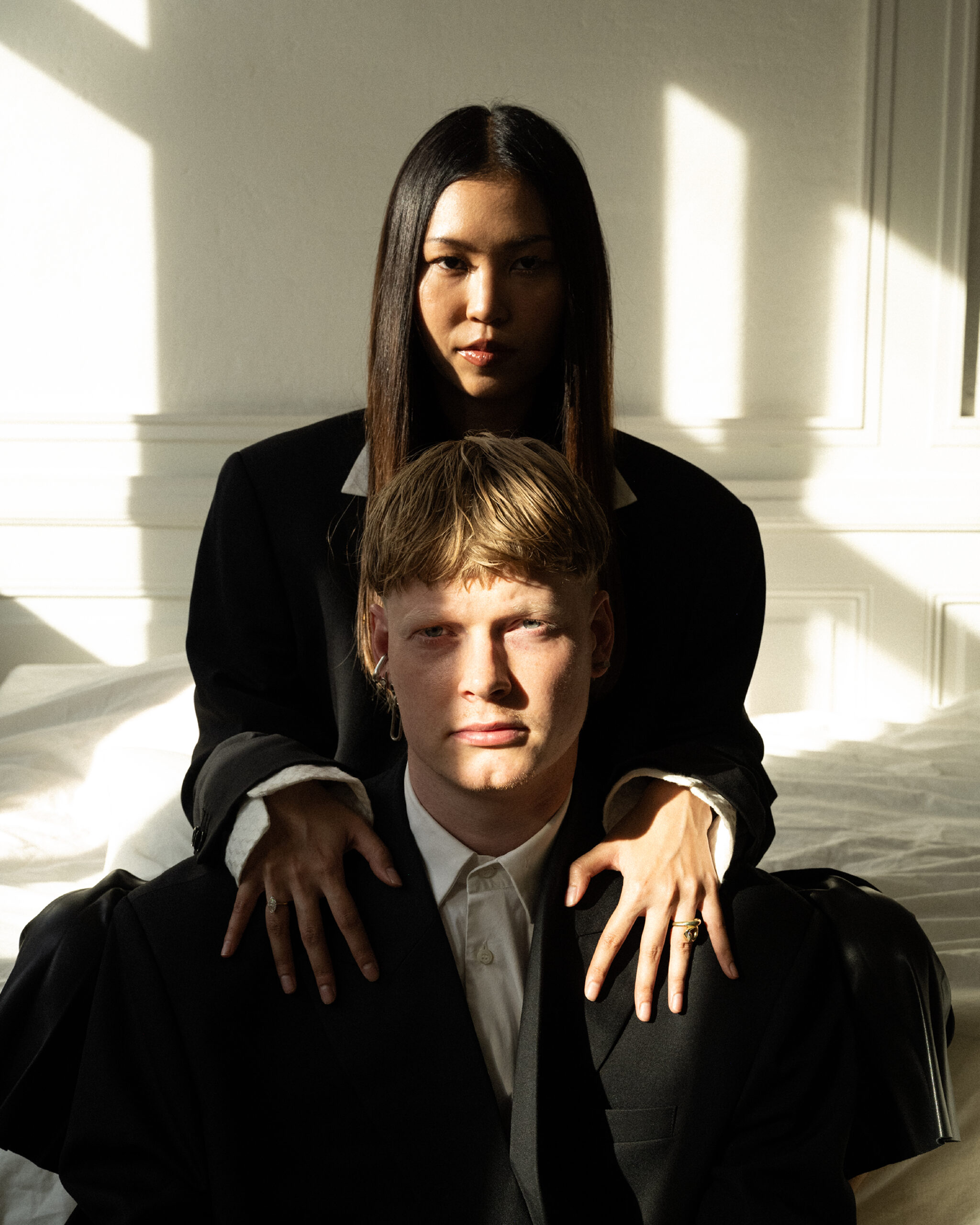
Presented at the bi-annual fashion fair CIFF (Copenhagen International Fashion Fair) during Copenhagen Fashion Week, Jens Skov Østergaard’s work with RENÈ stood out as a key highlight. We were immediately struck by the rustic, raw materials and the enchanting design language, which merges Thai craftsmanship with Nordic design.
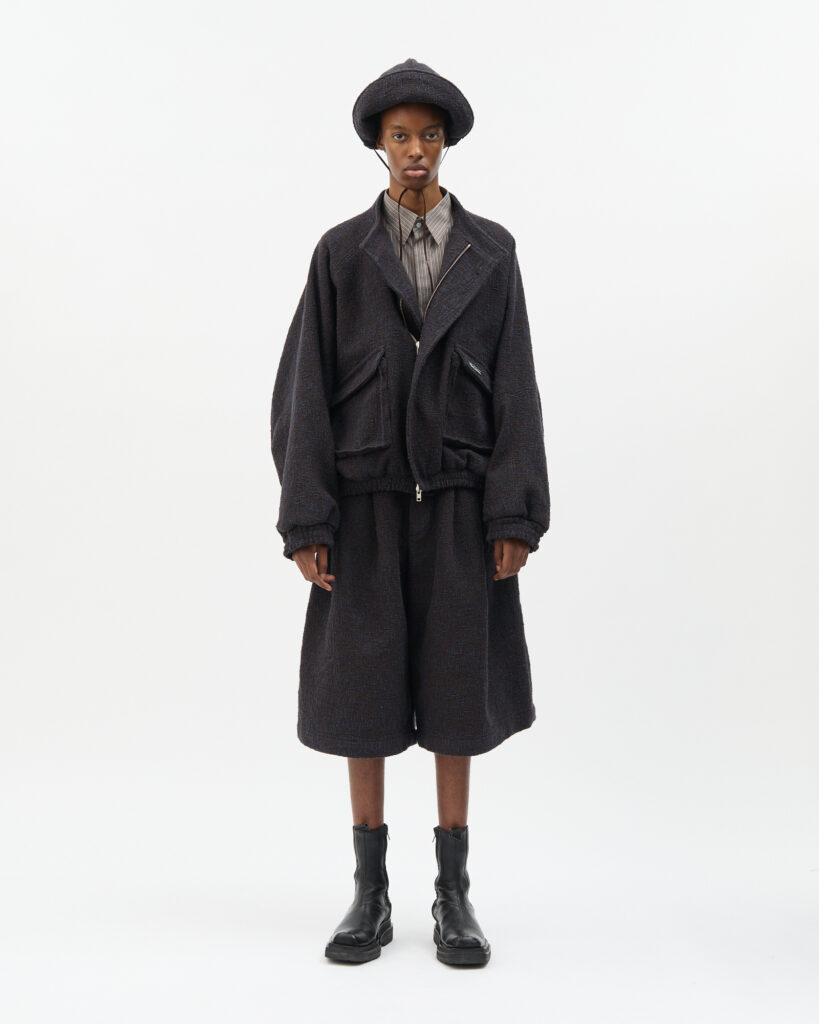
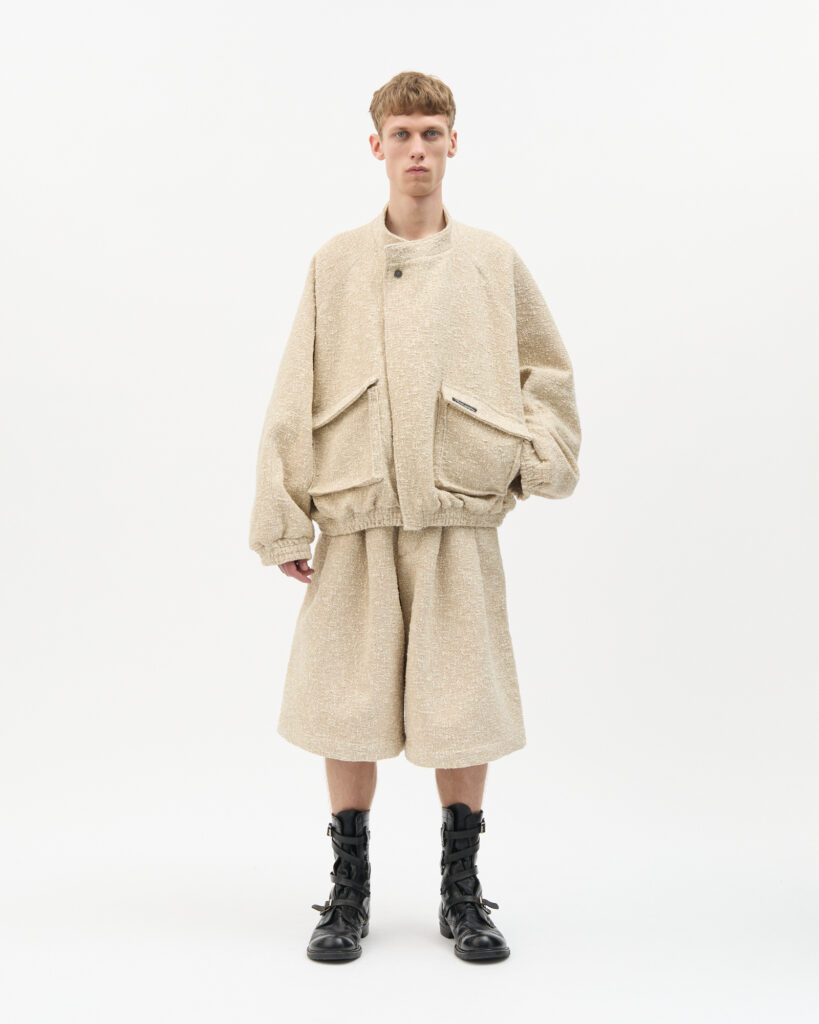
At the fair, Østergaard showed us the latest collection, “Norse Saga,” at their booth by the main entrance. The story of the collection mesmerised us, with odes to the old, cold, and harsh medieval period. The collection featured unique soldier and peasant-like silhouettes inspired by the Middle Ages, whilst exploring different textures, fabrics, and landscapes, whilst adhering to the synonymous rustic RENÈ aesthetic.
Østergaard wasn’t always destined to be a fashion designer. Raised as the son of a priest and a doctor and trained to become a nurse, the choice to pursue a career in fashion design feels particularly bold. His participation in the Danish TV programme “Danmarks Næste Tøjdesigner” accelerated his decision to commit to his brand, RENÈ, and to fulfill his creative vision.
We’ll begin with something easy. Can you please introduce yourself to our readers?
My name is Jens Skov Østergaard, and I am the creative director of RENÈ, which I run together with my wife, Kridipat. We focus on oversized genderless garments and have a slightly rustic take on unisex clothing. We pay great attention to fabrics and silhouettes to create a contemporary look. Regarding the fabrics, we work a lot with deadstock – our main suppliers for this are furniture companies in Copenhagen. It allows us to create structured, beautiful silhouettes.
What types of work does your wife do at RENÈ?
We are both designers; she is from Thailand, where we produce a lot of our garments. She is our connection to the manufacturers and also handles logistics, communication, and our social media presence. My wife has a part in our designs, too, of course. I’d say our roles are quite mixed, and, in a way, we do everything together.
Based on our research, you developed an affection and interest in fashion at a young age. Picking up interest in clothes, and textiles specifically, what initially piqued your interest, and how did it evolve into fashion design?
My grandmother used to sew and introduced me to it when I was very young. At that point in time, it didn’t really catch my attention – I had too much energy to sit down and work with a sewing machine. Years went by, and then I developed an interest in fashion in general, whilst studying medicine in Aalborg. I eventually quit my studies in order to pursue a career in fashion. I like human anatomy, and how you can manipulate the body with oversized clothes. I later applied for fashion school, where I met my wife, who was already working as a designer for a brand. That was how it all started. She had all the connections in Thailand; over there, everything is a bit simpler when it comes to production. I started making a suit, produced it in Thailand, and sold a few pieces; that is basically the beginning of our story. This eventually allowed me to experiment more freely with the type of garments I wanted to make.
How did the decision to manufacture your clothes in Thailand come to fruition? Was it something you both unanimously agreed was a sensible way forward?
Kridipat already had her own brand, for which the manufacturing took place there. It was very simple, I could bring a pattern or a sample to a manufacturer, and they would make it in no time. The idea of creating my own brand, at the time, was more of a fun side gig and a hobby. It wasn’t something I intentionally pursued; I wasn’t setting up brand directions and business plans. It was more of a: “Ok, I have a fairly good understanding of how things work” – that is how it all came together, I’d say.
Later on, right before I started working on my bachelor’s project, I received a message from a scout working for the Danish TV programme “Danmarks Næste Tøjdesigner”. They told me to apply, which I did, and it went very well as I managed to reach the final. Meanwhile, I had to create my bachelor’s project on the side, which gave me a lot of motivation to keep pushing myself. I wouldn’t say it was the reason I decided to focus fully on RENÈ, but it really instigated me to work on my brand after I finished my degree. And now I am here, two years and four collections later, which is fun.
How did the TV programme, “Denmark’s Next Fashion Designer,” impact you as a person, and most importantly, as a designer?
Very fast and intense. We didn’t really have time to work on the details of our garments. I had to go with my intuition a lot more because they gave us a very strict timeframe. It taught me how to adapt to these circumstances, which are applicable in the industry. It also made me trust my own design language more. Apart from that, it was just a fun experience in general. I don’t think it had much of a bigger impact on me on a personal level.
You were also working on RENÈ at the time, correct?
Yes, so at the time our collections were essentially small batch drops – two jackets, three shirts, and two sets of trousers, that was over a timespan of eight months or so, because we obviously didn’t do seasonal collections.
Where does the brand name RENÈ come from?
We decided on the name because we wanted something genderless, so we went through a lot of names which had a clean aesthetic but still matched our brand identity. That is basically it.
You did one of your internships at FINE CHAOS, correct?
Yes, it was my first internship at the very start of their brand’s journey. I also interned at two other brands.
FINE CHAOS’ design language is different from your own and RENÈ’s, albeit there are some similarities. How did your time there and in the other internships shape you as a designer?
I enjoy their work and their rustic details. I’ve done three internships in total. One was in Italy, at Calcaterra, a womenswear brand – I’d categorise them as a niche luxury brand with oversized garments. Daniele Calcaterra was the key motivator for me; he really pushed me in the direction I’m now in design-wise. He also introduced me to an advanced patternmaker who had been at Louis Vuitton – I was around 24 at the time, and fell in love with all the work I was exposed to, with oversized silhouettes, big sleeves – fluid yet strict.
We can see that your time there really shaped your work now that you mention it. There are plenty of influences woven into how you create your silhouettes.
Exactly. We are mainly focusing on genderless clothing, but our primary target is essentially men. Giorgio Armani is another key inspiration for me, who introduced this masculine silhouette into womenswear, so he’s a very good reference point for me personally.
Do you enjoy the more “classy” aspects of clothing?
I do, but with a twist. We are moving more into tailoring and a more utility-like approach to our garments.
We see an increasing number of designers, especially fresh graduates, starting their own brands. You are one of many. What led you to make that decision, and what type of difficulties and challenges have you faced so far?
I partook in the TV programme, and simultaneously ran my webshop on the side, so it never really felt like a choice per se. My wife thought that it was the time to go for it: “You have the momentum now, why would you wait five years when it has already started?” At the same time, having your own brand is so: “Oh my god”. I finished school and took RENÈ full-time straight from the get-go. Now it is completely different, and a different reality; we currently have a studio with three interns. There were so many things that I had no experience or knowledge of. Everything from buyers to press, all these things, whilst also focusing on designing and planning collections – it is a lot of work. It forces you to absorb so much knowledge that would have been easier to gain whilst working at another brand, because you’d be able to learn as you go. But you’d also gain insights into when to drop your new season’s collections, the wholesale aspect, and how to manage your production, shipping, and exporting products. There are just so many things that would have been nice to have had some experience with. My recommendation for new designers would be to work at a brand for at least two years to prepare, because you will make so many mistakes on your own, and it’ll cost you time, energy, and money.
The business aspects of this industry are quite tough, and it’s not something that you’re ever really prepared for. I assume you don’t receive any type of business-related education during your fashion studies?
No, no, no. Now I spend a lot of time on Excel sheets, and that is me learning it from scratch. It starts with the most basic things, such as setting up your prices with linesheets. And there are so many similar things that you’d be prepared for if you went to business school. But when you’re studying fashion, you get no head start or experience with it. At the same time, it’s a lot of fun, and if you enjoy it, I think it’s definitely worth going for.
RENÈ is based in Copenhagen, a city that hosts one of the biggest fashion weeks, and as it continues to grow, so does the local competition.
This means you need a clearer brand identity and, more importantly, a more unique story to tell. How have you managed to set yourself apart from the rest?
I absolutely love the city. I think our aesthetic is just very different from other brands, especially here. You can find more similarities with Asian brands. Most of the designers I look up to are Asian, not all of them, but most. I am more drawn to the Asian ways of working with patterns compared to the European way. It might sound a bit arrogant to say, but I think we’re quite different. It can make things a bit harder, however, because we have to grow our own niche client base; we don’t have the luxury to just tap into something more Scandinavian. At the same time, Copenhagen is a great base, and from outside of Europe, people seem to really love the city. The city is getting more traction and hype from abroad. We have cool cafés, restaurants, Copenhagen Fashion Week, and CIFF, which has been super helpful to me; they really pushed us. Similar concepts don’t really exist elsewhere in the world.
Could you tell us about some of the Asian designers you’re inspired by?
Song Zio, or Songzio the brand, made a really amazing collection this season. I love Uma Wang; she makes crazy cool stuff, and I like Ziggy Chen too. There are also some more deconstructive brands that I like, which are different from us, but are very inspiring.
Calcaterra is another one, incredible, perfect tailoring, all made in Italy, and very impressive finishing. Hed Mayner, too, with some very cool silhouettes for menswear, and cool textures. Most of my inspirations are fairly new designers to the general public, with fresh takes and not shaped too much by heritage.
How has CIFF helped you, and RENÈ specifically?
CIFF was essentially the first one to believe in us. It can be quite hard to get attention from people within the industry, but they quickly helped us by saying that we bring something new to the market. They gave us a good booth at the venue, boosting our visibility and helping us connect with buyers for our brand, including us on their social media channels. It matters so much to us to have them backing us and believing in us.
You state on your site that “RENÈ blends Scandinavian restraint with Eastern precision.” Could you tell us a bit more about that and your research process to keep in line with that statement?
In terms of Scandinavian restraint, I feel like we are still keeping it “clean” in a way, maybe not minimal, but we mainly focus on our silhouettes. Our Asian influence comes from paying a lot of attention to oversized loose-fit shapes, especially when it comes to patternmaking. We utilise the Thai heritage by working with local manufacturers. We use a lot of Japanese fabrics for our garments too. We essentially mix the two different design styles of Scandinavia and parts of Asia. My wife, with her background, obviously has different perspectives on design, and we merge our views very well. For example, the collection just presented, we drew inspiration from the early medieval Nordic era. Everything was very, very raw and rough – we combined those emotions and aesthetics whilst exploring moss-like textures, and more rustic drapery. We reinterpreted all this through Asian fabrics, combining both worlds, and tried to create a contemporary way of seeing the two very different clothing styles in one.
We see more brands opting for deadstock fabrics and materials. Do you think that it sometimes limits your capacity to design and produce clothes that you had first envisioned, or does it allow you to challenge yourself and become more creative?
For sure, you have to be more creative because you are very limited with what you can do and design. You have to come up with new ways of utilising the fabrics in your designs. Because we’re not creating our own fabrics, it’s not entirely made in the way we might want. We may only have one or two colour variations of a certain fabric, and the fabric’s thickness might not always be what we want for a certain design, either, so you have to find ways to adapt and accept that this is what you have to work with. At the same time, it can be fun, too, because it’ll challenge you and make you think: “How can I incorporate this fabric into this design?” It helped me develop as a designer. For example, we had a very cool Indian deadstock fabric that I wanted to utilise, and I had to ask myself how I would use it.
You use Computer-Aided Design in your design development process. Could you give us insight into what it’s like to work with CAD?
You can basically use it for many things, but we mainly use CLO 3D as a design tool. It’s a key part of our process when we create our patterns, but that doesn’t stop us from creating patterns more traditionally, on the table. For example, you can immediately see the silhouette, the colour-way, the textures – you then render it and get a clearer idea of how the garment will look. It’s a fantastic way for us to conduct our patternmaking, and it is easy to experiment with different shapes and ideas – although you might still have to create a physical sample and develop it. But in general, it’s just a great tool for fashion design.
We create samples in the program; we later print out the pattern and turn it into a physical sample. We incorporate both methods when we create our samples. But it allows us to create different variations of the same design, especially if you only want to make minor tweaks, such as different colour-ways or shapes, it saves a lot of time and fabric. For us, it’s just a faster way to experiment with our designs.
With technology evolving and fashion design becoming more simplified, especially with tools like CAD, do you think that there’s a potential loss of love for the more traditional way of patternmaking?
Maybe, but I think if you are really good at patternmaking on the table, you will prefer that. Even if you are really good at CAD, it won’t directly translate into a good sample on the table; you have to be good at both to make the correct adjustments and notice potential flaws or issues in the design. It is essentially just patternmaking on the computer, but you need to understand the fundamentals of patternmaking in general.
One of your parents is a priest, and you previously studied to become a nurse. Both of those professions require a uniform, and some of your designs come in the same colour-way, silhouettes and more, essentially turning them into sets. Would you say that a part of your design language is to make garments more of an everyday uniform rather than individual pieces?
I see clothes as an everyday uniform, yes. I want to stick with something that you can easily mix and match. I also love wearing sets myself, and I think it looks very cool on others, too. We design our clothes for longevity by making it easy to mix and match our garments from previous seasons with the latest season. But as a uniform? Yes, I am so used to uniforms; my father is a doctor, I was a nurse, so uniforms have always been around me, and I like wearing them. I like to see people wear the whole RENÈ-look with a bomber jacket and trousers together.
Before we wrap things up, what is next for you and RENÈ, and what is the end goal?
Funnily enough, my wife and I were joking around yesterday that we wanted to be part of the LVMH Prize. It’s tough, and we’re many years away from it. I mean, we just want to get our clothes out in the world and have a sustainable, healthy business. We want to set ourselves apart by making nice, distinctive clothes which people will cherish. We’re going to Milan in two weeks to present our autumn/winter collection, which is exciting.
As RENÈ’s adventure continues through the classic streets of Milan, we eagerly await what they have in store for us for the next iteration of Copenhagen Fashion Week in August. The in-depth knowledge we’ve gained about Jens, his personal story, and RENÈ allows us to further explore and follow their journey as they take another step towards further success.
Interview conducted on: 13/02/2026 13:00
Written by Jesper Green
Edited by Wonne Scrayen
Leave a Reply