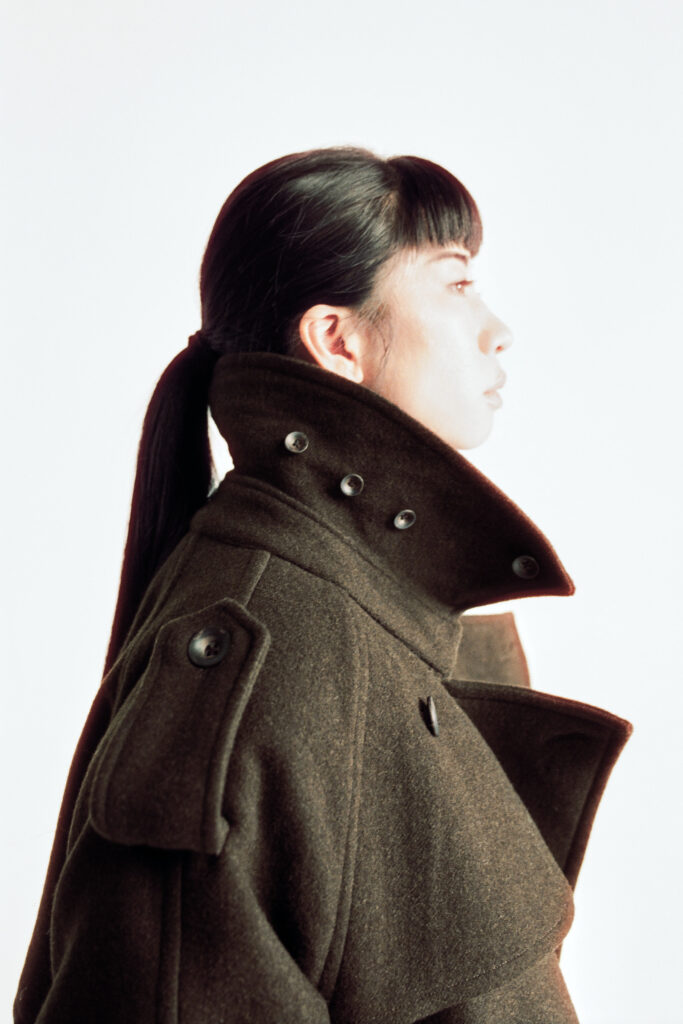
Image courtesy of Gracia Ventus
Our exclusive interview with ROSEN and ROSEN-X founder, Gracia Ventus, explores her fascination with Japanese designers, growing up with strangers, her studies abroad, her relationship with writing, and much more.
Ventus grew up in Indonesia before being sent to Singapore. She eventually ended up in Shanghai where she started her own label in 2017. Knowing that she’d like to pursue a career in fashion entrepreneurship, she studied business rather than fashion to get a better understanding of how to operate a business.
My first encounter with Ventus was through a series of tweets by Derek Guy talking about lesser-known designers who make excellent clothes. It was something about the distinct design language and the comments on various forums about the brand that convinced me to pull the trigger on my first garment from her, a pair of Hakama trousers.
Whilst normally a very private person, we’ve had the opportunity and the privilege to interview her to gain a better insight into her personal life and the person behind ‘therosenrot’ and ROSEN.
This interview was conducted in writing and has been loosely edited to maintain her own writing style and authenticity.
As a writer, what has your relationship with language been like? At what age did words take on a significance for you? And what specific themes and topics have been interesting to you throughout that journey? Are there recurring ones? What has been your emotional experience with words, whether your own or those of others?
I write out of my love for reading. As with fashion design, I am a conduit of ideas. I absorb other people’s thoughts, filter them through my own observations and experiences, then reinterpret them. I was born and raised in a bilingual environment in Jakarta, speaking Indonesian in school and Hakka at home, supplemented by rudimentary English and Mandarin from after-school classes. At the age of ten, I was sent to Singapore to continue my education. In the house I shared with a few other Indonesian children under the guardianship of a stranger, far from our families, was a library of books ranging from Enid Blyton, Roald Dahl and J.R.R. Tolkien, amongst many others. It was then that I began reading out of boredom. I started my first year in Singapore as a fifth grader. The English syllabus required frequent writing exercises in class, or “compositions”, as they preferred to call them. I had no idea what it meant to do a piece of ‘writing’ before then, but I plugged away with variations of mischievous children getting in and out of trouble, or of children discovering their inner fortitude. Half a year went by uneventfully before my English teacher read one of my compositions aloud to the class. As a child dissociated from all semblance of home and family, newly arrived in a foreign culture, being given credit where it was most unexpected did wonders for the subconscious mind. That encouragement probably paved the way for confidence, which fuelled my affinity for literature and writing. Within a year, I had largely abandoned my two primary languages, switching to English for all classes and conversations, with Mandarin on the side. Over the course of my studies, my writing shifted from storytelling towards argumentative essays. I enjoyed the logical process of coming to a rational conclusion in a debate, or exploring possible outcomes out of variables and parameters that were being presented. In university, I learned the process of supporting conclusions with evidence, which paved the way for substantiating my personal writing on fashion with studies and literature reviews from journal articles and published books. I do my best to not pull facts out of thin air. Every piece of writing is a reflection of my integrity. Words are powerful, and we must wield them responsibly.
What is the significance of Rosen and its variations to you — in terms of name, image, concept for the brand and so on? Were there alternative names or variations in mind?
ROSEN was taken from the online moniker that I have been associated with for a decade, which itself was based on a song by a German industrial band. I wanted a name that was easy to remember and could also be easily translated into Chinese through a homophonic rendering. There were other names being considered, but I no longer remember them.
You have been running an independent fashion label since 2017. Before that, you had prior experience with selling vintage garments. What were some lessons you took from that earlier experience into the operations of your brand? For example, how was your design philosophy and interest influenced by the vintage pieces you sourced? And has that relationship between vintage garments and your own evolved since? How does it feel to have spent 8 years on this journey?
My design philosophy and the vintage clothes I used to buy and sell stem from my personal aesthetic preferences. They deviate from mainstream beauty standards, but are also intriguing to those who are curious. And most importantly, they stand outside the flow of time. There are two important lessons I learned from my former business: how to create quality while breaking conventional rules of construction, and more importantly, how to exceed expectations the moment the customer handles the garment. That feeling of surprise and delight is what I aim to deliver. The tactility of a garment begins with the fabric and its hidden interfacing, followed by all the trims and finishes. Whether light or heavy, soft or structured, a garment must serve its purpose and occasion. One also learns how to walk the balance between weight and drape so that a hefty garment does not tire the wearer, and a light garment does not feel cheap when handled. With each collection I make, I learn a new construction method, gain a deeper understanding of existing rules and how to break them, or learn how to handle a new material. With each passing year of running this manufacturing-centric business, I have come to understand how primary and secondary industries drive the real global economy, how valuable human capital is in manufacturing, and how differing economic systems influence the geopolitics we see today. The global tension we see right now is the consequence of financial capital increasingly failing to maintain its dominance over the rest of the world, while the producers of tangible goods and services gain prominence by providing value that people actually seek out.
You studied Commerce in Monash. What was the significance of that course of study to you, whether in the choice of classes or what you learnt from them, and how did it situate itself within the rest of your life? For example, does it reflect an interest from childhood? What about your studies in London?
Before enrolling in university, I knew that I wanted to be an entrepreneur in the fashion industry. I chose not to enrol in a fashion degree because I was aware that my personal interest would motivate me to study all aspects of the subject independently. What I needed instead was a rigid learning environment in which to study how the commercial world operates, for two reasons. The first was to reduce reliance on others when starting a business. The second was to fill as many gaps in my ignorance as possible, leaving little room for others to take advantage of me should I encounter bad actors. Fashion is a business. In university, I chose subjects that would help me navigate business operations, such as international economics, marketing and the study of human behaviour, while eschewing in- depth studies in banking and finance, as I was never fond of the parasitical nature of those industries. In London, I took additional business classes alongside philosophy, which over time helped me think more logically. During my time there, I also examined the feasibility of establishing an independent fashion business without external capital injection or government support. All the education I received has provided a basic understanding of how labour converts into goods and services, the importance of efficient logistics and supply chains, as well as the barriers to trade in different countries and trading blocs. Europe was undoubtedly a utopia for employment with fashion conglomerates, but I felt it was not conducive for independent players with little capital or connection to build a company from the ground up. The drive for entrepreneurship ultimately brought me back to Asia.
Which blogs and writers do you enjoy? Which of them, if any, had an effect in your decision to begin publishing your own essays online? Or was that an independent decision based on another desire or influence? Has your relationship with reading the works of others, especially contemporaries, changed over the years?
I don’t recall reading fashion blogs much, as they rarely offer the kind of primary research that I base my writing on. In the beginning, I enjoyed looking at street-style blogs such as The Sartorialist or Bill Cunningham, which spurred me to document my own personal styling attempts. I began writing in depth about fashion theory after reading scholarly fashion journals and books on fashion studies, mostly written in the 1980s and 1990s, which I still keep to this day. Books by Dr. Joanne Entwistle and Elizabeth Wilson helped me study fashion from a sociological and theoretical perspective. I am less interested in treating it purely as an art form than in examining it through cultural and economic lenses. These perspectives help explain our consumption habits and the behaviour of the industry itself. These days, I have moved on from reading about fashion to focus on literature. I am fond of Fyodor Dostoevsky, Jun’ichirō Tanizaki, amongst many others, including more recent authors such as David Foster Wallace. Literary authors have played a larger role in shaping my writing in recent years.
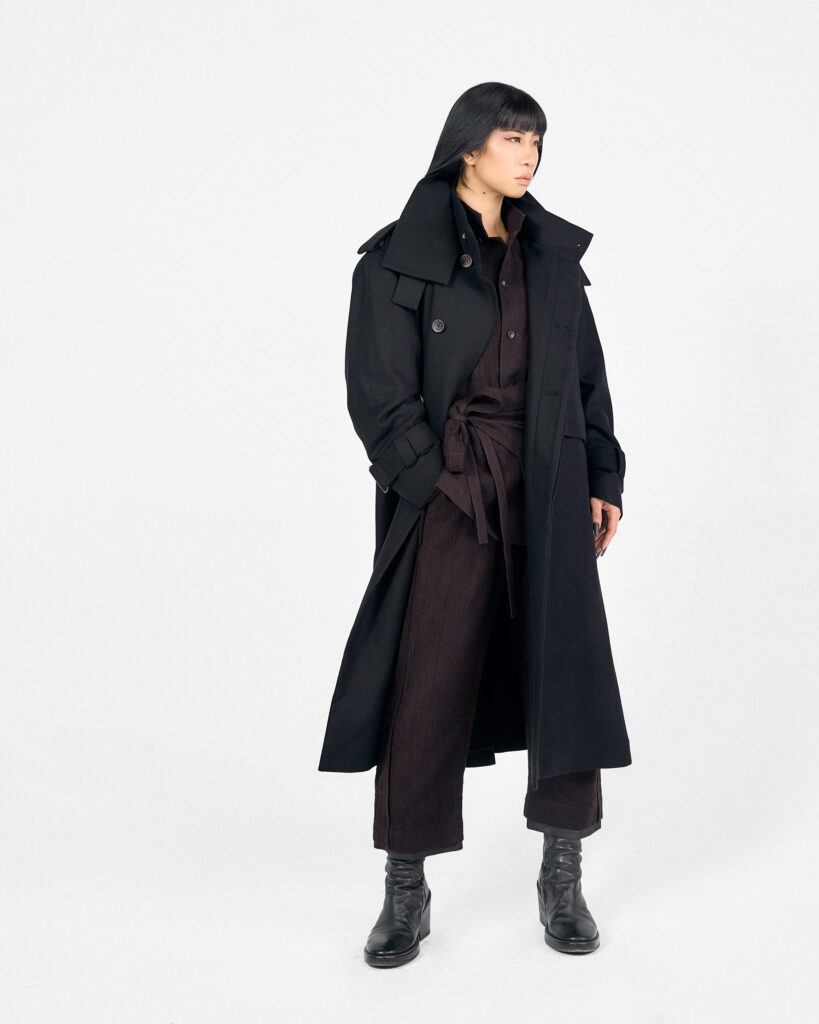
For those with less knowledge about China and its fashion industry, could you explain your decision to design and produce your brand in Shanghai? What is your experience with the Chinese market and customer base? How has the proximity to China affected your design philosophy and research? And what do you wish people understood better about China?
Before moving to China, I had not the slightest inclination to design my own clothes, let alone create an entire clothing brand. It was only after moving here that I realised how accessible garment manufacturing can be. The barrier to entry in monetary terms is relatively low. Anyone with an idea can eventually find freelance skilled professionals who can bring it to life, along with fabric and trim suppliers who require little to no minimum orders. What separates successful brands from the stragglers is the ability to build robust manufacturing and marketing networks once the initial excitement fades. In the early stages, being resourceful often matters more than having large amounts of capital. Chinese fashion consumers behave differently from their Western counterparts. Competition is fierce, partly because consumers are accustomed to extreme convenience, with lightning-fast delivery and lax return policies. Younger consumers either buy inexpensive goods, often impulsively, or spend heavily on viral statement pieces. Between these extremes lies a large group influenced by celebrity culture. Affluent customers, however, prefer the conventional luxury experiences: private retail environments, attentive service and intimate runway events where purchases can be made immediately. When brands meet their expectations consistently, loyalty tends to follow. Though they are less swayed by trends, they remain aware of them, and are not afraid to experiment. For these reasons, starting a clothing brand in China can be relatively easy, but succeeding in the Chinese market without significant capital or manpower is extremely difficult. From a design perspective, running a business in China is creatively stimulating. Fabric merchants constantly update their inventory, so I am never short of beautiful materials. Fierce domestic competition keeps me on my toes, ensuring that I never take my work for granted and always strive to improve. Manufacturers and skilled workers are constantly updating their knowledge in order to remain competitive, which in turn allows designers to bring complex ideas to life. China itself is a well of cultural capital from which to draw inspiration. I was moved by the sight of giant tapestries in Tibetan monasteries. I found solace in the hilly tea plantations of Hangzhou, before descending onto the stone bridge that cuts across West Lake, looking at the same scenery that was painted a thousand years ago. Witnessing technological innovation and the wonders of large-scale civil engineering juxtaposed against beautiful natural landscapes across the country creates an optimism about the future of humanity, which in turn motivates me to create. Living in China also opens one’s eyes to a different system of thinking, from grassroots society to national politics. Despite being ethnically Chinese and understanding the language, I realised that when I possessed only a toddler’s understanding of China’s history, culture, regional differences and political movements upon arriving here ten years ago. It is thus a pity that as US hegemony is being challenged economically, a significant propaganda campaign amounting to more than billions of dollars has been mounted to obfuscate people about China. This has unfortunately given rise to ignorance within the economically anxious. It has also created a class of social media commentators who profit from spreading misinformation, many of whom eventually become believers in their own narratives. As a result, political pundits often appear genuinely surprised whenever positive developments emerge from the country. Most importantly, many young people remain unaware of the opportunities China offers because they are inundated with fear-driven narratives. China’s state-directed economic planning keeps public services such as housing, healthcare and public transport affordable. When the government subsidises the cost of public goods, the cost of doing business comes down significantly because ordinary people are not weighed down by debts they have to repay. On top of that, the Chinese system adopts a laissez-faire approach to small businesses so they can operate with comparatively little bureaucratic red tape. This combination has proven more conducive to grassroots entrepreneurship than the other systems I have experienced firsthand. With that said, living here does not automatically translate into a true understanding of a country as vast as China. Ultimately, it depends on the level of open-mindedness and intellectual curiosity each individual brings with them.
What is your design process? In preparing for a new collection, how does the creative and manufacturing process begin and end? Can you describe the research methods you have found and refined over the years? How do you know when a garment is ready to go-to-market? What have been the worst setbacks in production and how did you feel and overcome them?
My design process has no definite beginning nor end. New ideas appear in my mind every few days, which I store away mentally until I am ready to begin sampling. These ideas usually revolve around a particular silhouette, a type of garment, or a fabric. A collection begins to take shape when several of these ideas coalesce into complementary pieces that can be produced using similar materials or colours. Often, it can begin with a single hero product, around which the rest of the garments are designed. A garment is ready when it fits well and possesses the right balance between weight and structure. Major setbacks usually occur when the final sample fails to perform or fit as intended during testing, often due to pattern or material issues. Each setback becomes a valuable lesson. Over time, I have learned to gauge the feasibility of a pattern, the suitability of a fabric, and how a garment will sit on the body simply by handling the material. This intuition significantly reduces the time required for research and development.
Having studied abroad for years, what is your reflection on that experience? How has it shaped your desires in life? And as an Indonesian Chinese, what is your relationship now with Indonesia and your upbringing there? How has it affected your relationship with Chinese culture and language too? What are the feelings associated with that history?
I have lived in five countries and experienced different economic systems, cultures and ways of life. Driven by my childhood ambition to run my own business, I would evaluate each place according to its suitability for establishing a fashion business by considering its manufacturing capacity, logistics, bureaucratic barriers and taxation. It is also important for me to consider the cultural compatibility between my own values and those of the wider society. I have also found that living in places with a slower pace of life kills the fire for creativity and competitive spirit in me. For many Chinese Indonesians, there exists an implicit understanding of our precarious position in the country. In the 1960s, caught in the CIA- and MI6- backed anti-communist genocide, thousands of ethnic Chinese were massacred, many by their own neighbours. Many more businesses and homes were burned, including those of my grandparents. Both of my parents, each of whom grew up in families with nine siblings, were brought up in poverty as a result, until my father gradually climbed the socio-economic ladder in his adult years. For the next forty years, forced assimilation policies banned Chinese cultural practices, including the use of Chinese names on official documents. In the late 1990s, widespread looting and riots once again broke out, this time specifically targeting the Chinese communities. I witnessed the violence unfolding on television. My family and I had to leave our home out of fear that the looters would arrive in our neighbourhood. A few days later, when we believed that things had calmed down, we made a visit to a relative’s home. I remembered then how the taxi driver who took our fare told us to “go back”. It was only some years later I realised he was telling us to go back to China. Despite my father’s gentle rebuttal that our family had lived in Indonesia for generations, the driver kept repeating the phrase like a broken radio. Less than a year later, my parents sent me to Singapore to further my studies, while the rest of my family moved to Malaysia. In the last few years, racial relations has seen signs of improvements, although tensions can still resurface at the drop of a hat. Nevertheless, I do enjoy visiting the country whenever I can, and I remain hopeful for its economic progress. Despite my abrupt departure, there are parts of me that remain staunchly Indonesian. We are generally soft-spoken and polite, often to a fault, and I try to maintain this trait wherever I go. Food also plays an important role in my life, as it does for many Indonesians. I may be biased, but I personally rank Indonesian cuisine to be the best in the world. I am fortunate to have parents who prioritised education, insisting that I spoke our mother tongue at home while also sending me to language classes outside of school, thereby building the foundation of my nomadism. Despite the political restrictions of the time, my parents found a Chinese tutor, sending me to her classes at the age of six. They had the foresight that China would become a major economic power and wanted to prepare my future self for that reality. This was more than three decades ago, when the country was still widely perceived as poor and underdeveloped. Because of their efforts in exposing me to multiple languages at an early age, I was able to adapt relatively smoothly when I began studying in Singapore. That experience eventually became the stepping stone to higher education in Western institutions, and later living and working in China with minimal language barrier. Their determination to preserve our cultural identity also spared me from developing deep anxieties about my ethnicity. I have never felt inadequate for being different wherever I go. As a result, I do not feel compelled to abandon my values in order to fit in, nor do I expect others to compromise theirs for me.
What are your thoughts on ambition? As someone with wide ranging interests and modes of self-expression, is there a pathology to your efforts in the world? In other words, what compels you to create new things? Can you explain your history with creativity and its nature within your work? How does it feel to create something new?
Ambition is like the rudder of a ship; without it, we are merely vessels tossed around in the ocean of life, prone to being carried away by the whims of others. As cheesy as it may sound, one must be the captain of one’s own life or risk turning into a Kafkaesque bug. The impetus to create comes from within. I absorb the things I see, which are funnelled into my mental processes and eventually manifest as ideas that I feel compelled to bring into the world. Once an idea has been materialised, whether as a garment or in writing, there is always more waiting in my mind that I must act upon. On top of that, there are always new construction methods, fabrics and silhouettes to explore. There are new issues to be explored as our world changes in the blink of an eye. The drive to create exists like a fire that refuses to die. Inspiration comes along when it wants to, in large part due to the dynamic environment that I live in, being sent new fabric samples every other month and consuming different forms of aesthetics to keep my mind stimulated, whether through film, music or literature. My proclivity for the arts began at a young age when I took drawing lessons. I enjoyed doodling and colouring, which eventually led me to major in illustration and photography during my pre-university diploma years. The initial stage of creation is always easy. To see it to completion as a finished product is extremely difficult. It requires determination to overcome self-doubt and insecurity. In the end, releasing a finished work into the world can feel as cruel as throwing a part of oneself into the lion’s den.
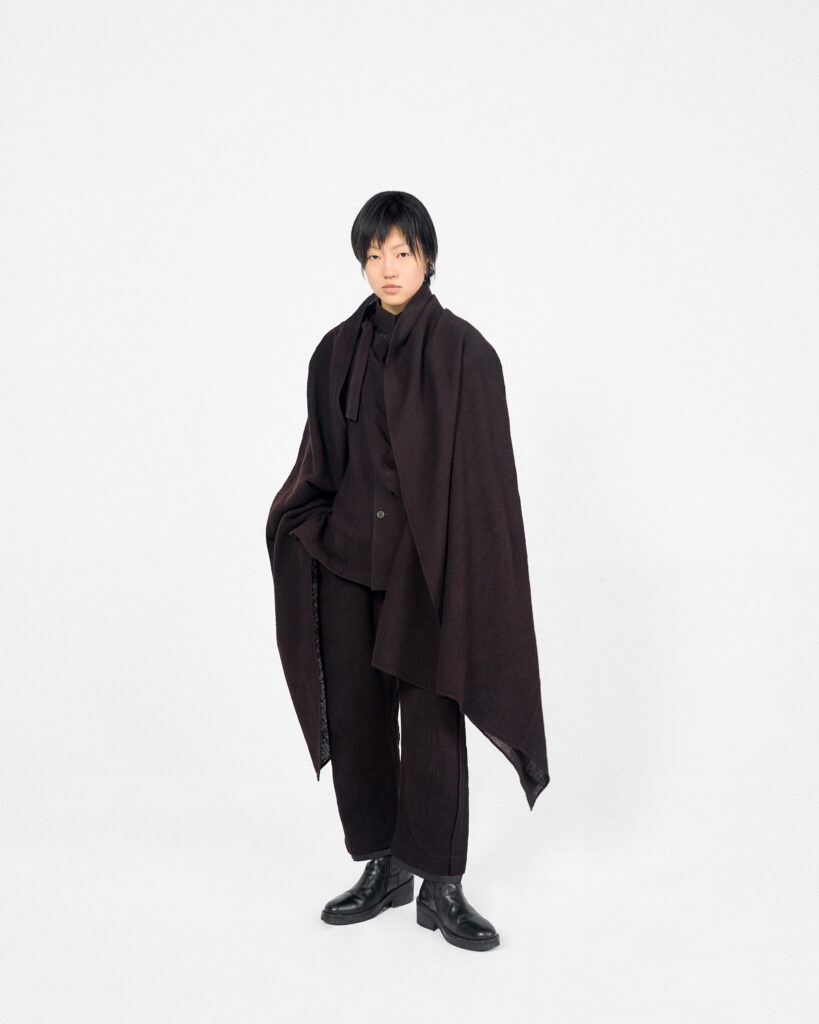
In your affinity for Japanese designers such as Rei Kawakubo and Junya Watanabe, whose clothes often obfuscate and subvert the image of human bodies, does a tension exist alongside your affinity for nature and travel? In another way, what are your thoughts on exercise, musculature and anatomy in relation to making clothes that seek to hide and transform such silhouettes? Does such a question hold any significance to you, especially with regards to your sportswear offerings and use of performance textiles in ROSEN-X?
The clothes of Rei Kawakubo, as well as those of her peers and protégés, are designed primarily for urban environments, often defined by affluence and order. Aesthetically, they feel at home in liminal areas such as airports, sparsely decorated museums or empty corridors where the flow of time seems suspended. Whether those garments feel equally at home in natural settings, such as villas or hot springs in a mountainous village, is another question. In this context, I think Issey Miyake does that better than the others, perhaps because the label continues to explore natural materials and traditional silhouettes. When strenuous activity is involved, different types of clothing become more appropriate. This line of thinking eventually led to the creation of ROSEN-X. ROSEN-X was designed with an active lifestyle in mind; they are garments that can toggle between work and leisure in urban settings, while also accommodating exercise and outdoor exploration without appearing out of place. Outside of work and home, the place where I spend most of my time is the gym. Exercise benefits both the body and the mind. Achieving physical goals that once seemed impossible builds self-esteem. My personal aim is to maintain bodily strength and cardiovascular health as I age, while also preserving my ideal physique. I do not see the concealing silhouettes of my designs as being in conflict with physical fitness. Fitness and physique are private matters; we are not obliged to display them to the world. The creation of ROSEN-X has less to do with exposing the body and more with facilitating a modern lifestyle that involves movement and physical exertion. On a deeper level, it is an auto-biographical representation of the person I was growing up: a competitive-student athlete, a fence-climbing short-haired tomboy, a rebellious teenager playing the drums. Much of my youth was spent channeling my violent energy and internal rage into productive, pro-social outlets, which in many ways I continue to do today.
What is the significance of history to you? In your collections for ROSEN, you often present the pieces alongside a strong sense of geography and narrative, whether textually or visually. What is the significance of highlighting time and place in such ways? Is it fair to say that ROSEN represents a kind of life or worldview you wish to have for yourself, carved outwards into the external world?
History is a lesson and, at times a fiction, that must be examined critically because it shapes our reality, and we are all products of it. I am deeply interested in human behaviour and understanding why individuals, societies and nations act the way they do. Studying events from the 18th century onwards, such as the Industrial Revolution, or the rise and fall of Qing Dynasty, can provide valuable context for many of the global tensions we see today. Having the ability to parse conflicting information is essential for identifying workable solutions during times of uncertainties. The narratives that accompany my collections, whether visual or textual, are a glimpse into the places I have travelled to and the knowledge I have absorbed from reading and observing. I have come across aesthetics that are largely overlooked by mainstream fashion, many of which have resonated with my design language. The enrichment of my visual dictionary continues to shape my work to this day. I believe it is important to shine a light on these sources of knowledge as a form of appreciation and gratitude.
What is the significance of black to you? It features often in your collections as part of monochromatic clothes set against more colourful backdrops of historical and urban landscapes. Does the influence of Japanese designers such as Rei Kawakubo and Yohji Yamamoto take hold here? Or do you have other reasons for the choice of black? If so, what is your personal history with those reasons?
Black is aggressively protective, but is also practical. It hides stains and marks, which is useful for someone like me who often works in labour-intensive tasks. Before there was any inkling of aptitude for fashion, music was my primary artistic outlet. I was a drummer throughout the later half of my school years, playing for several bands. The music I gravitated towards was heavy metal as it spoke to my personal experiences and internalised rage. The heavier sub-genres, such as industrial, power metal, metalcore, embody intense energy riddled with manifestations of anger, brutalism, nihilism and despair. Musicians of these genres tend to gravitate towards black as the unofficial uniform, though each individual sees its symbolism in different ways. What started as a rebellion against the psychedelic colours of the 1960s has evolved into symbols of transgressions against mainstream Western culture, as well as a nod to what ultimately comes for us all, death and decay. It is perhaps not coincidental that postwar Japanese designers, who perhaps are carrying the collective memory of annihilation and subjugation, also found refuge in the colour of mourning and rebellion. To this day I continue to listen to the music that has shaped me, and I find comfort in black much in the same way that I find comfort in music.
In choosing to be the public face of your own brand, how has your relationship with the private and public versions of yourself evolved over the years? Has it been desirable for you to create distance between these two selves? To you, what is the significance in being the public face of ROSEN, such as modelling in your own collections? What do you want people to understand about you in relation to your brand? How does it feel to be perceived this way?
Aside from sharing aspects of my background and personal history, I remain cautious about revealing too much of my day-to-day life. In recent years, I have become even more reserved in that regard. I do not publicly share my personal frustrations; they are my own burdens to carry. However, I am willing to share personal insights or advice when asked. Using myself as a model in the early stages of the brand was a practical decision to familiarise my customer base with my new design venture. Over time, as people began to associate me with the brand, I hope that what they see represents the pursuit of uncommon aesthetics and uncompromising quality. Eventually, I will introduce new faces to represent the brand. There will come a day when age inevitably catches up with me. I feel fortunate that the visual identity I have cultivated, from my signature hairstyle to the colour of my nails, has helped carry the narrative of the brand.
Do you have recurring collaborators for your brands? What is the nature of your contribution at ROSEN and ROSEN-X? For example, do you have a team behind you? Briefly-speaking, who are they and what are their stories? Do you have intentions to scale the company in the future? And what is your leadership style at its helm?
Whenever possible, I prefer to work with the same people, whether in manufacturing or media production. Running a fashion business is not a solitary endeavour. It takes a village to make a garment and another to communicate its existence to the world. The work inevitably involves complications, many of which cannot be predicted until they arise. For this reason, building a network of collaborators who understand my vision and working style is essential. It reduces misunderstandings, frustrations and unnecessary time spent learning how to work together. That said, I am always open to exploring new collaborations with different tailors or workshops. However, much like hiring new employees, there must be a trial period to evaluate expectations and standards before entrusting them with complex orders. Once a strong working relationship is established, half the battle of running a design business is won. On the media production side, I have a small core team of models, photographers and assistants who understand my aesthetic. They know what I want and can deliver it without requiring extensive explanation. I have always grown the business organically. What started in a single-bedroom apartment has grown to its present size today without outside investments nor advertising. I am far more interested in honing my design language, production quality and maintaining a healthy profit margin rather than building revenue under a deadline, which often results in larger liabilities and expenses. I don’t subscribe to the model of forced scaling up that is trendy in the tech industry. My long-term aim is to nurture and grow the brand in a financially sustainable manner. There is plenty of room for growth and development for the business, it simply does not need to be carried out at an artificial pace. My leadership style is rather hands-off. I set the tasks, deliverables, quality standards and timeline; how they are executed is up to the individual. Hence the people who work with me have to be independently-motivated rather than needing to be watched constantly.
Have you felt pressure as a founder? What keeps you invested in the effort and time it takes to refine and perfect a collection to the standards you desire? Do you have any regrets on choosing fashion as a career? If not, what else occupies your time outside of fashion? Are there other interests you have? How else would you like to see and actualise your life?
Leading a company is inherently stressful because others depend, or at least in part, on my decisions for their livelihood. I must set the agenda for the week, month and year, both for myself and for the company. No one else can do it for me. At the same time, every mistake ultimately becomes my responsibility, even if it originates elsewhere. What drives me, and I believe it is common in creatives, to perfect every collection is my obsessive personality. I cannot rest well knowing that there are mistakes to be corrected, or that I have not made each piece to the best of my ability. I am also willing to sacrifice designs that do not work, rather than allow them to weaken the overall collection. I have no regrets in doing what I do. If anything, it still feels like a dream. I have always wanted to be an entrepreneur before I was a teen, and I knew it would be in fashion by the time I was twenty. What I did not anticipate was becoming a designer myself. Proper garment manufacturing had once seemed inaccessible without industry connections or significant capital. It was only after moving to China that the possibility became tangible. My only other desire in life is to buy a large estate somewhere in China when the time is ready, once I have explored enough cities to choose the right place, with the hopes of converting it into a refuge for stray cats who are unable to survive on their own, either due to long-term sickness or injury.
When you think of the future, what do you see? Likewise, when you think of the past, what do you see? How do you see yourself at this time in your life? What are your dreams for ROSEN and for yourself?
The present is always rife with challenges, some of which can feel insurmountable. The work never ends and one can never truly rest. When the going gets too tough, I remind myself of the period after I graduated during the global financial crisis, when I spent six months unable to find work in the fashion industry. Facing the onset of depression, I took fate into my own hands and decided that I would never again depend on others for my livelihood. That decision led to years of navigating an ocean of uncertainties as I chart the course of entrepreneurship. There was little guidance and certainly no mentorship. A few years later, having made a comfortable life for myself trading archive garments, I made another life-altering decision: to experiment with designing my own garments. The first collection consisted of four shirts and a coat. There is no formula for what I’m doing. I am crossing the river by feeling the stones. Knowing that I have been able to sustain both my livelihood and those of others through these decisions helps put present challenges into perspective. What once felt like mountains now appear more like hills. In the near future, I expect to see a deceleration of growth amid increasing instability. But it is under the auspices of chaos that the rules of the game are rewritten. When old guards fall, new ones inevitably emerge. I see this as an opportunity to evolve and elevate our designs so that when the world settles on a new paradigm, we will be ready for it.
Written by Thomas Hu & Jesper Green
Edited by Jesper Green
Leave a Reply